
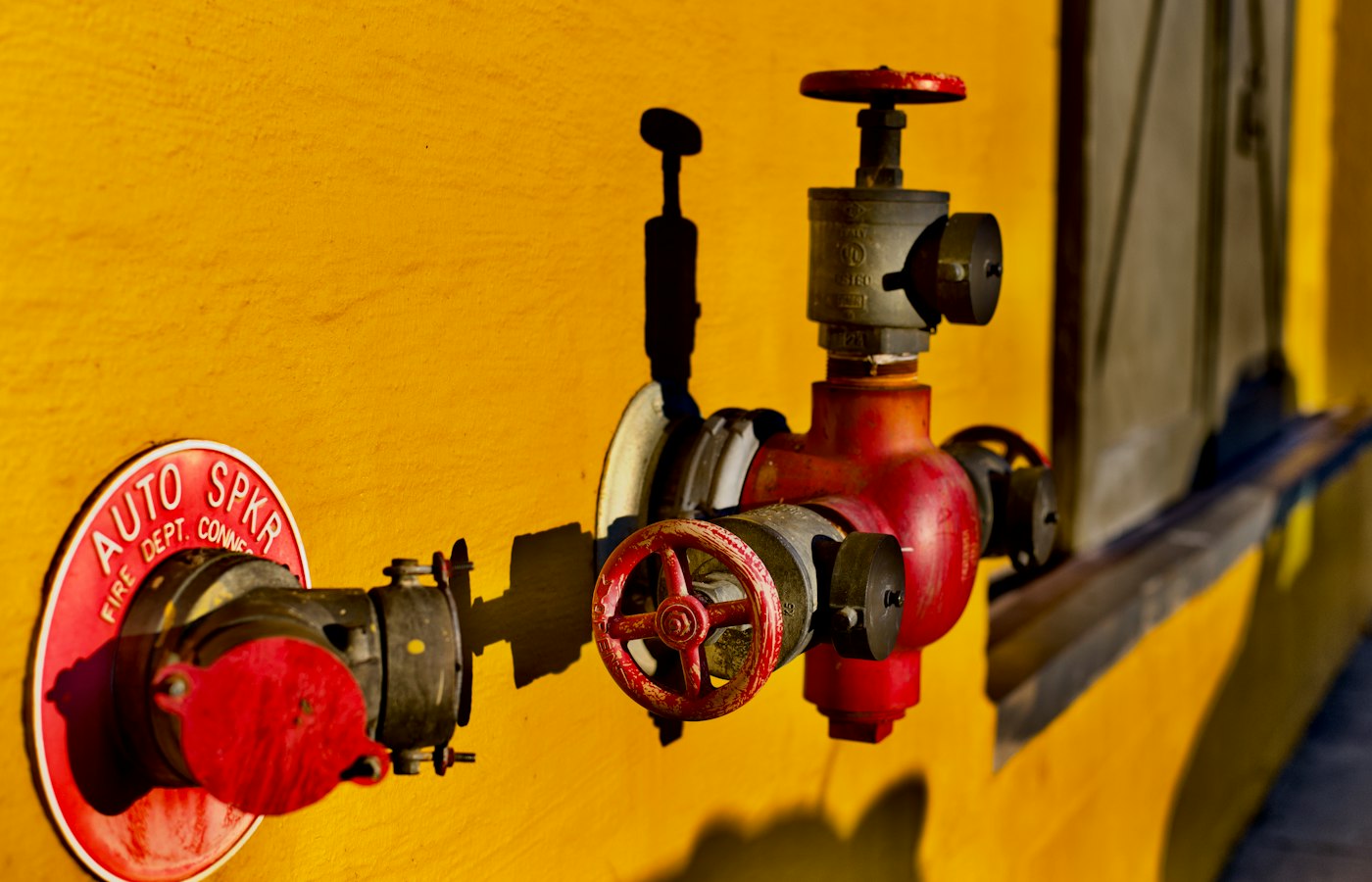
On survey the fire pump itself is rarely the problem. Pumps are robust. What fails inspection is the installation around the pump and the evidence that it has been tested under realistic conditions. These five items account for most of what we write up.
1. The pump was never run at flow
A weekly no-flow start proves the motor turns. It proves almost nothing else. Without an annual flow test you do not know whether the pump still meets its rated duty, whether the suction arrangement is adequate, or whether the driver can hold the load. Churn testing alone is the most common gap in maintenance records.
2. Jockey pump masking a leak
A jockey pump exists to maintain system pressure against minor losses. When it starts frequently, it is not doing its job well, it is hiding a leak or a passing valve. Frequent jockey starts should be logged and investigated, not accepted as normal behaviour.
3. Ventilation and ambient temperature
Diesel-driven sets need combustion air and a route for heat to leave the room. This is the failure we see most in summer. A pump room that ran fine in winter derates in August because the ventilation was sized for an assumption nobody rechecked. Electric sets are not exempt: controller electronics have ambient limits too.
4. Valve positions and supervision
Suction and discharge valves must be open and supervised. A tamper switch that has been disconnected, bypassed at the panel, or never terminated turns a supervised valve into an unsupervised one, and an unsupervised valve is a valve that can be closed without anyone knowing.
5. Batteries and starting
Diesel sets need two independent starting battery banks, both healthy. A single failed bank is often tolerated for months because the other one still starts the engine. It is a single point of failure sitting in plain sight, and it shows up on a proper load test rather than a voltage check.
The records are part of the system
An inspector asks for the test results. Flow test curves, battery load test results, dated and signed. If the only evidence is an invoice saying annual maintenance, expect to be asked to repeat the test.