

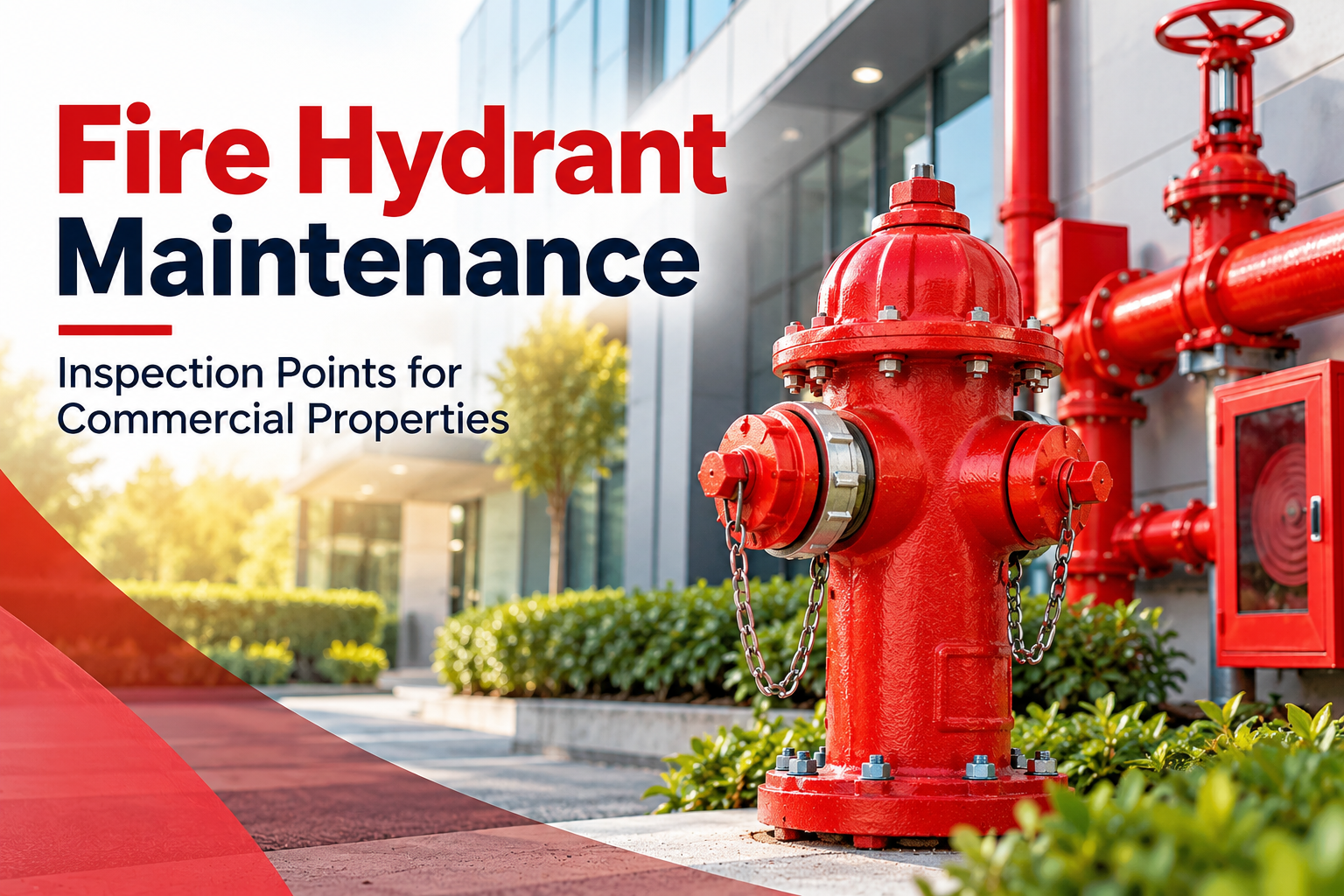
Fire hydrant systems play an important role in protecting commercial buildings against fire emergencies. Offices, warehouses, shopping centres, hotels, restaurants and industrial facilities depend on reliable fire fighting equipment to support emergency response. However, installing a fire hydrant system is only the first step. Regular inspections, testing and servicing help ensure that the system remains ready for use when required.
Fire hydrant maintenance involves checking the condition, accessibility and performance of hydrants, valves, pipes and associated equipment. A structured maintenance programme helps identify faults early, reduce the risk of equipment failure and support compliance with applicable fire safety requirements. This guide explains the main inspection points commercial property owners and facility managers should consider when maintaining a fire hydrant system.
Why Is Fire Hydrant Maintenance Important?
Fire hydrants provide access to water for firefighting operations. During an emergency, damaged equipment, obstructed access or inadequate water supply can affect firefighting activities. Regular maintenance helps identify problems such as leaking valves, corroded pipework, damaged hydrant outlets and pressure-related issues. It also helps facility managers plan repairs before minor defects become more serious. A planned maintenance schedule supports equipment reliability and provides documented evidence of inspection and servicing activities. The required frequency depends on the system design, manufacturer recommendations, applicable regulations and the property’s fire safety requirements.
1. Check Hydrant Accessibility and Visibility
Fire hydrants must remain accessible so emergency responders can locate and use them without unnecessary delays.
During an inspection, technicians should check:
- Whether hydrants are clearly identifiable.
- Whether vehicles, stored materials or landscaping obstruct access.
- Whether hydrant cabinets and protective enclosures are accessible.
- Whether identification signs are visible and legible.
- Whether the surrounding area shows signs of damage or deterioration.
Commercial properties should maintain clear access around hydrants at all times. Construction work, parking arrangements and changes to landscaping can create obstructions that affect emergency access.
Any obstruction should be removed, and damaged signs or enclosures should be repaired.
2. Inspect Hydrant Valves and Outlets
Hydrant valves and outlets must remain in suitable working condition to support firefighting operations. Corrosion, physical damage and leakage can affect their reliability.
During fire hydrant inspection, technicians should examine the following components:
- Hydrant body for cracks, corrosion and visible damage.
- Outlet connections for wear, deformation or damaged threads.
- Valve handles and operating mechanisms.
- Caps, chains and protective covers.
- Gaskets and seals for deterioration.
- Visible signs of leakage around joints and connections.
Technicians should also confirm that valves operate as required under the approved inspection procedure. Stiff, damaged or leaking components may require repair or replacement.
Any operation that could affect the water supply or other connected systems should follow the property’s approved safety procedures.
3. Check Pipework and Water Supply Connections
The performance of a fire hydrant system depends on a reliable water supply and properly maintained pipework. Hidden leaks, corrosion and damaged connections may reduce system effectiveness.
Inspection activities should include checking accessible pipes, joints, supports and connections for visible deterioration. Technicians should look for corrosion, water leakage, damaged protective coatings and signs of physical impact.
Where the system includes underground pipework, additional checks may be necessary if technicians identify leakage, pressure loss or other concerns.
The inspection should also consider the water supply arrangement and any associated tanks, pumps or control valves installed as part of the firefighting system.
Identified defects should be documented and assessed by qualified personnel. Repairs should follow the system design and applicable technical requirements.
4. Conduct Fire Hydrant Flow Testing
Visual inspections cannot confirm whether a hydrant delivers the required water flow. Fire hydrant flow testing helps assess system performance under defined test conditions.
Depending on the system design and applicable requirements, testing may involve measuring static pressure, residual pressure and water flow at designated test points.
These measurements help technicians evaluate whether the system can provide the required hydraulic performance. Results should be compared with the approved design criteria and relevant requirements rather than relying on a general pressure value.
Flow testing should be carried out by qualified personnel using suitable equipment and an approved procedure. Technicians must also consider water discharge, drainage, traffic, nearby property and other safety risks before testing begins.
If the results indicate inadequate performance, further investigation may be necessary. Potential causes include supply restrictions, valve problems, pipework deterioration or pump-related issues where applicable.
5. Inspect Fire Pumps and Associated Equipment
Some commercial fire hydrant systems depend on dedicated fire pumps to provide the required water pressure and flow. When pumps form part of the installation, their condition and operation must receive appropriate attention.
Maintenance checks may include:
- Pump control panels and fault indicators.
- Power supplies and associated electrical connections.
- Pump condition, unusual noise and vibration.
- Suction and discharge pressure readings.
- Valves, visible pipework and connections.
- Automatic starting functions and other required operating features.
Technicians should conduct functional tests according to the equipment manufacturer’s instructions and applicable requirements.
Not every hydrant system uses the same pump arrangement. Inspection procedures must reflect the actual installation and its approved design.
6. Review Fire Hydrant System Servicing Records
Maintenance records help facility managers monitor system condition, track defects and plan corrective work.
After an inspection or service visit, the provider should document:
- Components inspected.
- Tests performed and results obtained.
- Defects identified.
- Repairs completed or recommended.
- Outstanding issues requiring follow-up.
- The next scheduled inspection or test, where applicable.
These records support maintenance planning and help identify recurring problems. They can also provide useful evidence during internal safety reviews and inspections by relevant authorities.
Commercial property managers should ensure that reported defects receive timely attention rather than remaining unresolved between service visits.
How Often Should Commercial Properties Inspect Fire Hydrants?
The inspection and testing schedule depends on the type of system, its design, manufacturer guidance and applicable fire safety requirements. Some checks may need to take place more frequently than others.
Property managers should establish a maintenance programme that clearly defines routine visual inspections, technical servicing, flow testing and any additional checks required for the installation.
They should also arrange further inspections after damage, significant repairs, changes to the water supply or other events that may affect system performance.
A qualified fire safety service provider can help establish an appropriate schedule based on the property’s requirements.
Conclusion
Regular fire hydrant maintenance helps commercial properties keep essential firefighting equipment accessible, serviceable and ready for use. Inspections should cover hydrant bodies, valves, outlets, pipework, water supply connections and associated pumps where installed.
Combining visual inspections with appropriate fire hydrant flow testing and professional fire hydrant system servicing helps identify defects that may otherwise remain unnoticed.
For commercial property owners and facility managers, a documented maintenance programme supports better equipment management, timely repairs and preparedness for fire emergencies. The key is to follow the approved system requirements, use qualified technicians and address identified problems without delay.