

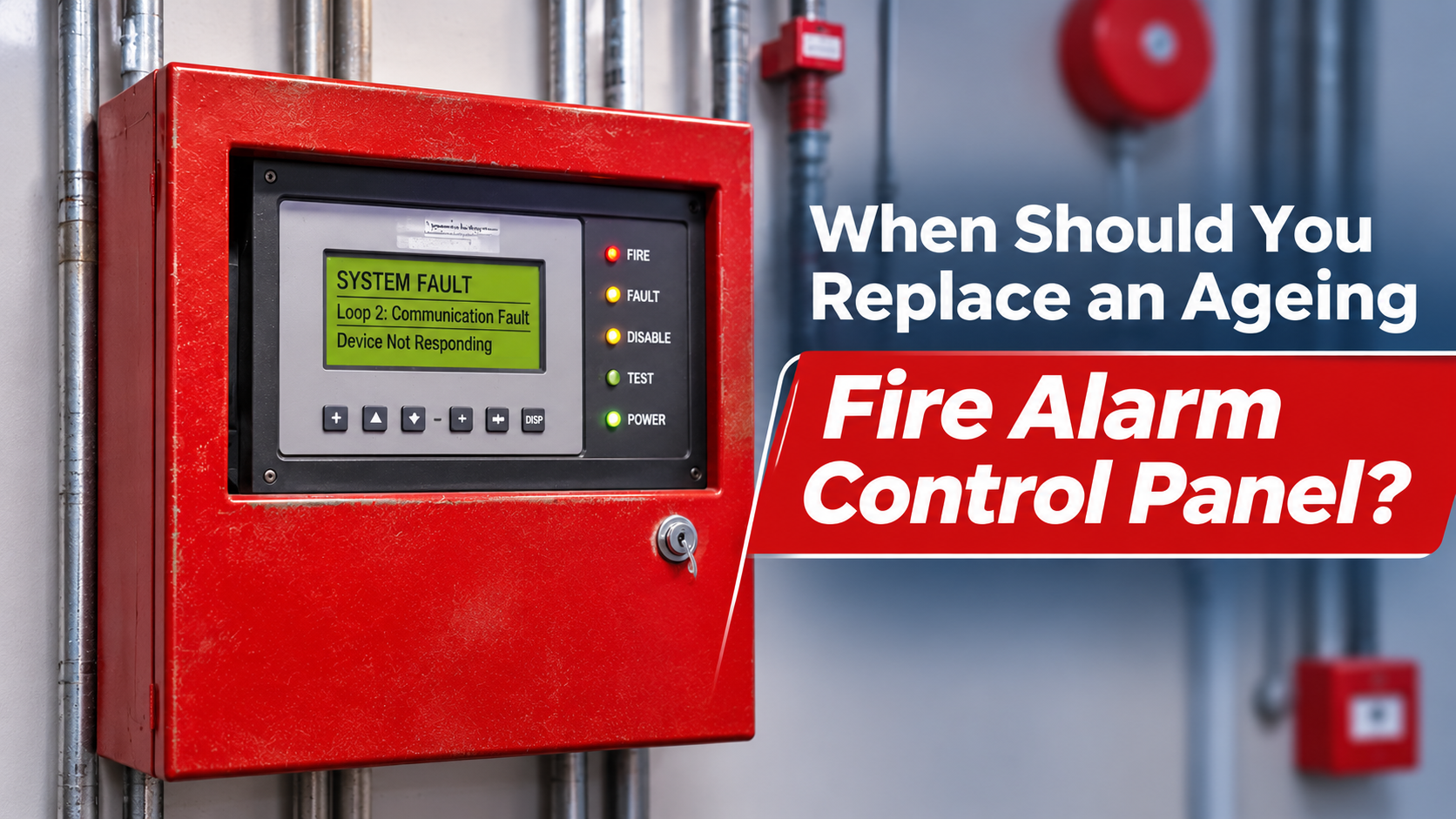
A fire alarm control panel is the central component of a building’s fire detection and alarm system. It receives signals from smoke detectors, heat detectors, manual call points and other connected devices before activating the required warning systems. When the panel starts developing recurring faults, facility managers must decide whether to continue repairing it or invest in a replacement.
For commercial buildings, hotels, residential towers, warehouses and industrial facilities in Abu Dhabi, this decision directly affects fire safety system reliability and maintenance costs. Although repairing an existing panel may appear more economical initially, repeated breakdowns, obsolete components and limited manufacturer support can make replacement a more practical long-term solution.
Understanding when to replace an ageing control panel helps facility managers maintain reliable fire protection while planning their maintenance budgets effectively.
1. Repeated Control Panel Faults Increase Maintenance Costs
One of the first warning signs of an ageing fire alarm control panel is the frequent occurrence of system faults. These may include communication errors, detector faults, circuit failures, earth faults and power supply issues.
Although individual faults may be repairable, repeated breakdowns indicate that the panel or its connected components may be approaching the end of their useful service life.
Facility managers should consider replacement when:
- The same faults keep returning after repairs.
- Multiple zones or circuits experience recurring communication problems.
- The panel requires frequent technician visits.
- Replacement components are becoming difficult to source.
- Repair costs are increasing without improving system reliability.
A detailed assessment helps determine whether the problem originates from the control panel, field devices, wiring or another connected component.
2. Replacement Parts Are No Longer Available
Fire alarm manufacturers regularly update their product ranges. Older control panels may eventually become discontinued, making replacement circuit boards, display modules, communication cards and power supply units difficult to obtain.
This creates a maintenance challenge for building operators.
When a critical component fails, the maintenance contractor may struggle to restore the system within a reasonable timeframe. Depending on the panel design, using incompatible replacement components can also create additional technical problems.
Facility managers should review:
- Manufacturer support for the existing panel.
- Availability of compatible replacement components.
- Availability of qualified technicians.
- Compatibility with existing detectors and notification devices.
- Long-term availability of software and programming support.
If the manufacturer has discontinued the panel and no reliable support route remains, replacing the control panel may provide a more sustainable maintenance solution.
3. Frequent False Alarms and Unstable System Performance
Repeated false alarms can disrupt building operations and reduce confidence in the fire alarm system.
In commercial properties, hotels, hospitals and industrial facilities, unnecessary alarm activations can interrupt daily activities and require repeated investigation.
However, false alarms do not automatically mean the control panel needs replacement. Contaminated detectors, incorrect device settings, environmental conditions, damaged wiring and poor installation practices can also cause unwanted activations.
Before recommending replacement, technicians should inspect:
- Smoke and heat detectors.
- Detector sensitivity and configuration.
- Wiring and communication circuits.
- Panel programming and event history.
- Environmental conditions around installed devices.
If the control panel itself has persistent electronic or processing faults that cannot be resolved reliably, replacement may be necessary.
Regular fire alarm preventive maintenance Abu Dhabi helps identify these problems before they develop into recurring operational issues.
4. The Existing Panel Cannot Support Building Modifications
Buildings change over time. Commercial properties may add new floors, renovate office spaces, introduce additional fire compartments or change their internal layouts. These modifications can increase the number of detectors, manual call points, sounders and other devices required by the fire protection system. An older control panel may not have sufficient capacity to accommodate these changes.
Facility managers should assess replacement when:
- The existing panel has insufficient addressable device capacity.
- Additional zones or circuits cannot be accommodated.
- The panel cannot support required system integration.
- Existing system architecture limits future expansion.
- New building requirements cannot be met through compatible upgrades.
In some situations, an expansion module or additional panel may solve the problem. A qualified fire safety contractor should evaluate the existing system before recommending a complete replacement.
5. The Control Panel Has Limited Integration Capabilities
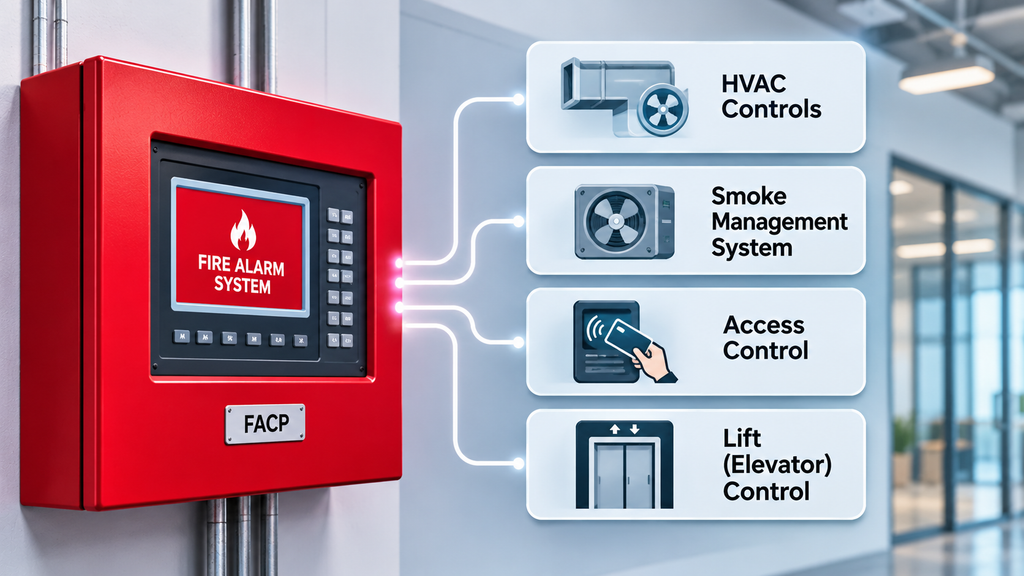
Modern commercial buildings often use integrated building management and life safety systems.
Depending on the approved building design, fire alarm systems may need to interface with equipment such as HVAC controls, smoke management systems, access control and lift-related functions.
An ageing control panel may not support the communication protocols or interface requirements needed for these arrangements.
Facility managers should review whether the existing panel can reliably support the required cause-and-effect sequences and approved system interfaces.
If it cannot, upgrading or replacing the panel may become necessary.
Any proposed integration must follow the approved fire safety design and applicable authority requirements. System modifications should never compromise existing fire protection functions.
6. Repairs No Longer Offer a Cost-Effective Solution
Continuing to repair an old panel can become expensive when multiple components begin failing.
Instead of looking only at the cost of the latest repair, facility managers should compare the long-term cost of maintaining the existing equipment with the cost of replacement.
A practical evaluation should include:
- Previous repair expenditure.
- Frequency of recurring faults.
- Cost and availability of spare parts.
- Technician and service requirements.
- Expected future maintenance costs.
- Replacement, installation and commissioning expenses.
For example, a panel that requires repeated circuit board replacements may create higher maintenance expenses than a new, properly specified system over its expected service life.
There is no universal age at which every fire alarm panel must be replaced. The decision should depend on manufacturer guidance, equipment condition, repair history, system reliability and applicable requirements.
7. What Facility Managers Should Check Before Replacing a Fire Alarm Panel
Replacing a fire alarm control panel requires careful planning. A new panel must work with the building’s existing fire detection infrastructure or form part of a properly designed system upgrade.
Before proceeding, facility managers should arrange a technical assessment covering:
Existing system condition: Review the control panel, detectors, manual call points, sounders, wiring and connected modules.
Device compatibility: Confirm whether existing field devices can communicate correctly with the proposed replacement panel.
System capacity: Check the number of existing devices and the capacity needed for future building modifications.
Cause-and-effect programming: Verify that required alarm responses and connected safety interfaces operate according to the approved design.
Installation and commissioning: Establish a plan for installation, configuration, testing and documentation.
Authority requirements: Confirm applicable approvals and inspection requirements before making changes to the existing fire alarm system.
Choosing a qualified contractor for fire alarm system installation Abu Dhabi helps ensure that replacement work follows the approved technical requirements.
8. Why Preventive Maintenance Matters Even After Panel Replacement
Replacing an ageing control panel does not eliminate the need for regular system maintenance.
New equipment can also develop faults because of wiring problems, damaged devices, environmental conditions, power supply issues or improper configuration.
A structured maintenance programme should include:
- Scheduled control panel inspection.
- Checking power supplies and standby batteries.
- Testing detectors and manual call points.
- Inspecting alarm sounders and notification circuits.
- Reviewing fault and event logs.
- Checking communication between devices and the control panel.
- Recording defects and completed corrective actions.
Working with a provider offering fire alarm preventive maintenance Abu Dhabi helps facility managers monitor equipment condition and identify developing faults.
When comparing contractors offering the best fire alarm maintenance in Abu Dhabi, building operators should examine technical qualifications, applicable licences and approvals, maintenance scope, response arrangements, reporting standards and experience with the installed fire alarm system.
Conclusion
An ageing fire alarm control panel does not always require immediate replacement. However, recurring faults, discontinued spare parts, limited expansion capacity, unreliable performance and increasing repair expenses can indicate that continued repairs are no longer the right decision. Facility managers should arrange a comprehensive technical assessment before choosing between repair, upgrading or complete replacement. The objective is to maintain a dependable fire alarm system that meets the building’s operational and applicable safety requirements.
Fire Base – Fire Fighting Systems supports fire alarm system installation, inspection, maintenance and related fire protection services in Abu Dhabi. Contact Fire Base to assess your existing fire alarm system and discuss a suitable maintenance or replacement solution for your building.