
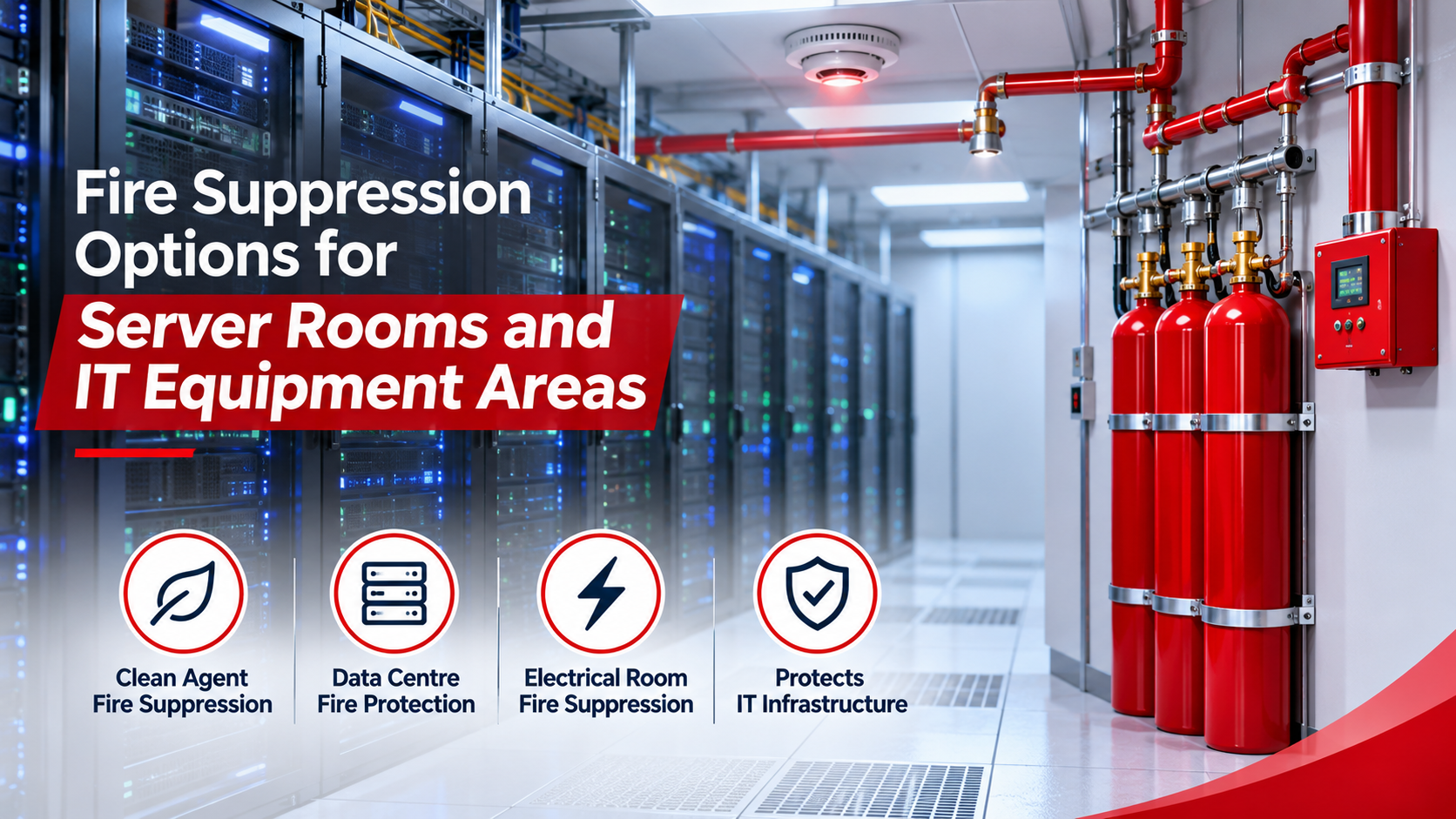
Server rooms and IT equipment areas play an important role in modern business operations. They contain critical infrastructure, including servers, networking devices, storage systems, power distribution units and communication equipment. A fire in these environments can damage expensive hardware, interrupt business operations and lead to significant data loss. Unlike ordinary office spaces, server rooms require specialised fire protection solutions. Traditional water-based fire suppression systems may not always be suitable for protecting sensitive electronic equipment because water discharge can cause additional damage. Installing a server room fire suppression system in UAE helps businesses protect their IT infrastructure through specialised fire detection and suppression technologies. Understanding the available options, how they work and where they are suitable can help businesses select an appropriate fire protection solution.
Why Do Server Rooms Require Specialised Fire Protection?
Server rooms contain electrical equipment that operates continuously. Electrical faults, overheating, damaged cables and power distribution failures can create potential fire hazards. Several factors make fire protection particularly important in these environments.
Electrical Equipment Overheating
Servers, switches and other IT equipment generate heat during operation. Poor ventilation, cooling system failures or excessive equipment loads can increase temperatures and create potential fire risks.
Electrical Short Circuits
Damaged cables, overloaded circuits and faulty electrical connections can generate heat or sparks, potentially causing fires.
High Equipment Density
Server rooms often contain multiple racks, cables and power distribution units within limited spaces. A fire can affect several connected systems and disrupt essential business operations.
Business and Data Disruption
A fire can damage hardware, interrupt network connectivity and affect access to important business information. For organisations that depend on continuous IT operations, even a short interruption can create serious operational challenges.
What Is a Server Room Fire Suppression System?
A server room fire suppression system is a specialised fire protection solution designed to detect and control fires in areas containing sensitive electronic equipment.
These systems use suitable extinguishing agents to suppress fire while minimising damage to servers, electrical components and other valuable assets.
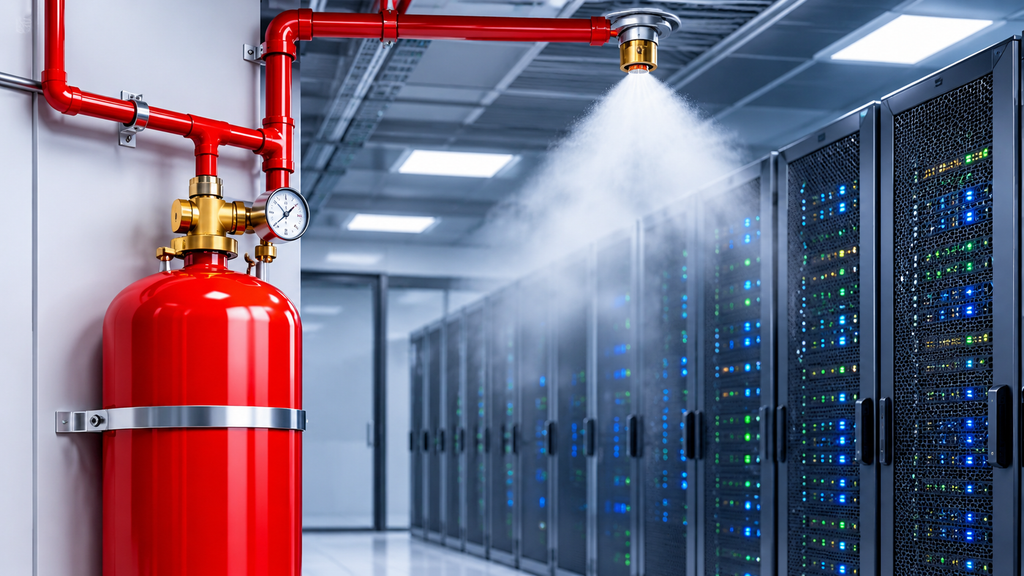
A typical system may include:
- Automatic fire detection devices.
- Smoke detectors and associated control panels.
- Fire suppression cylinders.
- Clean agent storage and distribution pipework.
- Discharge nozzles.
- Manual activation and emergency controls.
- Audible and visual alarm devices.
- Equipment shutdown and ventilation control interfaces, where required.
The system design depends on the room dimensions, equipment layout, fire risks and applicable safety requirements.
Different Fire Suppression Options for Server Rooms
Businesses can choose from different fire suppression technologies depending on their infrastructure and operational requirements.
Clean Agent Fire Suppression Systems
Clean agent systems are widely used in server rooms, data centres and electrical equipment areas.
These systems release specialised gaseous extinguishing agents that suppress fire without leaving solid or liquid residue on protected equipment.
Common clean agents include:
FK-5-1-12: This clean agent suppresses fire primarily by absorbing heat. It is designed for applications where protecting sensitive electronic equipment is important.
HFC-227ea: Also known as FM-200, this gaseous clean agent suppresses fire primarily through heat absorption. It has been used in electronic equipment protection applications.
Clean agent systems require proper engineering, including agent quantity calculations, enclosure assessment and appropriate discharge arrangements.
Inert Gas Fire Suppression Systems
Inert gas systems use gases such as nitrogen, argon or mixtures of these gases to reduce the oxygen concentration within a protected enclosure to a level that can suppress combustion.
These systems do not leave chemical residue and can be suitable for certain data centre and server room applications.
However, designers must carefully assess oxygen concentration, room occupancy, pressure relief and personnel safety before installation.
Carbon Dioxide Fire Suppression Systems
Carbon dioxide (CO2) systems suppress fire by reducing the oxygen concentration and providing some cooling effect.
Although CO2 can be used in specific industrial fire protection applications, it presents a serious risk to human life at fire-extinguishing concentrations.
It is therefore not generally appropriate for occupied server rooms without carefully evaluated safety provisions and applicable approvals. Businesses should consider safer alternatives where people may be present.
How Does a Clean Agent Fire Suppression System Work?
A clean agent system operates through automatic detection and controlled extinguishing agent discharge.
Step 1: Early Fire Detection
Smoke detectors monitor the protected area and identify signs of fire. Some critical facilities use aspirating smoke detection systems to provide very early warning by continuously sampling air.
Step 2: Alarm Activation
When the detection system identifies a fire condition, it activates the configured alarm sequence. Depending on the design, a warning period may allow personnel to leave the protected area before discharge.
Step 3: Clean Agent Discharge
The suppression system releases the extinguishing agent through strategically positioned nozzles. The agent spreads throughout the protected enclosure according to the system design.
Step 4: Fire Suppression
The clean agent suppresses the fire by reducing heat or interrupting the combustion process, depending on the agent used.
Step 5: Post-Discharge Assessment
After discharge, trained personnel should assess the protected area, investigate the cause of the fire and confirm that the environment is safe before restoring normal operations.
Important Considerations When Choosing a Data Centre Fire Protection System
Selecting the right data centre fire protection solution requires more than choosing a suitable extinguishing agent. Businesses must consider the complete protection requirements of their IT environment.
Important factors include:
- Room size: Calculate the protected volume to determine the required extinguishing agent quantity.
- Equipment layout: Consider server racks, raised floors, suspended ceilings and cable distribution areas.
- Fire detection: Select suitable detection technologies based on the room environment and required warning time.
- Personnel safety: Evaluate occupancy, evacuation arrangements and exposure risks associated with the selected agent.
- Room integrity: Ensure the enclosure can maintain the required agent concentration for the specified hold time.
- Ventilation control: Coordinate HVAC shutdown, dampers and other interfaces according to the system design.
- System reliability: Consider backup power, control panel monitoring and appropriate alarm integration.
A professional fire protection contractor should assess these requirements before recommending a system.
Why Is Electrical Room Fire Suppression Important?
Electrical rooms contain transformers, switchgear, control panels, distribution boards and other critical electrical infrastructure. A fire in these areas can interrupt power distribution and affect the operation of an entire facility. An appropriate electrical room fire suppression solution helps address fire risks associated with electrical equipment. Depending on the identified hazards, businesses may consider clean agent systems or other engineered suppression technologies. The selection should account for electrical equipment specifications, room occupancy, ventilation, fire load and applicable fire safety requirements.
Benefits of Installing a Server Room Fire Suppression System in UAE
Installing a suitable fire suppression system provides several benefits for organisations operating critical IT infrastructure.
- Protection of IT equipment: Helps control fires without introducing water or residue from suitable clean agents.
- Reduced operational disruption: Helps limit fire damage to critical infrastructure.
- Early fire detection: Identifies potential fire conditions before they develop into larger incidents.
- Protection of business data: Reduces the risk of fire-related damage to physical storage and networking equipment.
- Improved workplace safety: Integrates detection, alarms and evacuation arrangements into the fire protection strategy.
- Support for business continuity: Helps organisations protect essential systems and maintain operational resilience.
These benefits depend on correct system selection, installation, testing and maintenance.
Why Regular Fire Suppression System Maintenance Matters
Even a properly installed fire suppression system requires routine inspection and servicing to remain operational.
Businesses should arrange maintenance according to the manufacturer’s instructions, applicable standards and authority requirements.
Important maintenance activities include:
Inspecting Detection Devices
Check smoke detectors, control panels, alarm devices and detection connections for damage or faults.
Checking Suppression Cylinders
Inspect cylinder pressure, condition, mounting arrangements and associated components according to manufacturer specifications.
Examining Pipework and Nozzles
Ensure that distribution pipework and discharge nozzles remain secure, clean and free from obstructions.
Testing System Controls
Verify alarm sequences, manual activation devices, warning systems and equipment interfaces through approved testing procedures.
Maintaining Inspection Records
Keep service reports, inspection records and system documentation updated for maintenance planning and compliance purposes.
Conclusion
Server rooms, data centres and electrical equipment areas require specialised fire protection to safeguard critical infrastructure. Clean agent and inert gas suppression systems offer suitable options for many sensitive IT environments, provided that engineers design them around the specific fire hazards and occupancy requirements. Installing a reliable server room fire suppression system in UAE helps businesses protect valuable equipment, reduce fire-related disruption and strengthen their overall fire safety strategy.
Choose an experienced fire protection contractor in Al Ain, to assess your facility, recommend an appropriate suppression solution and provide professional installation and maintenance services.