

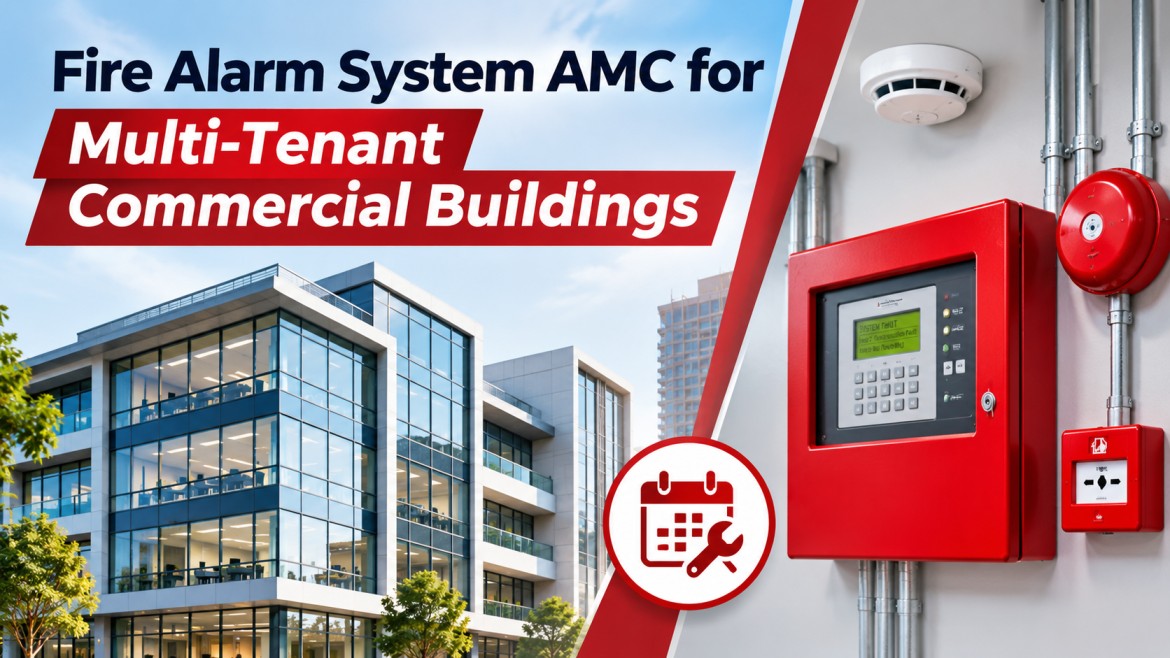
Managing fire safety in a multi-tenant commercial building requires consistent coordination, technical expertise and preventive maintenance. Unlike single-occupancy properties, commercial buildings accommodate multiple businesses, offices, retail units and shared facilities. Each tenant may have different operating hours, internal layouts and equipment, making fire alarm system maintenance more challenging.
For property managers and facility management teams in Abu Dhabi, a structured Annual Maintenance Contract (AMC) helps maintain the operational reliability of fire alarm systems across common areas and tenant-occupied spaces. A well-planned AMC also helps identify equipment faults, maintain service records and address maintenance requirements before they develop into serious problems.
Understanding what a fire alarm AMC should cover allows building owners to select the right maintenance contractor and manage their fire protection responsibilities more effectively.
1. Why Multi-Tenant Commercial Buildings Need a Structured Fire Alarm AMC
Multi-tenant properties often have interconnected fire alarm infrastructure covering reception areas, corridors, staircases, parking facilities, office units and retail spaces. A fault in one part of the system may affect monitoring or alarm functions elsewhere, depending on the system design.
Without regular maintenance, building operators may face problems such as:
- Smoke detectors developing faults or becoming contaminated.
- Manual call points becoming damaged or obstructed.
- Fire alarm sounders failing to operate correctly.
- Communication failures between field devices and the control panel.
- Standby battery deterioration.
- Unresolved system faults affecting multiple building zones.
A professional fire alarm AMC Abu Dhabi service provides a planned approach to inspecting, testing and maintaining these components. It also gives property managers a defined process for reporting faults and arranging corrective maintenance.
2. What Should a Fire Alarm AMC Cover in a Multi-Tenant Building?
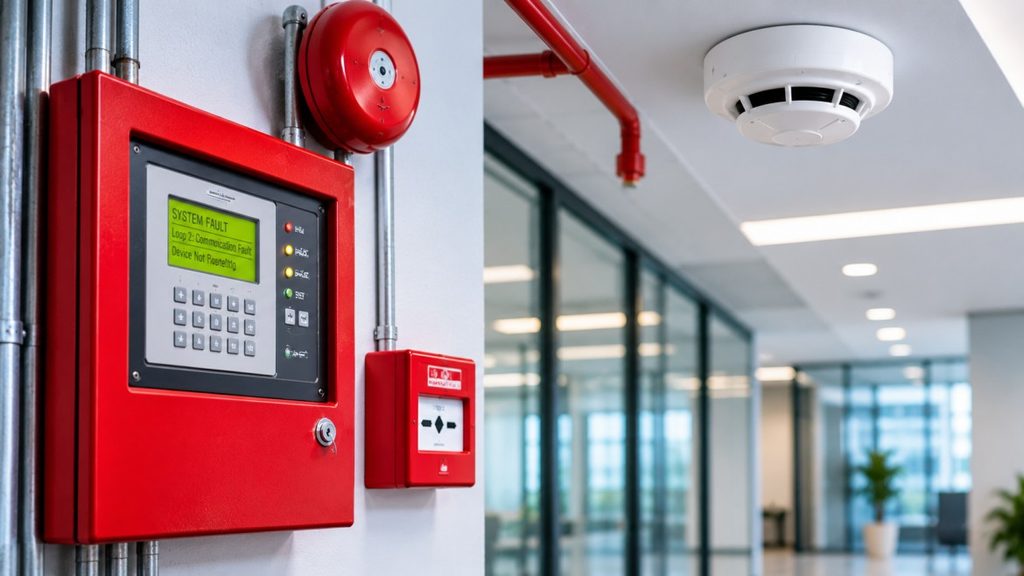
Before signing a maintenance contract, property managers should understand exactly which equipment and areas the contractor will maintain.
A comprehensive maintenance scope should consider the following components.
Fire Alarm Control Panels: Technicians should inspect the main and associated control panels, review fault indications, check event logs and verify the operation of relevant control functions.
Smoke and Heat Detectors: Regular inspections help identify contaminated, damaged or improperly installed detectors. Testing should follow the equipment manufacturer’s recommendations and applicable requirements.
Manual Call Points: Technicians should check the condition, accessibility and operation of manual call points installed throughout the building.
Fire Alarm Sounders and Notification Devices: Testing should verify that the required warning devices operate correctly in designated areas.
Wiring and Communication Circuits: Inspection should identify visible damage, loose connections, communication faults and other electrical issues affecting system reliability.
Power Supply and Backup Batteries: Maintenance should include checking the primary power supply and standby battery condition according to manufacturer specifications.
The contract should clearly identify whether these services cover only common areas or also extend to individual tenant premises.
3. Managing Fire Alarm Maintenance Across Multiple Tenant Units
One of the biggest challenges in multi-tenant properties is coordinating maintenance access.
A commercial building may contain offices, restaurants, retail outlets, clinics and other businesses. Some tenants may operate during standard working hours, while others remain open late.
Property managers should establish a maintenance coordination process that includes:
- Preparing an updated list of tenant units and installed fire alarm devices.
- Informing tenants before scheduled inspection and testing.
- Arranging access to restricted areas and technical rooms.
- Coordinating testing to minimise unnecessary business disruption.
- Recording access restrictions and unresolved maintenance issues.
- Communicating defects to the responsible building representative.
The maintenance contractor should coordinate with the facility management team to ensure that inspections cover all agreed areas.
Clear responsibilities are particularly important where tenants carry out internal fit-outs, install partitions or modify their premises. Such changes may affect detector coverage, device locations and the approved fire alarm design.
4. How Preventive Maintenance Helps Identify Fire Alarm Problems
Waiting for a fire alarm fault to occur can create unnecessary operational challenges. Preventive maintenance focuses on identifying developing problems during planned inspections.
Common issues that maintenance teams should investigate include:
Detector Contamination: Dust, construction debris and environmental contaminants can affect detector performance and contribute to unwanted alarms.
Battery Deterioration: Ageing standby batteries may not provide the expected backup performance during a power interruption.
Communication Failures: Damaged wiring, loose connections or faulty devices may interrupt communication with the control panel.
Repeated False Alarms: Frequent unwanted activations require investigation to identify whether the cause involves detectors, environmental conditions, wiring or system configuration.
Panel Fault Notifications: Repeated fault indications should be investigated rather than repeatedly resetting the control panel without identifying the underlying cause.
Regular fire alarm preventive maintenance Abu Dhabi services help facility managers maintain equipment condition and plan corrective work based on inspection findings.
5. What Should Property Managers Check Before Signing an AMC?
Not all maintenance contracts provide the same coverage. Comparing quotations based only on price may result in gaps in the maintenance scope.
Before selecting a contractor, property managers should review these important points:
Scope of Work: Confirm the number of control panels, detectors, call points, sounders and other devices included in the contract.
Maintenance Schedule: Check the proposed inspection and testing frequency against applicable requirements, manufacturer recommendations and the approved maintenance programme.
Emergency Response: Understand the contractor’s process for handling urgent faults and arranging corrective maintenance.
Repair and Replacement Costs: Confirm whether spare parts, replacement devices and major repairs are included or charged separately.
Service Reports: Ensure that each maintenance visit includes documented inspection findings, identified defects and completed corrective actions.
Technical Competence and Approvals: Verify that the contractor holds the applicable licences and approvals for the fire protection services being provided in Abu Dhabi.
A contractor offering fire alarm maintenance Abu Dhabi services should also demonstrate experience with the type of fire alarm system installed in the property.
6. Importance of Maintenance Reports and Fire Safety Records
Documentation plays an important role in managing fire safety across multi-tenant commercial buildings.
Property managers should maintain records of scheduled inspections, equipment testing, reported faults, repair activities and outstanding defects.
A useful maintenance report should identify:
- Date and scope of the maintenance visit.
- Areas and equipment inspected.
- Devices tested and their recorded condition.
- Faults or defects identified.
- Corrective maintenance completed.
- Outstanding issues requiring further attention.
- Recommendations for repair or replacement.
These records help facility managers monitor recurring problems, evaluate contractor performance and plan future maintenance expenditure.
They also provide useful documentation when preparing for relevant fire safety inspections and compliance reviews.
7. Choosing the Right Fire Alarm AMC Company in Abu Dhabi
Selecting a reliable maintenance contractor is an important decision for commercial property owners. The right provider should understand the operational requirements of multi-tenant buildings and offer a clearly defined maintenance scope.
When comparing companies offering the best fire alarm maintenance in Abu Dhabi, consider their technical capabilities, applicable approvals, experience with commercial properties, reporting practices and corrective maintenance arrangements.
Fire Base – Fire Fighting Systems provides fire alarm system installation, inspection and maintenance services in Abu Dhabi. Its fire protection services support building owners and facility managers looking to maintain their existing systems and address identified maintenance requirements.
Property managers should discuss their building layout, existing equipment, tenant access arrangements and maintenance expectations before finalising an AMC.
Conclusion
A structured fire alarm AMC helps property managers maintain fire detection and alarm infrastructure across multi-tenant commercial buildings. From control panel inspections and detector testing to fault diagnosis and maintenance reporting, every activity contributes to better system management.
Rather than waiting for equipment failures, building owners should establish a preventive maintenance programme with a qualified service provider. A clearly defined contract, regular inspections and proper documentation help maintain system reliability while supporting the building’s applicable fire safety requirements.
Contact Fire Base to discuss fire alarm inspection, preventive maintenance and AMC solutions for commercial buildings in Abu Dhabi.