

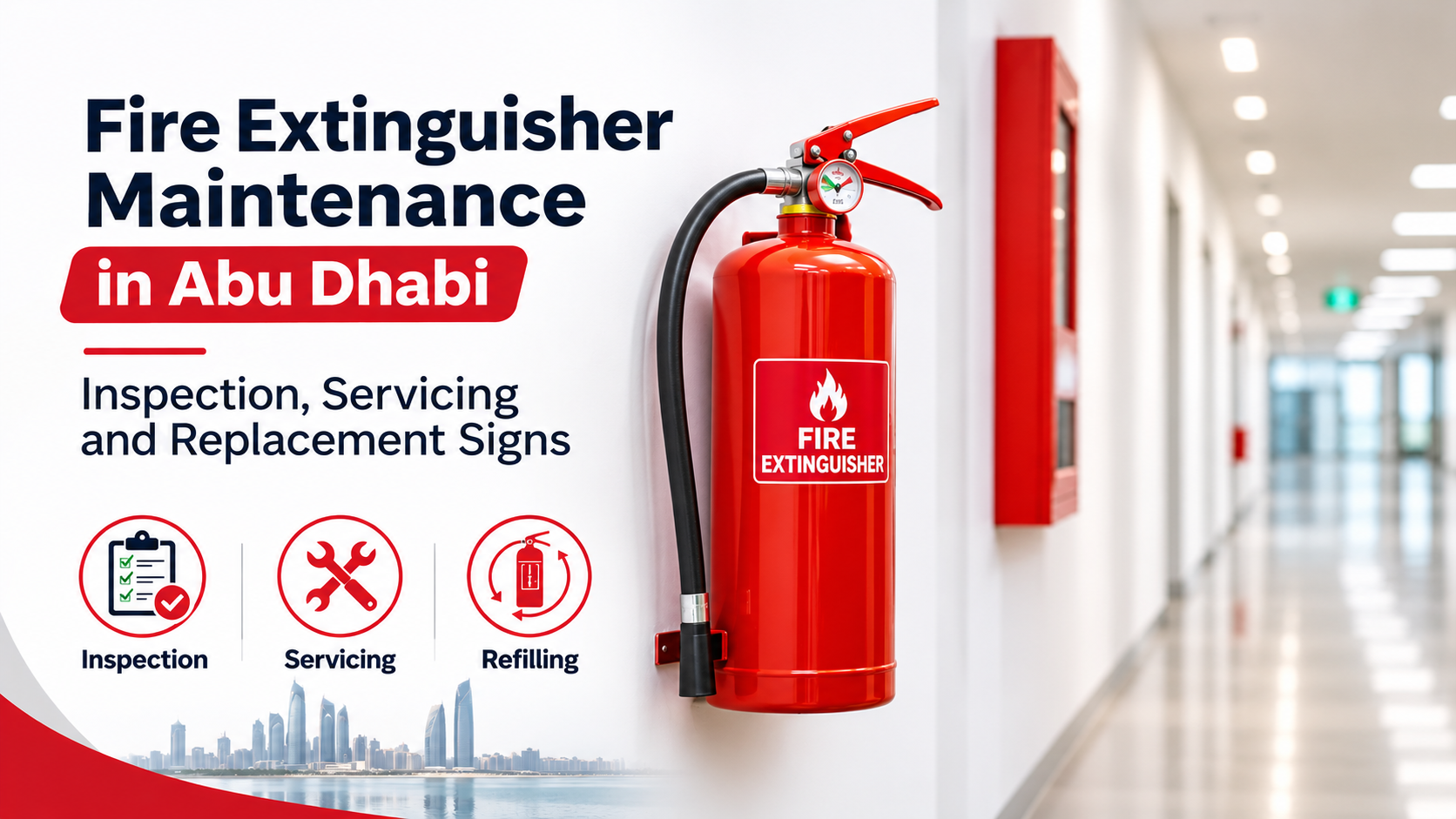
Fire extinguishers play an important role in protecting commercial buildings, offices, warehouses, industrial facilities and residential properties from fire hazards. However, installing fire extinguishers alone does not guarantee fire safety. Regular inspection, proper servicing and timely refilling help ensure that extinguishers remain ready for use during emergencies.
For businesses and property owners, fire extinguisher maintenance in Abu Dhabi is an essential part of maintaining workplace safety and meeting applicable fire safety requirements. Environmental conditions, frequent handling and equipment ageing can affect extinguisher performance over time. Understanding when to inspect, service, refill or replace fire extinguishers helps prevent equipment failures when they are needed most.
1. Why Is Regular Fire Extinguisher Maintenance Important?
A fire extinguisher must remain in proper working condition to control small fires before they spread. Without regular maintenance, issues such as pressure loss, damaged components, blocked nozzles or expired extinguishing agents can affect its performance.
Regular maintenance offers several benefits:
- Reliable performance: Helps ensure extinguishers are ready for use during emergencies.
- Early fault detection: Identifies leaks, corrosion, pressure problems and physical damage.
- Workplace safety: Supports fire prevention and emergency preparedness.
- Equipment lifespan: Helps maintain extinguisher condition through timely servicing.
- Regulatory compliance: Supports adherence to applicable Abu Dhabi fire safety requirements.
Professional maintenance also helps businesses maintain inspection records and identify equipment that needs repair or replacement.
2. Understanding Fire Extinguisher Inspection
Fire extinguisher inspection involves checking the equipment to confirm that it is accessible, undamaged and ready for operation. Regular visual checks help identify problems before they become serious.
Important inspection points include:
- Pressure gauge: Check whether the needle remains within the manufacturer’s recommended operating range.
- Physical condition: Look for dents, corrosion, rust, cracks or other visible damage.
- Safety pin and seal: Confirm that the safety pin and tamper seal are intact.
- Hose and nozzle: Check for blockages, cracks, leaks or damage.
- Accessibility: Ensure the extinguisher remains visible, accessible and correctly positioned.
- Instruction label: Verify that operating instructions and identification labels remain readable.
- Inspection tag: Check maintenance records and the date of the previous inspection.
If an extinguisher shows signs of damage, leakage or pressure loss, arrange professional servicing rather than waiting for the next scheduled inspection.
3. When Does a Fire Extinguisher Need Professional Servicing?
Visual inspections help identify obvious problems, but they cannot replace professional maintenance. A qualified fire safety technician checks the extinguisher’s components and condition according to the manufacturer’s instructions and applicable standards.
Professional fire extinguisher servicing may include:
- Checking the cylinder for corrosion, damage and other defects.
- Examining valves, handles, hoses and discharge mechanisms.
- Checking pressure levels and operating components.
- Verifying the condition and suitability of the extinguishing agent.
- Identifying leaks or signs of deterioration.
- Completing required maintenance procedures.
- Updating service tags and maintenance documentation.
The required servicing frequency depends on the extinguisher type, applicable regulations, manufacturer recommendations and operating conditions.
Businesses should maintain a proper servicing schedule instead of relying only on visual checks.
4. When Is Fire Extinguisher Refilling Necessary?
A fire extinguisher may require refilling after use, even when only a small amount of extinguishing agent has been discharged. Some extinguishers can also lose pressure or develop leaks over time.
Professional fire extinguisher refilling may be necessary in the following situations:
- The extinguisher has been used during a fire emergency.
- The pressure gauge indicates insufficient pressure.
- The extinguishing agent has leaked or decreased.
- The equipment fails a maintenance inspection.
- The manufacturer or servicing requirements specify recharging.
The refilling process depends on the extinguisher type, such as dry powder, CO2, foam or water-based models. Technicians must use the correct extinguishing agent and follow the manufacturer’s specifications.
Never attempt to refill or pressurise an extinguisher without the necessary training and equipment. Improper handling can create additional safety risks.
5. Signs That Your Fire Extinguisher Needs Replacement
Not every damaged or ageing extinguisher can be repaired. In certain situations, replacement offers a safer and more reliable solution.
Look for these warning signs:
Visible corrosion or severe damage: Rust, deep dents, cracks or damaged cylinders may compromise the equipment’s structural integrity.
Persistent pressure loss: An extinguisher that repeatedly loses pressure may have an underlying fault that requires professional assessment.
Damaged operating components: Broken handles, faulty valves, damaged hoses or defective discharge mechanisms can prevent proper operation.
Failed inspection or testing: Equipment that does not pass the required inspection or pressure testing must not remain in service.
Expired or unsuitable equipment: Extinguishers that have reached the end of their service life or no longer meet applicable requirements may need replacement.
Unavailable spare parts: If essential components are no longer available, replacement may be more practical than continued repairs.
Always ask a qualified technician to assess whether an extinguisher can be safely serviced or needs replacement.
6. How Often Should Fire Extinguishers Be Maintained?
The frequency of fire extinguisher maintenance Abu Dhabi depends on the type of equipment and the applicable fire safety standards.
A typical maintenance programme includes:
- Routine visual inspections: Check accessibility, physical condition, pressure indicators and seals at the required intervals.
- Scheduled professional servicing: Arrange maintenance according to the applicable standards and manufacturer recommendations.
- Periodic extended maintenance: Certain extinguisher types require additional internal examination or maintenance at specified intervals.
- Hydrostatic testing: Cylinders require pressure testing at intervals determined by their type and applicable standards.
Property owners should follow the maintenance schedule established by their qualified fire safety service provider. Do not apply one servicing interval to every extinguisher type.
7. Choose Professional Fire Extinguisher Maintenance in Abu Dhabi
Maintaining fire extinguishers requires technical knowledge, appropriate equipment and an understanding of applicable fire safety requirements. Choosing an experienced service provider helps businesses manage inspections, servicing, refilling and replacement more effectively.
Fire Base provides fire safety solutions in Abu Dhabi, including fire extinguisher maintenance and related fire protection services. Its services support businesses and property owners in maintaining their fire safety equipment and addressing maintenance requirements.
Whether you manage an office, warehouse, commercial property or industrial facility, arrange regular inspections and professional servicing to keep your fire extinguishers in proper working condition.
Contact Fire Base to discuss your fire extinguisher inspection, servicing and refilling requirements in Abu Dhabi.
Frequently Asked Questions
1. How often should fire extinguishers be inspected?
Fire extinguishers require routine visual inspections and scheduled professional maintenance. The exact frequency depends on the applicable standards, extinguisher type and manufacturer’s recommendations.
2. Can a fire extinguisher be refilled after use?
Yes. Many rechargeable fire extinguishers can be refilled after discharge. A qualified technician should inspect the equipment and complete the refilling process according to the manufacturer’s specifications.
3. What are the signs of an expired fire extinguisher?
Visible corrosion, damaged components, persistent pressure loss, failed inspections and equipment that has reached the end of its service life are possible signs that an extinguisher needs replacement.
4. Why should businesses arrange professional fire extinguisher servicing?
Professional servicing helps identify hidden defects, maintain equipment performance, address pressure problems and support compliance with applicable fire safety requirements.
5. Where can I get fire extinguisher maintenance in Abu Dhabi?
Businesses can contact qualified fire safety companies such as Fire Base Installation and Fire Safety Equipment for fire extinguisher inspection, servicing, refilling and maintenance support in Abu Dhabi.