
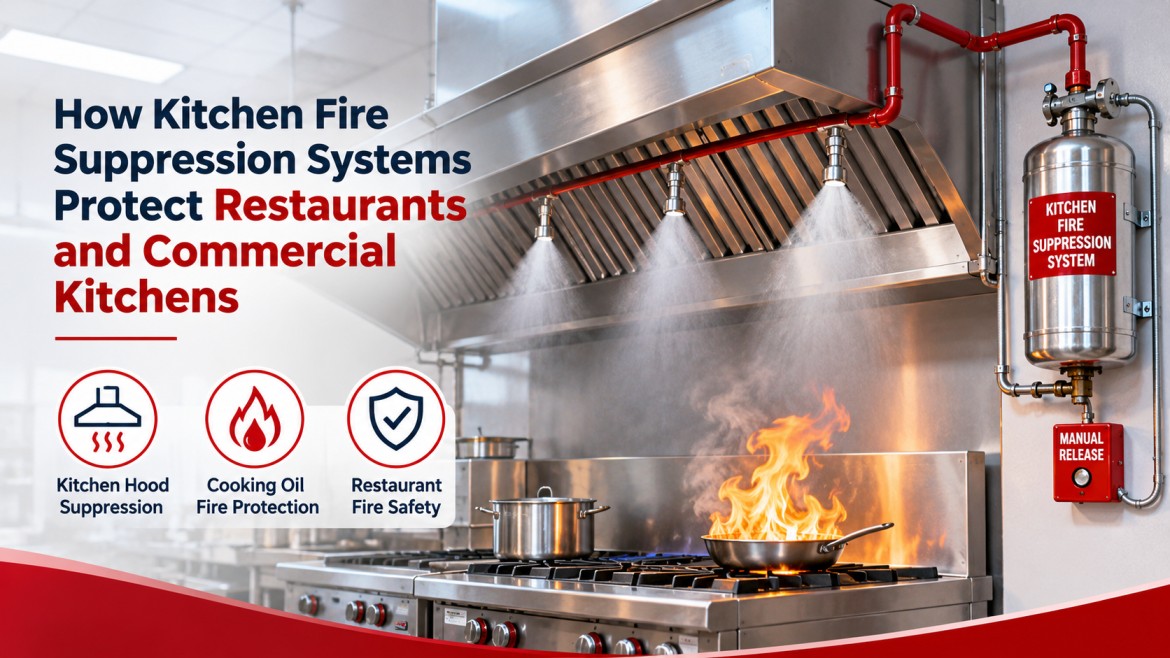
Commercial kitchens handle high temperatures, cooking oils, gas appliances and electrical equipment every day. These conditions increase the risk of fire, especially around cooking ranges, deep fryers, grills and kitchen exhaust hoods. Even a small fire can spread quickly if the kitchen does not have suitable fire protection equipment.
Installing a commercial kitchen fire suppression system in Abu Dhabi helps restaurants, hotels, catering facilities and other food businesses control cooking-related fires. These systems detect fire and release specialised extinguishing agents to suppress flames before they spread to other areas.
Understanding how kitchen fire suppression systems work, where they are installed and why regular maintenance matters can help business owners improve restaurant fire safety and protect their staff, customers and property.
Why Are Commercial Kitchens at High Risk of Fire?
Commercial kitchens contain several potential fire hazards. Cooking appliances operate at high temperatures, while grease and oil can accumulate inside exhaust hoods, filters and ventilation ducts.
Some common causes of commercial kitchen fires include:
Grease and Oil Accumulation
Cooking oils and grease can collect on kitchen surfaces, filters and exhaust ducts. When these deposits come into contact with high temperatures or open flames, they can ignite and allow fire to spread through the ventilation system.
Deep Fryers and Cooking Equipment
Deep fryers use large quantities of heated cooking oil. If the oil overheats or comes into contact with an ignition source, it can cause a serious cooking oil fire.
Gas Leaks and Electrical Problems
Faulty gas connections, damaged electrical wiring and malfunctioning kitchen equipment can also increase fire risks. Without proper detection and protection, these incidents may develop into dangerous situations.
What Is a Commercial Kitchen Fire Suppression System?
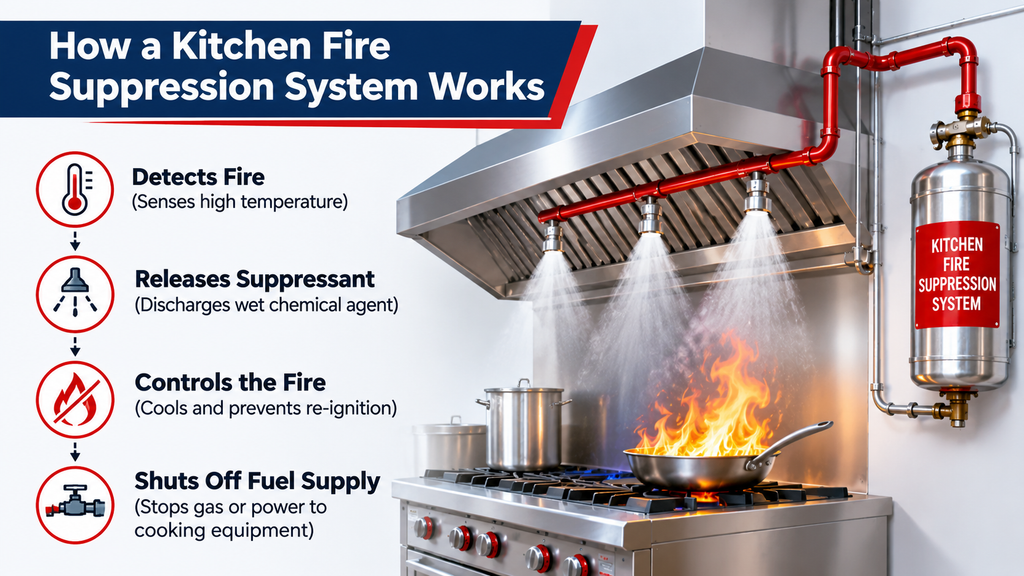
A commercial kitchen fire suppression system is a specialised fire protection solution designed to detect and extinguish fires involving cooking appliances, grease and combustible cooking oils.
Unlike ordinary fire extinguishers, these systems provide automatic protection for designated cooking areas. They commonly use a wet chemical extinguishing agent designed for fires involving cooking oils and fats.
A typical kitchen fire suppression system includes:
- Detection devices: Identify excessive heat or fire conditions.
- Control mechanism: Activates the suppression system when the detection mechanism operates.
- Wet chemical agent: Releases the extinguishing chemical through strategically positioned nozzles.
- Discharge nozzles: Direct the agent towards cooking appliances and other protected areas.
- Fuel shut-off mechanism: Helps stop the gas or electrical supply to protected cooking equipment, where designed.
- Manual activation: Allows authorised personnel to activate the system when required.
The system works automatically when it detects a fire condition, reducing the need for someone to approach the flames.
How Does a Kitchen Hood Suppression System Work?
A kitchen hood suppression system protects cooking appliances and the exhaust hood area, where grease fires can develop and spread.
Understanding its operation helps restaurant owners recognise the importance of proper installation.
Step 1: Fire Detection
Heat-sensitive detection elements monitor the protected cooking area. When temperatures reach the system’s specified activation threshold, the detection mechanism triggers the suppression system.
Step 2: Automatic System Activation
Once activated, the system releases the stored wet chemical extinguishing agent through the connected distribution network.
Step 3: Extinguishing Agent Discharge
The discharge nozzles direct the wet chemical agent towards the cooking appliances, including deep fryers, grills and cooking ranges, as specified in the system design.
Step 4: Fire Suppression
The wet chemical agent reacts with burning cooking oil to create a soapy layer through a process known as saponification. This helps cool the surface and prevent the fire from reigniting.
Step 5: Fuel Supply Shutdown
Where integrated into the system design, the activation mechanism also shuts off the fuel supply to the protected cooking appliances. This helps prevent continued heating and reduces the possibility of fire spreading.
How Do These Systems Protect Against Cooking Oil Fires?
Cooking oil fires require specialised extinguishing methods. Water should never be poured onto burning cooking oil because it can cause the burning oil to splash and spread the fire.
A wet chemical kitchen fire suppression system addresses this risk through two important actions.
Cooling the Burning Oil
The extinguishing agent helps reduce the temperature of the burning cooking oil. Cooling plays an important role in preventing the fire from continuing.
Creating a Protective Layer
The chemical agent reacts with the hot oil to form a foam-like soapy layer. This helps separate the fuel from oxygen and reduces the possibility of re-ignition.
This makes wet chemical suppression systems particularly suitable for protecting deep fryers, commercial cooking ranges and other appliances involving heated cooking oils and fats.
Where Should Commercial Kitchen Fire Suppression Systems Be Installed?
The system should protect the cooking equipment and associated areas where fire risks exist. Its design and nozzle placement depend on the kitchen layout, appliance specifications and applicable fire safety requirements.
Common protection areas include:
Restaurant Kitchens
Restaurants use multiple cooking appliances throughout the day. A properly designed system protects critical cooking areas and supports restaurant fire safety.
Hotel Kitchens
Hotel kitchens often prepare food continuously for restaurants, room service and events. Fire suppression systems help protect these high-demand cooking environments.
Catering Facilities
Large catering operations use industrial cooking equipment to prepare food in bulk. Suitable suppression systems help manage fire risks around fryers, grills and cooking ranges.
Food Processing and Commercial Cooking Units
Food production facilities may operate specialised heating and cooking equipment. Fire protection requirements should reflect the specific hazards and equipment installed.
Benefits of Installing a Commercial Kitchen Fire Suppression System in Abu Dhabi
Investing in a suitable commercial kitchen fire suppression system in Abu Dhabi provides several important safety benefits.
- Automatic fire protection: Detects and suppresses fires without requiring immediate manual intervention.
- Cooking oil fire protection: Uses specialised wet chemical agents designed for cooking oil and fat fires.
- Equipment protection: Helps reduce fire damage to valuable commercial cooking equipment.
- Improved employee safety: Reduces the risks associated with uncontrolled kitchen fires.
- Reduced fire spread: Protects designated cooking areas and helps prevent flames from spreading through the kitchen exhaust system.
- Business continuity: Effective fire protection can reduce the extent of damage and disruption caused by kitchen fires.
However, installation alone does not guarantee safety. Businesses must also maintain their equipment, train employees and follow applicable Abu Dhabi fire safety requirements.
Why Regular Kitchen Fire Suppression System Maintenance Matters
Regular inspection and maintenance ensure that the suppression system remains ready to operate when needed. A poorly maintained system may fail to activate or discharge the extinguishing agent correctly.
Restaurant owners should arrange professional inspections based on the manufacturer’s instructions and applicable authority requirements.
Important maintenance activities include:
Inspecting Detection Components
Technicians should examine heat detectors, detection links and activation mechanisms to identify damage, corrosion or other issues.
Checking Discharge Nozzles
Nozzles should remain clean, correctly positioned and free from grease deposits or obstructions.
Examining the Extinguishing Agent
The system’s chemical agent, storage cylinders and pressure indicators should be checked according to the manufacturer’s specifications.
Testing Fuel Shut-Off Mechanisms
Where provided, technicians should verify that the fuel shut-off mechanism operates correctly when the suppression system activates.
Maintaining Inspection Records
Businesses should retain inspection reports, maintenance records and service documentation to support fire safety management and compliance requirements.
How to Choose the Right Kitchen Fire Suppression System Contractor in Abu Dhabi
Selecting a qualified fire protection contractor is essential for reliable system performance. Restaurant owners should evaluate the contractor’s technical experience, installation practices and maintenance capabilities before making a decision.
Consider the following factors:
- Relevant approvals: Verify the contractor’s current approvals and licensing for the required fire protection work.
- Kitchen-specific experience: Choose a provider experienced in commercial kitchen hood suppression and wet chemical systems.
- Proper system design: Ensure the system matches the kitchen layout, cooking appliances and identified fire hazards.
- Professional installation: Confirm that the contractor follows the manufacturer’s installation requirements and applicable authority standards.
- Maintenance support: Choose a company that can provide regular inspection, servicing and emergency support.
- Documentation: Request installation documents, inspection reports and relevant system certifications.
A reliable contractor should assess the kitchen before recommending a suitable suppression solution.
Conclusion
Commercial kitchens require specialised fire protection because cooking oils, grease deposits, high temperatures and gas appliances create significant fire hazards. A properly designed kitchen hood suppression system helps detect and control fires before they cause extensive damage.
For restaurants, hotels and catering facilities, installing a commercial kitchen fire suppression system in Abu Dhabi is an important step towards improving workplace safety and protecting business operations.
Fire Base provides fire protection solutions designed to support commercial and industrial safety requirements. Contact Fire Base to discuss your kitchen fire suppression requirements, installation and maintenance needs.