

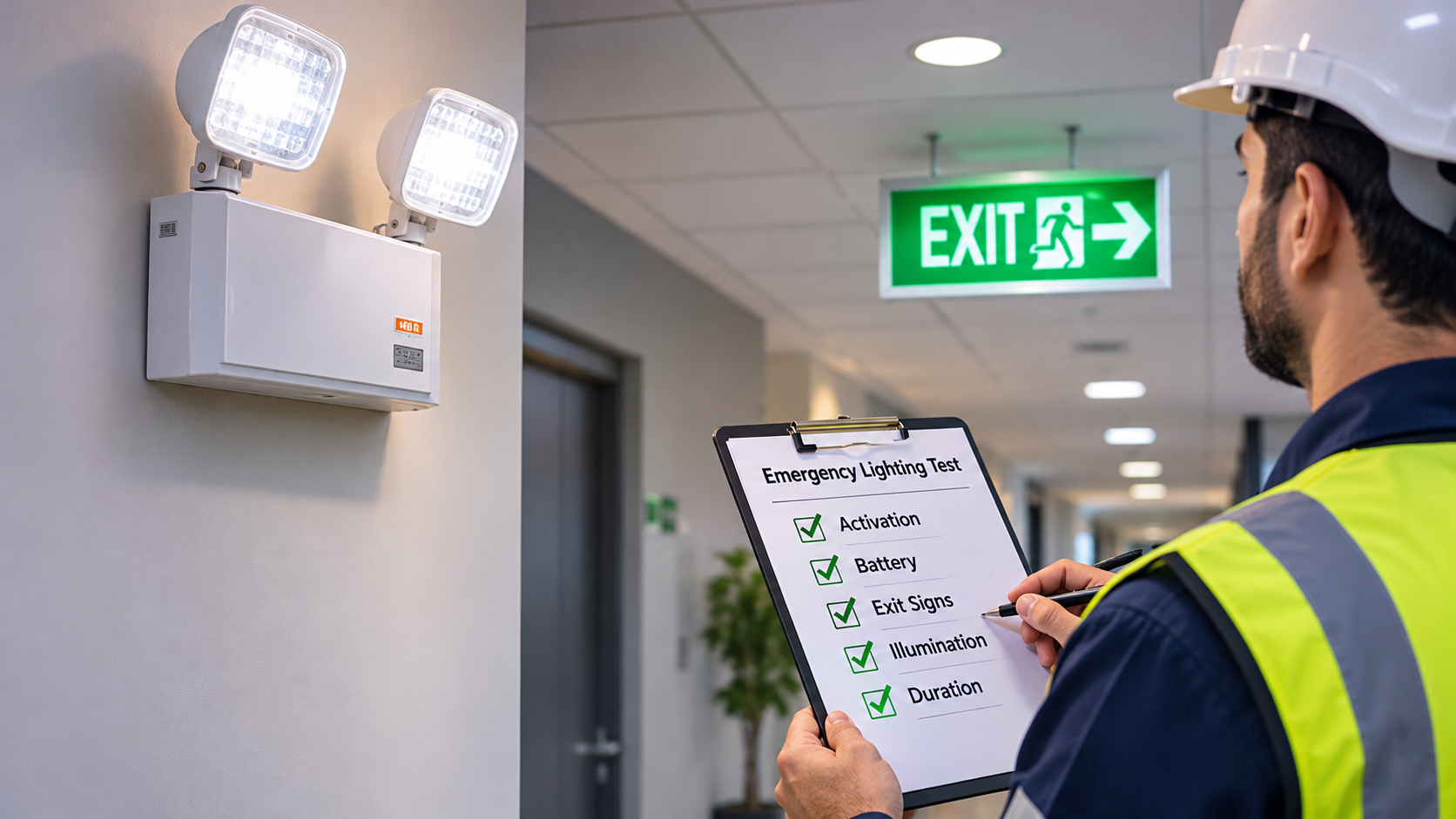
Emergency lighting plays a critical role in building safety, especially during unexpected power failures, fire incidents and evacuation situations. In commercial buildings, hospitals, hotels, warehouses and residential towers, emergency lights help occupants identify escape routes and reach safe areas when normal lighting stops working. However, installing an emergency lighting system is not enough. Facility managers must ensure that every light, battery, indicator and exit sign works correctly when required. Regular inspections and testing help identify faults before they affect building safety. For businesses looking for reliable emergency light system testing in Abu Dhabi, understanding the essential inspection procedures is important for maintaining operational readiness and meeting applicable fire safety requirements.
Why Is Emergency Lighting Testing Important?
Emergency lighting systems remain on standby during normal building operations. Their actual performance becomes critical when the main power supply fails. Without regular testing, several problems can go unnoticed, including weak batteries, damaged lighting units, faulty charging circuits and malfunctioning exit signs.
Routine testing helps facility managers:
- Identify battery performance issues.
- Confirm that emergency lights activate during power interruptions.
- Check whether evacuation routes receive sufficient illumination.
- Identify damaged or defective lighting units.
- Maintain reliable exit sign visibility.
- Support compliance with applicable fire safety requirements.
Regular testing also helps building owners reduce the risk of equipment failure during emergencies.
1. Check Emergency Light Activation During Power Failure
One of the most important tests involves checking whether emergency lights activate automatically when the normal electrical supply fails.
Facility managers should simulate a controlled power interruption using the appropriate testing procedure and verify that the emergency lighting units switch to battery operation.
During this inspection, check:
- Whether lights activate automatically.
- Whether all connected emergency lighting units respond.
- Whether any lights flicker or fail to illuminate.
- Whether the system switches back correctly when normal power returns.
Any delayed activation, inconsistent operation or complete failure requires investigation by a qualified technician.
2. Inspect Emergency Light Battery Performance
Battery performance directly affects how long emergency lights can operate during a power failure.
Over time, rechargeable batteries may lose their capacity due to ageing, repeated charging cycles, temperature conditions and poor maintenance.
Facility managers should inspect:
- Battery charging indicators.
- Battery connections and terminals.
- Signs of swelling, leakage or physical damage.
- Battery condition and replacement history.
- Emergency lighting duration during scheduled tests.
If a lighting unit cannot maintain the required backup duration, its battery or associated charging components may need replacement.
3. Verify Emergency Exit Sign Visibility
Emergency exit signs guide occupants towards designated escape routes. Their visibility becomes particularly important when normal lighting fails.
A properly maintained emergency and exit light system in Abu Dhabi should provide clear directional guidance throughout the building.
During inspections, facility managers should verify:
- Exit signs illuminate correctly during power failure.
- Directional arrows point towards the correct escape routes.
- Signs remain visible from the intended viewing positions.
- No furniture, equipment or decorative elements obstruct visibility.
- Exit signs remain securely installed and undamaged.
Special attention should be given to corridors, staircases, passageways, building entrances and emergency exits.
4. Inspect Emergency Lighting Along Evacuation Routes
Emergency lights must provide suitable illumination along designated escape routes and other areas requiring emergency lighting.
A detailed inspection should cover:
- Internal corridors and passageways.
- Staircases and stairwell landings.
- Emergency exit doors.
- Changes in floor levels and direction.
- Fire equipment locations.
- Electrical and plant rooms where emergency lighting is required.
Facility managers should also check that emergency lighting provides adequate coverage based on the building’s approved design and applicable standards.
5. Test Emergency Lighting Backup Duration
Emergency lighting systems must operate for the required duration during a power failure.
A functional test confirms whether the backup battery can support the lighting load for the specified period.
During duration testing, technicians should:
- Record the starting condition of the battery.
- Simulate the loss of normal power.
- Monitor the emergency lighting operation.
- Check for reduced brightness or premature shutdown.
- Record the final test results.
- Allow the batteries to recharge according to manufacturer recommendations.
The required backup duration depends on the applicable fire safety standards, building requirements and approved system design. Technicians should verify the correct duration rather than applying one requirement to every building.
6. Check Wiring, Connections and Lighting Fixtures
Electrical faults can affect emergency lighting performance even when batteries and lighting units appear functional.
Inspectors should examine wiring connections, charging circuits, switches, protective devices and lighting fixtures.
Look for:
- Loose electrical connections.
- Damaged cables and insulation.
- Corrosion around terminals.
- Cracked or damaged light covers.
- Faulty charging indicators.
- Signs of overheating.
Qualified technicians should investigate and repair electrical defects to prevent recurring failures.
7. Maintain Emergency Lighting Inspection Records
Maintaining proper inspection records helps facility managers monitor system performance and identify recurring problems.
Every test should include relevant details such as:
| Inspection Item | Details to Record |
| Test date | Date of inspection |
| Equipment | Emergency lights and exit signs |
| Activation test | Pass or fail |
| Battery condition | Operational status |
| Duration test | Actual operating duration |
| Defects | Identified faults |
| Corrective action | Repairs or replacements |
| Technician | Inspection details |
These records also help demonstrate maintenance activities during relevant building safety inspections.
How Often Should Emergency Lighting Systems Be Tested?
Testing frequency depends on the applicable regulations, system design, manufacturer instructions and building requirements.
Facility managers should establish a documented testing schedule covering routine functional checks and full-duration testing.
For example, NFPA 101 contains provisions for periodic emergency lighting testing, including a 30-second monthly test and a 90-minute annual test for applicable systems. However, building owners in Abu Dhabi must also follow the requirements applicable to their specific property and approved fire safety arrangements.
Professional inspection services help ensure that testing follows the correct procedures.
Choosing Professional Emergency Lighting Testing Services in Abu Dhabi
Emergency lighting testing requires more than switching off the power and checking whether lights turn on. Technicians must assess battery performance, electrical connections, illumination coverage, exit sign visibility and backup duration.
When selecting a service provider, building owners should consider technical experience, maintenance capabilities, familiarity with applicable UAE fire safety requirements and the ability to provide proper inspection documentation.
Fire Base provides fire safety services, including emergency and exit light system installation and maintenance in Al Ain and Abu Dhabi. Professional inspections help building owners identify equipment faults, maintain emergency lighting performance and support building safety.
Conclusion
Emergency lighting testing is an essential part of building maintenance. Regular checks help facility managers identify battery failures, damaged fixtures, faulty connections and visibility issues before an actual emergency occurs.
Whether managing a commercial tower, warehouse, hospital or residential building, maintaining a properly tested emergency lighting system supports safer evacuation and reliable emergency preparedness.
For professional emergency light system testing in Abu Dhabi and maintenance of an emergency and exit light system in Abu Dhabi, contact Fire Base to discuss your building’s fire safety requirements