

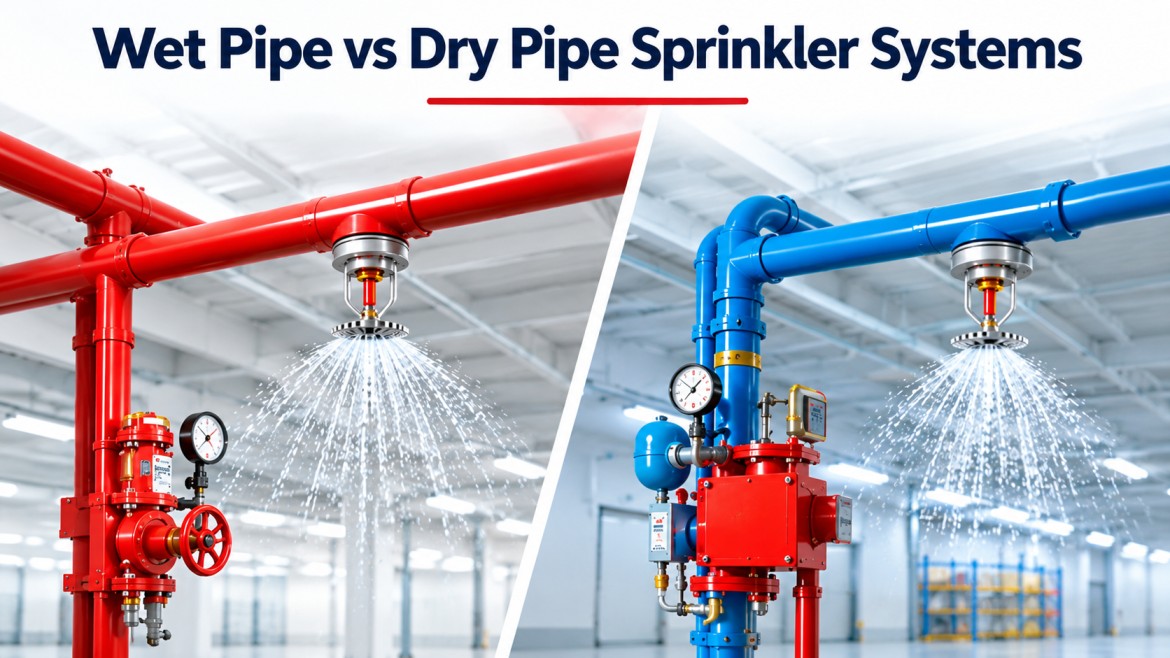
Fire safety is a critical consideration for commercial, residential, and industrial buildings. Installing the right fire sprinkler system helps control fires during their early stages, reduces property damage, and supports occupant safety. However, not all sprinkler systems operate the same way. Two commonly used types are wet pipe and dry pipe sprinkler systems.
Whether you are planning to install a fire sprinkler system in Al Ain or looking for the best fire sprinkler system in Dubai, understanding the differences between these systems will help you make an informed decision.
What Is a Wet Pipe Sprinkler System?
A wet pipe sprinkler system is one of the most widely used automatic fire protection systems. Its pipes remain filled with pressurised water, allowing water to discharge when an individual sprinkler activates due to heat from a fire. Unlike systems that require additional steps before water enters the pipes, wet pipe systems provide a direct water supply to activated sprinklers.
Key Features of Wet Pipe Sprinkler Systems
- Immediate water discharge: Water is already present in the piping network.
- Simple operation: Fewer specialised components make the system relatively straightforward to maintain.
- Cost-effective installation: Wet pipe systems generally have lower installation costs than comparable dry pipe systems.
- Reliable performance: Their relatively simple design reduces the number of components that can malfunction.
- Suitable for indoor applications: Ideal for buildings where pipes remain protected from freezing temperatures.
Wet pipe sprinkler systems are commonly installed in offices, shopping malls, hotels, hospitals, apartment buildings, and other temperature-controlled facilities.
What Is a Dry Pipe Sprinkler System?
A dry pipe sprinkler system operates differently. Instead of keeping water inside the sprinkler pipes, it maintains pressurised air or nitrogen within the piping network. When a sprinkler activates due to heat, the pressure drops, allowing the dry pipe valve to open. Water then enters the pipes and flows towards the activated sprinkler. This design makes dry pipe systems particularly suitable for environments where water-filled pipes could freeze.
Key Features of Dry Pipe Sprinkler Systems
- Freeze protection: Suitable for locations exposed to temperatures that could freeze water inside pipes.
- Pressurised piping: Air or nitrogen keeps the dry pipe valve closed during normal operation.
- Additional operating components: Requires specialised valves and pressure-maintenance equipment.
- Delayed water delivery: Water must travel through the piping after system activation.
- Specialised maintenance: Regular inspections help maintain correct air pressure and valve operation.
Dry pipe systems are frequently used in unheated warehouses, cold storage facilities, loading areas, and other spaces exposed to freezing conditions.
Wet Pipe vs Dry Pipe Sprinkler Systems: Key Differences
Understanding the operational differences between these systems is essential when selecting fire protection equipment.
| Feature | Wet Pipe Sprinkler System | Dry Pipe Sprinkler System |
|---|---|---|
| Pipe contents | Pressurised water | Pressurised air or nitrogen |
| Water discharge | Generally faster | Additional delivery time |
| Installation cost | Generally lower | Generally higher |
| Maintenance | Relatively simple | More complex |
| Freezing conditions | Requires protection against freezing | Designed for freezing-risk areas |
| Common applications | Offices, hotels, malls | Unheated warehouses, cold storage |
Both systems provide automatic fire protection, but their suitability depends on building conditions, environmental exposure, and applicable fire safety requirements.
Which Fire Sprinkler System Is Suitable for Buildings in Al Ain?
Selecting a fire sprinkler system in Al Ain requires careful consideration of the region’s environmental conditions and the building’s intended use. Al Ain experiences high temperatures, particularly during summer. Therefore, freezing conditions are generally not the primary concern for most buildings. Wet pipe sprinkler systems are often a practical choice for temperature-controlled commercial and residential properties because they provide straightforward operation and efficient water delivery.
However, installation decisions should consider several factors:
- Building occupancy and fire hazard classification
- Available water pressure and supply capacity
- Building height and floor layout
- Pipe routing and exposure to extreme temperatures
- Local Civil Defence requirements and applicable fire protection standards
Professional fire protection contractors can assess these factors and recommend an appropriate system for the property.
Choosing the Best Fire Sprinkler System in Dubai
Property owners searching for the best fire sprinkler system in Dubai should focus on system suitability rather than choosing equipment based on cost alone. Dubai’s commercial developments, residential towers, industrial facilities, and warehouses have different fire protection requirements. For most conventional indoor applications, wet pipe systems offer practical advantages because they provide direct water delivery and comparatively simple maintenance. Dry pipe systems may be appropriate for specialised environments where freezing conditions exist, including certain cold storage applications. The final selection should consider building design, fire risk assessments, applicable UAE Fire and Life Safety Code requirements, and relevant NFPA standards.
Why Professional Installation and Maintenance Matter
Even a properly selected sprinkler system may fail to perform as intended without correct installation, testing, and maintenance. Professional fire protection services help ensure that sprinkler heads, valves, piping networks, and water supplies function correctly. Routine maintenance typically includes checking control valves, inspecting sprinkler heads, monitoring pressure, testing alarm connections, and identifying leakage or corrosion. Building owners should also ensure that inspections and testing follow applicable standards and Civil Defence requirements. Working with qualified fire protection specialists helps maintain system readiness and supports long-term building safety.
Conclusion
Wet pipe and dry pipe sprinkler systems serve the same fundamental purpose: controlling fires and reducing potential damage. However, their operating mechanisms and applications differ. Wet pipe sprinkler systems are generally suitable for buildings where water-filled pipes can be maintained without freezing, while dry pipe systems are designed for environments where freezing presents a significant risk. For property owners planning a fire sprinkler system in Al Ain, selecting the right equipment requires professional evaluation of building conditions and fire safety requirements. Fire Base provides fire protection services in Al Ain, including fire sprinkler system installation, inspection, and maintenance. Contact Fire Base to discuss your building’s fire protection requirements and identify a suitable sprinkler solution.