
A fire protection system plays a critical role in protecting buildings, occupants, equipment, and business operations. However, installing fire safety equipment does not automatically guarantee that the system will perform correctly during an emergency. Every component must undergo proper inspection, testing, and commissioning before the building is handed over to its owner or facility management team.
Fire system testing and commissioning in Abu Dhabi involves a series of technical checks to verify that fire protection equipment operates according to the approved design, applicable safety requirements, and manufacturer specifications. This process helps identify installation errors, equipment faults, and communication problems before the system becomes operational.
For building owners, contractors, developers, and facility managers, understanding this process is essential to ensuring reliable fire protection.
1. Initial Inspection of Installed Fire Safety Equipment
The commissioning process begins with a detailed inspection of the installed fire protection equipment. Technicians check whether the equipment matches the approved drawings, specifications, and project requirements.
The inspection generally covers:
- Fire alarm control panels and detection devices.
- Smoke detectors, heat detectors, and manual call points.
- Fire sprinkler heads and associated pipework.
- Fire pumps and control panels.
- Fire hydrants, landing valves, and hose reels.
- Fire suppression equipment.
- Emergency lighting and exit signs.
Technicians also examine equipment positioning, accessibility, installation quality, electrical connections, and pipework arrangements. This initial inspection helps identify visible defects before functional testing begins.
2. Fire Alarm Commissioning and Detection Testing
Fire alarm commissioning is one of the most important stages of the handover process. A fire alarm system must detect potential fire conditions, communicate signals to the control panel, and activate the required notification devices. During fire alarm commissioning, technicians test individual detection devices and verify their communication with the fire alarm control panel.
Common testing activities include:
- Testing smoke and heat detectors.
- Activating manual call points.
- Checking alarm sounders and visual notification devices.
- Verifying zone identification and device addresses.
- Testing fault and supervisory signals.
- Checking communication between control panels.
- Verifying integration with other building systems where applicable.
For example, when a smoke detector activates, the control panel should identify the correct device or zone and initiate the programmed response. Technicians also check whether connected systems, such as fire alarm interfaces, lift controls, ventilation systems, and fire suppression equipment, respond according to the approved cause-and-effect matrix. Proper testing helps ensure that occupants receive timely warnings and that connected safety systems operate as intended.
3. Sprinkler Flow Testing and Water Supply Verification
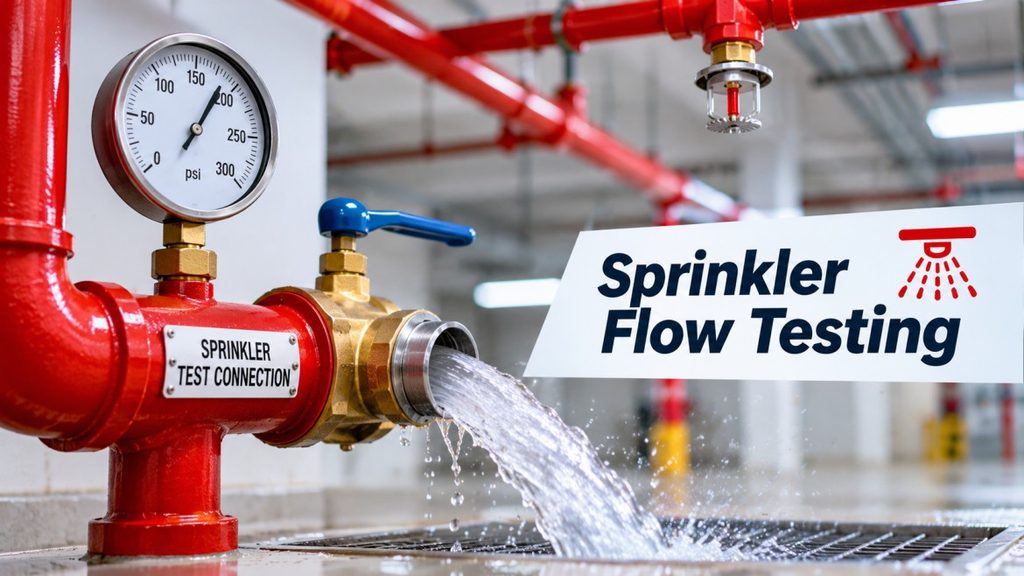
Automatic sprinkler systems require an adequate water supply and sufficient pressure to operate effectively during a fire emergency.
Sprinkler flow testing verifies whether the installed system can deliver the required water flow under the specified operating conditions.
During testing, technicians examine:
- Water supply availability and pressure.
- Sprinkler control valves and their positions.
- Alarm valve operation.
- Flow switch activation.
- Water flow through designated test connections.
- Pressure readings at relevant points.
- Drainage arrangements and system leakage.
The test also helps verify whether the water flow activates the associated alarm signals.
Sprinkler testing must follow the approved design criteria and relevant testing procedures. Any pressure loss, valve malfunction, leakage, or abnormal flow condition should be investigated and corrected before handover.
4. Fire Pump Performance Testing
Fire pumps provide the necessary water pressure and flow to support fire protection systems during emergency conditions. Their performance directly affects the reliability of sprinkler networks, hydrant systems, and other connected water-based fire protection installations.
Fire pump performance testing checks whether the installed pump assembly can deliver the required pressure and flow.
The testing process generally includes:
- Checking pump alignment and installation.
- Inspecting electrical connections and control panels.
- Verifying automatic and manual starting functions.
- Checking the operation of the jockey pump.
- Measuring pump discharge and suction pressure.
- Recording flow and pressure at specified test points.
- Checking the operation of standby pumps.
- Inspecting abnormal vibration, noise, and leakage.
Performance testing may include readings at churn, rated flow, and the specified overload flow condition, where required by the applicable design and standards.
The recorded results are compared against the approved pump performance requirements and manufacturer data.
If the pump fails to achieve the required performance, technicians must identify the cause and complete the necessary corrective work before final approval.
5. Testing Emergency and Exit Lighting Systems
Emergency lighting and exit signs help occupants identify safe evacuation routes during power failures and fire emergencies.
During commissioning, technicians verify that emergency lighting operates automatically when the normal electrical supply is interrupted.
The checks may include:
- Testing emergency light activation.
- Verifying exit sign visibility.
- Checking battery backup operation.
- Inspecting illumination along escape routes.
- Testing changeover from normal to emergency power.
- Checking the required operating duration.
These tests help confirm that occupants can identify exit routes and evacuation pathways during an emergency.
6. Integrated System Testing
Individual equipment testing is important, but fire protection systems must also work together.
Integrated system testing verifies whether different fire safety components communicate and respond correctly when a fire alarm condition occurs.
For example, when a fire alarm activates, the approved sequence may require:
- Audible and visual alarms to operate.
- Air-conditioning systems to shut down.
- Smoke control systems to activate.
- Fire-rated doors to release or close as designed.
- Lifts to follow the approved fire recall sequence.
- Fire suppression interfaces to respond where applicable.
Technicians verify these operations against the approved cause-and-effect matrix.
This stage is particularly important in commercial buildings, hospitals, warehouses, hotels, and industrial facilities where multiple safety systems operate simultaneously.
7. Documentation and Final Handover
After completing the required testing and commissioning activities, the contractor prepares the necessary documentation for the client, consultant, and relevant authorities.
Typical handover documents include:
- Testing and commissioning reports.
- Fire alarm testing records.
- Sprinkler flow test results.
- Fire pump performance reports.
- Equipment inspection records.
- Approved as-built drawings.
- Operation and maintenance manuals.
- Equipment warranties and certificates.
- Training records, where applicable.
Any outstanding defects identified during testing should be documented and rectified before final acceptance. The contractor may also provide training to facility management personnel on system operation, routine inspections, alarm response, and maintenance requirements. The final handover process must follow the applicable project specifications and authority approval requirements.
Why Professional Fire System Testing and Commissioning Matters
Skipping or rushing commissioning can leave serious gaps in a building’s fire protection arrangements. A detector may fail to communicate with the control panel, a sprinkler valve may remain incorrectly positioned, or a fire pump may not deliver the required performance.
Professional fire system testing and commissioning in Abu Dhabi helps identify these problems before the building becomes operational.
For developers and facility managers, proper commissioning offers several benefits:
- Verifies the functionality of installed fire safety equipment.
- Identifies installation defects before handover.
- Confirms coordination between interconnected systems.
- Provides documented evidence of testing.
- Supports applicable fire safety compliance requirements.
- Helps reduce the risk of unexpected equipment failures.
Choose Fire Base for Fire System Testing and Commissioning in Abu Dhabi
Fire Base provides fire protection solutions in Al Ain and across Abu Dhabi, supporting businesses and property owners with reliable fire safety services. Our services cover fire alarm systems, fire fighting systems, sprinkler systems, fire hydrant systems, fire pump systems, fire suppression systems, emergency and exit lighting systems, and preventive maintenance. Whether you are completing a new construction project or preparing an existing facility for inspection, proper testing and commissioning are essential steps towards operational readiness.
Contact Fire Base Installation and Safety Equipments for professional fire system testing and commissioning services in Abu Dhabi and ensure your building’s fire protection systems are inspected, tested, and prepared for handover.