
A fire alarm control panel is the central component of a building’s fire detection and alarm system. It receives signals from connected smoke detectors, heat detectors, manual call points, and other devices, then activates alarms or other programmed responses when necessary. If the panel develops a fault, it may affect the system’s ability to detect a fire, alert occupants, or communicate with connected equipment.
Regular fire alarm panel maintenance in Abu Dhabi helps building owners, facility managers, and businesses identify faults early and keep their fire protection systems in working condition. From offices and residential towers to warehouses and commercial facilities, routine inspections support fire safety and help meet applicable maintenance requirements.
Businesses in Abu Dhabi, including Al Ain, should establish a planned maintenance schedule that covers panel inspections, detector fault checks, alarm testing, and timely repairs.
1. Why Is Regular Fire Alarm Panel Maintenance Important?
Fire alarm panels continuously monitor connected devices and circuits for alarm conditions, faults, and other system events. When a problem occurs, the panel may display a warning or activate a fault indicator.
Without regular maintenance, issues such as damaged wiring, faulty detectors, battery deterioration, or communication failures may remain unresolved. These problems can affect system reliability and create unnecessary disruption through repeated fault alerts or unwanted alarms.
A planned maintenance programme helps technicians identify problems, verify system operation, review event logs, and confirm that connected components function as intended. It also allows facility managers to maintain accurate service records and organise repairs before minor defects become more serious.
2. Common Fire Alarm Panel Faults
Understanding common panel faults helps facility managers recognise when professional attention is necessary.
Power Supply Failure
Fire alarm panels typically rely on a primary electrical supply and standby batteries. A power supply fault may occur because of an interrupted mains supply, a damaged connection, a defective power supply unit, or a battery problem.
Technicians should check the panel’s power indicators, supply connections, battery condition, and charging arrangements according to the manufacturer’s instructions. They should also confirm that standby power operates as required.
Detector and Circuit Faults
A panel may display a detector fault when a smoke detector, heat detector, manual call point, or associated circuit develops a problem. Causes can include damaged wiring, loose connections, a defective device, or contamination affecting a detector.
During detector fault checks, technicians should identify the affected zone or device, inspect the relevant components, and carry out the required tests. They should resolve the underlying issue rather than repeatedly resetting the panel without investigation.
Communication Failures
Some systems communicate with remote monitoring services, other fire alarm panels, or building management systems. A communication fault may indicate a network problem, damaged wiring, or an issue with the connected interface.
Maintenance personnel should inspect the affected connection and verify communication using the system’s approved testing procedures.
Earth Faults and Wiring Problems
An earth fault may indicate an unintended electrical connection between a circuit conductor and earth. Damaged cables, moisture ingress, or deteriorated insulation can contribute to this condition.
Qualified technicians should investigate the fault using suitable test equipment and the manufacturer’s procedures. Unauthorised repairs can introduce additional risks or interfere with the fire alarm system.
3. Routine Checks for Fire Alarm Control Panels
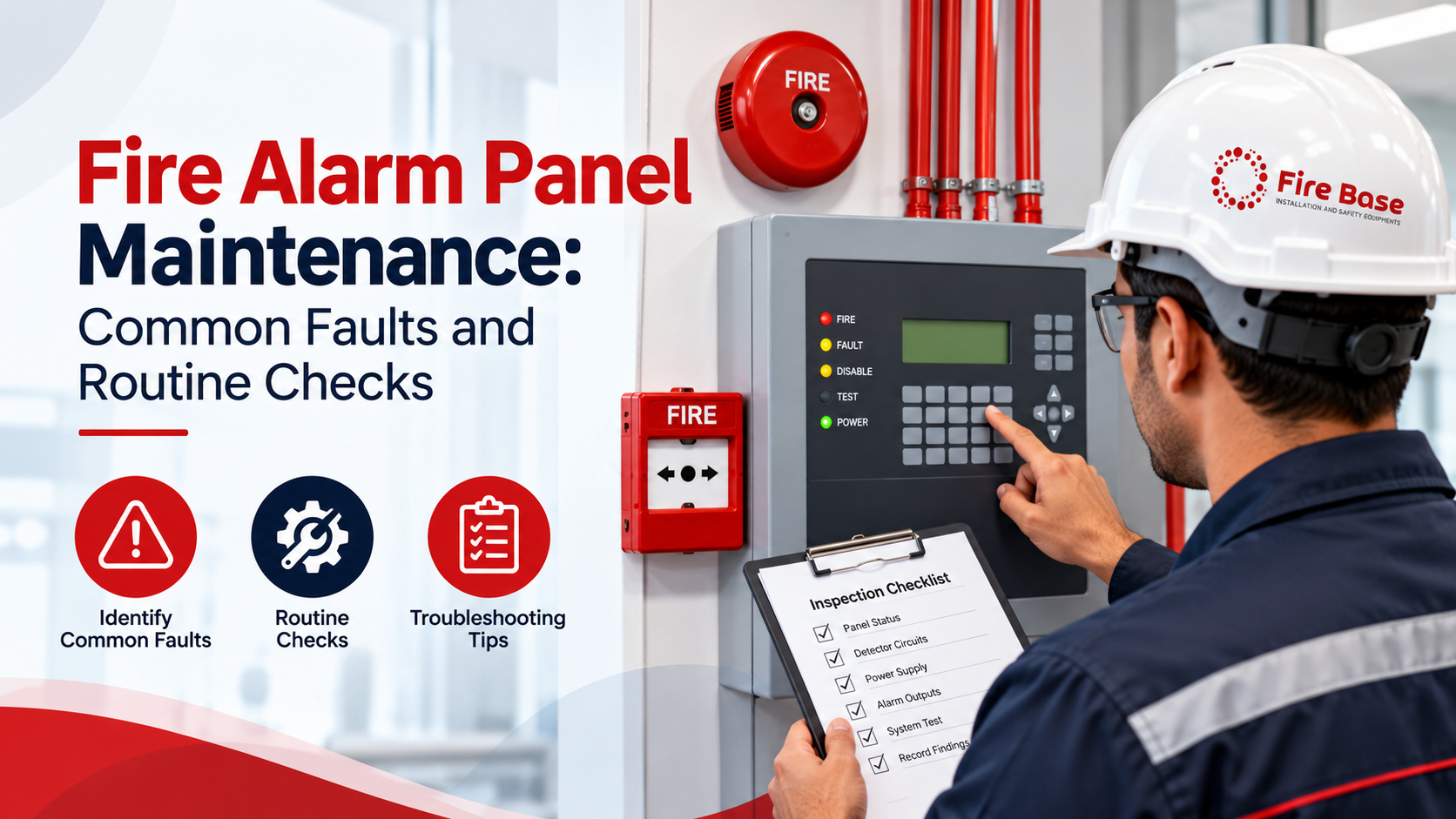
A structured maintenance checklist helps technicians inspect the panel consistently and record any defects.
Routine checks should include:
- Panel status: Review normal, alarm, supervisory, and fault indicators, where applicable.
- Event history: Check recent alarms, recurring faults, and reset records.
- Power supply: Inspect the primary supply, standby batteries, and charging system.
- Device communication: Verify the status of connected detectors, manual call points, and other devices.
- Wiring and connections: Inspect accessible components for visible damage or loose connections.
- Panel condition: Check the enclosure, display, controls, labels, and ventilation requirements.
- Functional testing: Carry out the required tests to confirm that the panel receives signals and activates the intended outputs.
- Documentation: Record findings, corrective work, test results, and outstanding defects.
The required inspection frequency depends on the system design, manufacturer’s instructions, applicable standards, and local authority requirements. A qualified fire alarm maintenance provider should establish the appropriate schedule.
4. Fire Alarm System Troubleshooting
Effective fire alarm system troubleshooting begins with identifying the exact fault message and affected device or circuit. Technicians should consult the panel’s event log and system documentation before carrying out diagnostic tests.
For example, a recurring detector fault may require inspection of the detector, its wiring, and its connection to the panel. A battery warning may require testing the battery and charging circuit. A communication error may require checks of the connected network or interface.
After completing repairs, technicians should conduct the necessary functional tests to confirm that the fault has been resolved and that the affected system components operate correctly.
Facility managers should never ignore warning indicators, repeatedly reset unexplained faults, or disable essential fire protection functions to stop nuisance alerts. If a fault affects system protection, the building’s responsible personnel should arrange appropriate interim safety measures and urgent repairs.
5. Fire Alarm Panel Maintenance in Abu Dhabi and Al Ain
Commercial and residential properties across Abu Dhabi and Al Ain require reliable fire detection and alarm systems. Offices, hotels, shopping centres, schools, industrial facilities, and residential buildings may have different system configurations and maintenance needs.
Building owners and facility managers should work with competent fire safety maintenance providers who understand the installed equipment and relevant local requirements. Before appointing a provider, verify any applicable approval or licensing requirements and confirm that the provider can maintain the specific panel brand and system type.
Maintenance planning should also account for the building’s occupancy, operating hours, evacuation procedures, and any connected fire suppression or monitoring systems.
For properties in Al Ain, facility managers should confirm the requirements applicable to their building and coordinate with the relevant authorities and building management team where necessary.
6. Maintain Accurate Service Records
Maintenance records help facility managers track recurring problems and demonstrate that required servicing has taken place.
Each service report should identify the panel location, equipment details, inspection date, reported faults, diagnostic findings, repairs completed, test results, and outstanding recommendations.
A digital maintenance register can help teams schedule future inspections and monitor unresolved issues across multiple buildings or locations.
Records should also document any temporary impairment of the fire alarm system, the safety measures implemented, and confirmation that normal protection has been restored after repairs.
Conclusion
Fire alarm panel maintenance plays an essential role in keeping fire detection systems reliable. Regular inspections, detector fault checks, power supply testing, and professional troubleshooting help identify problems before they compromise system performance.
For property owners and facility managers seeking fire alarm panel maintenance in Abu Dhabi and Al Ain, a planned maintenance programme should cover the control panel, connected devices, standby power, communication interfaces, functional testing, and service documentation.
By addressing faults promptly and working with qualified maintenance professionals, businesses can support occupant safety, reduce avoidable system downtime, and maintain their fire protection systems in accordance with applicable requirements.