
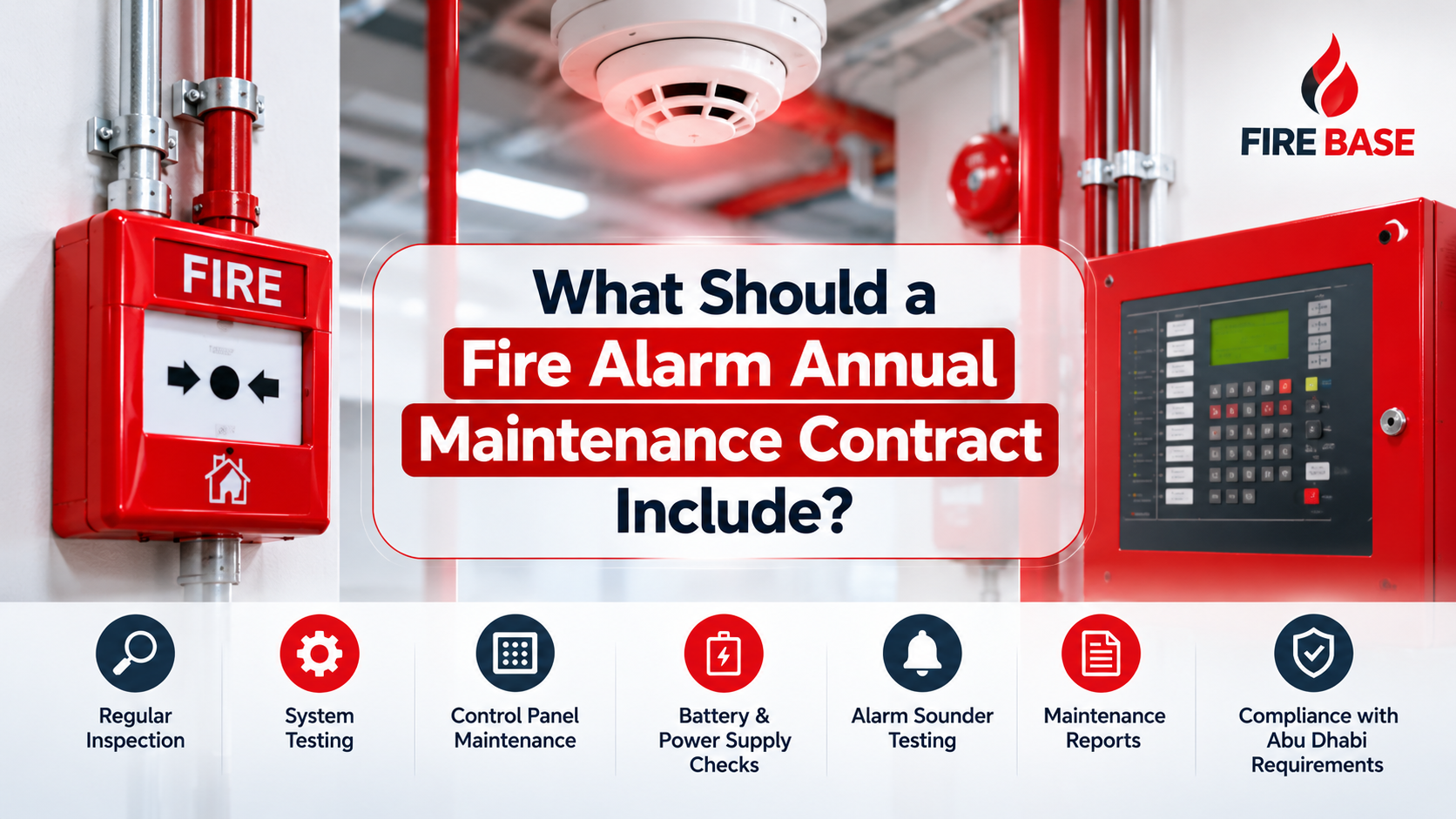
Fire alarm systems play a vital role in protecting people, buildings, equipment, and business operations. However, installing a fire alarm system is only the first step. Regular inspection, testing, and maintenance are essential to ensure the system works correctly during an emergency. A fire alarm annual maintenance contract (AMC) helps property owners and facility managers keep their fire detection and alarm systems in good working condition throughout the year.
For commercial buildings, residential properties, warehouses, offices, and industrial facilities in Abu Dhabi, a structured maintenance contract supports fire safety and helps identify potential issues before they become serious problems. But what exactly should a fire alarm AMC include? Here are the key services and responsibilities to look for when choosing a maintenance provider.
Key Services For Fire Alarm Annual Maintenance
1. Regular Fire Alarm System Inspection
A comprehensive fire alarm maintenance contract should include scheduled inspections of the entire system. These inspections help identify damaged components, loose connections, faulty devices, and other issues that could affect system performance.
During an inspection, technicians should check the main fire alarm control panel, smoke detectors, heat detectors, manual call points, alarm sounders, visual indicators, and associated wiring. They should also review the system for visible damage, signs of deterioration, and any changes that could interfere with the operation of fire detection devices.
The inspection frequency should follow the applicable fire safety requirements, manufacturer recommendations, and the property’s specific risk profile.
2. Testing of Fire Detection Devices
Testing is an essential part of professional fire alarm servicing. A detector may appear normal but fail to respond when exposed to the conditions it is designed to detect.
A fire alarm AMC should specify how technicians will test smoke detectors, heat detectors, manual call points, and other connected devices. Testing should confirm that the devices communicate correctly with the control panel and trigger the appropriate alarm response.
Technicians should use suitable testing methods and equipment to avoid damaging sensitive components. They should also record the results and identify devices that require cleaning, adjustment, repair, or replacement.
3. Fire Alarm Control Panel Maintenance
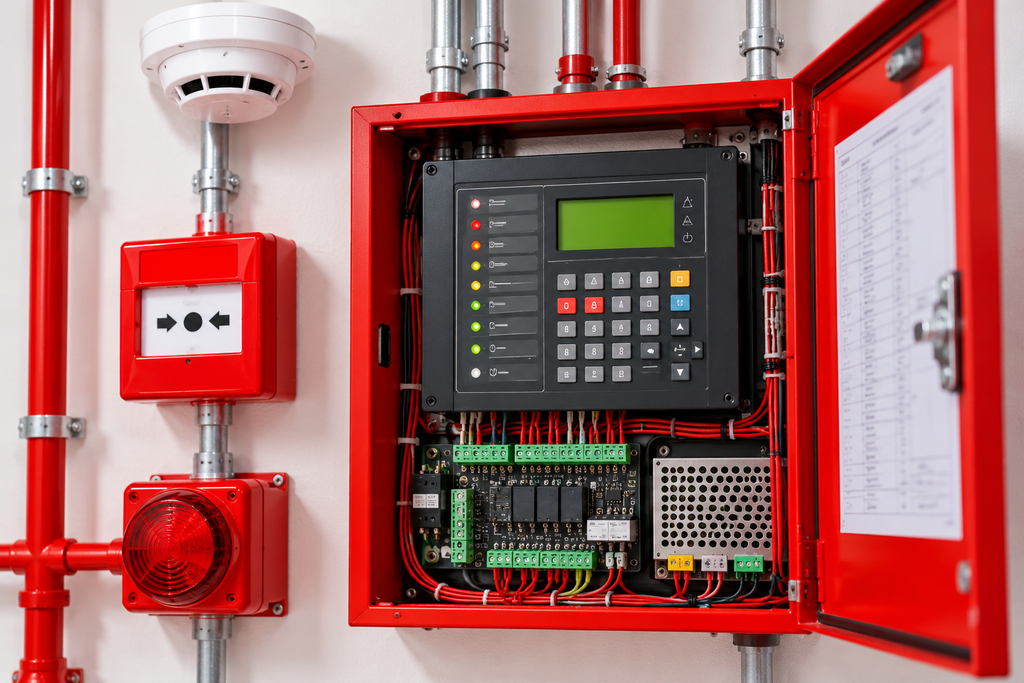
The fire alarm control panel acts as the central monitoring point for the system. It receives signals from detection devices and displays alarm, fault, and other system conditions.
A fire alarm maintenance contract should include checks of the control panel’s display, indicators, controls, fault notifications, and communication with connected devices. Technicians should also review any recorded faults and confirm that the panel operates according to the manufacturer’s specifications.
Where applicable, the maintenance team should check the operation of connected interfaces, including those linked to building management systems, fire protection equipment, or other emergency systems. Any integration testing must follow the approved system design and applicable safety procedures.
4. Backup Battery and Power Supply Checks
Fire alarm systems need a reliable power supply to remain operational. If the main electrical supply fails, the backup batteries must provide power for the required period.
A fire alarm AMC should include an assessment of the primary power supply, backup batteries, charging arrangements, and associated connections. Technicians should look for damaged cables, corrosion, battery deterioration, and other warning signs.
Battery condition and performance should be evaluated using suitable testing procedures. If a battery cannot meet the system’s requirements, the maintenance provider should recommend replacement with a compatible unit.
5. Alarm Sounder and Notification Testing
An alarm must alert occupants clearly when a fire-related event occurs. A maintenance contract should therefore cover the testing of audible and visual alarm devices installed throughout the property.
Technicians should verify that sounders, bells, horns, and visual notification devices operate as intended. They should also check whether alarms can be heard or seen in the relevant occupied areas, taking the building layout and applicable requirements into account.
Where the system connects to emergency communication or evacuation arrangements, the contract should clarify which tests and inspections are included.
6. Fault Identification and Corrective Maintenance
Routine inspections can reveal faults that need immediate attention. These may include detector failures, damaged wiring, communication errors, battery problems, or persistent fault indications on the control panel.
A good fire alarm maintenance contract should explain how the provider handles reported faults and corrective work. It should specify response arrangements, troubleshooting procedures, labour charges, and whether spare parts are included in the annual fee.
Property managers should confirm whether repairs are covered under the AMC or charged separately. The agreement should also explain how the provider documents completed repairs and verifies that the system has returned to normal operation.
7. Maintenance Reports and Documentation
Accurate records help property managers monitor system performance and demonstrate that maintenance activities have taken place.
After each scheduled visit, the service provider should supply a maintenance report covering the inspection date, devices tested, test results, identified faults, corrective actions, and outstanding recommendations.
The contract should also explain how the provider maintains service records and communicates unresolved issues. These documents can support internal safety reviews, facility management planning, and relevant inspections by authorities.
8. Compliance with Abu Dhabi Fire Safety Requirements
Businesses and property owners in Abu Dhabi should choose a maintenance provider familiar with the applicable UAE fire and life safety requirements and relevant Abu Dhabi Civil Defence (ADCD) procedures.
The contract should clearly identify the provider’s responsibilities for inspection, maintenance records, reporting, and any required coordination with the relevant authority. Where the property requires an appropriately approved or licensed service provider, the owner should verify the provider’s current credentials and the scope of its authorization.
An AMC alone does not guarantee regulatory compliance. The building owner or responsible facility manager must ensure that the system, maintenance arrangements, and supporting documentation meet the requirements applicable to the property.
9. Emergency Support and Preventive Maintenance Schedule
A reliable maintenance agreement should define the service provider’s availability when a fault occurs outside a planned visit. Check whether the contract includes emergency call-outs, response-time commitments, troubleshooting support, and additional charges.
The agreement should also provide a clear preventive maintenance schedule. The frequency of visits and tests should reflect applicable requirements, manufacturer guidance, system complexity, and the risks associated with the building.
Preventive maintenance helps identify developing problems early and reduces the likelihood of unexpected system failures.
How to Choose the Right Fire Alarm AMC Provider
Before signing a contract, compare providers based on their relevant experience, technical capabilities, service scope, response arrangements, reporting standards, and applicable approvals. Ask for a written list of included services, exclusions, spare-parts charges, emergency support terms, and renewal conditions. Make sure the provider understands the type of fire alarm system installed at your property and can maintain it according to the manufacturer’s instructions. The lowest annual fee may not offer the best value if important inspections, repairs, or emergency services fall outside the agreement.
Conclusion
A well-planned fire alarm annual maintenance contract should cover routine inspections, detector testing, control panel checks, battery assessments, alarm notification testing, fault resolution, and detailed maintenance reports. It should also establish clear responsibilities for emergency support and compliance with applicable fire safety requirements.
For property owners and facility managers in Abu Dhabi, choosing a qualified fire alarm maintenance provider in Abu Dhabi helps maintain reliable fire detection and alarm systems while supporting safer building operations. Review the contract carefully, confirm exactly what it covers, and keep maintenance records up to date to ensure your fire alarm system receives the attention it needs throughout the year.