
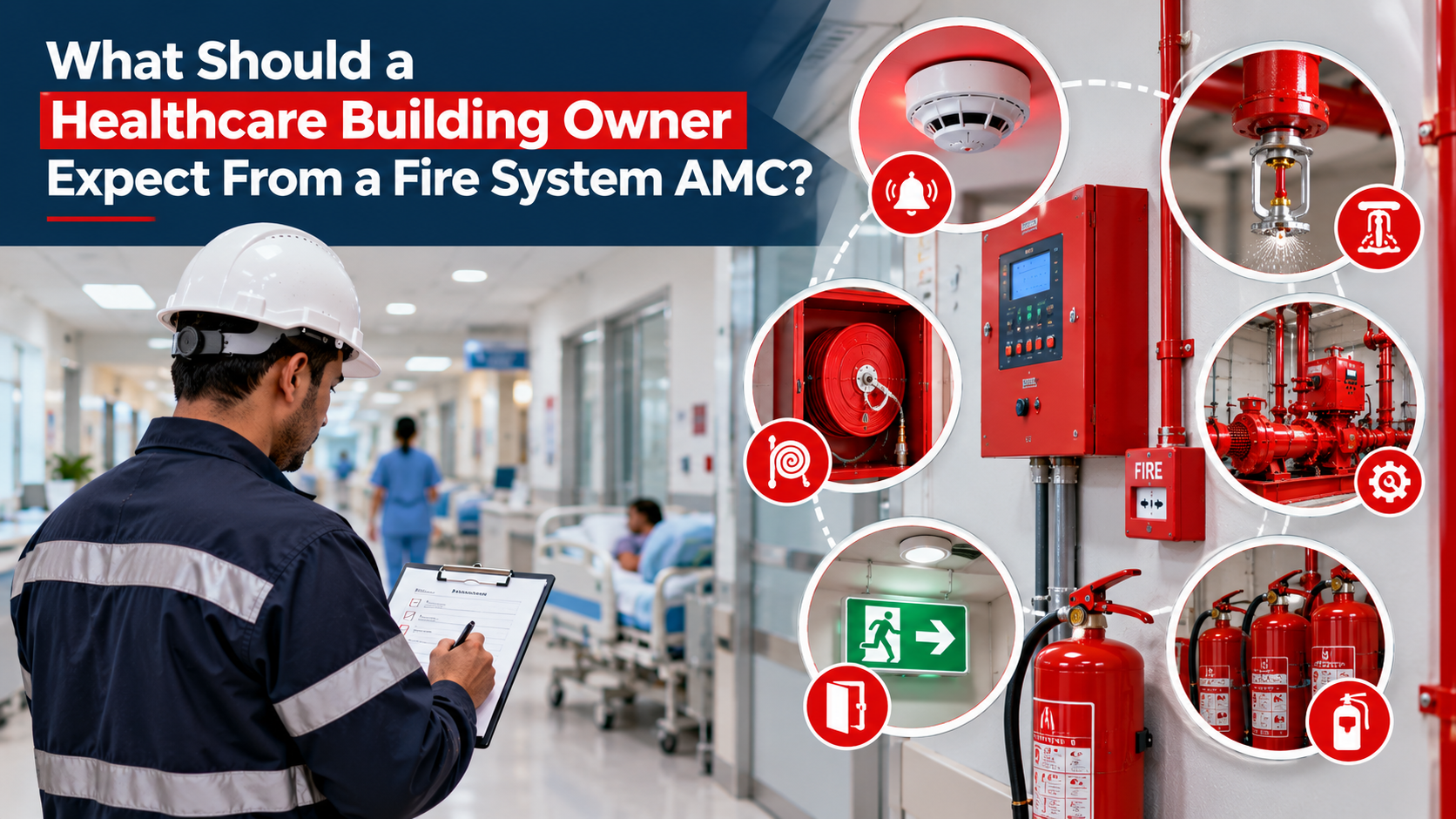
Healthcare buildings require reliable fire protection systems to safeguard patients, medical staff, visitors, and critical equipment. Hospitals, clinics, diagnostic centres, and other healthcare facilities operate with unique safety challenges because many occupants may have limited mobility or require assistance during an emergency. Regular inspections and preventive maintenance help ensure that fire protection equipment remains ready when needed.
A fire safety AMC Al Ain provides a structured approach to maintaining fire protection systems throughout the year. For healthcare building owners, an Annual Maintenance Contract (AMC) should cover scheduled inspections, equipment testing, preventive maintenance, fault identification, and corrective action according to the agreed scope and applicable fire safety requirements.
Understanding what an AMC includes helps healthcare facility managers make informed decisions and maintain a safer environment.
Why Is a Fire System AMC Important for Healthcare Buildings?
Healthcare facilities often operate around the clock. Fire protection systems must remain functional even during busy periods, equipment upgrades, or routine building maintenance.
A properly planned AMC helps healthcare building owners:
- Identify faults before they affect system performance.
- Maintain fire alarms and detection equipment.
- Check fire pumps, sprinklers, and hydrant systems.
- Verify emergency lighting and exit signs.
- Maintain service records and inspection reports.
- Plan repairs and replacement of damaged components.
- Support compliance with applicable fire safety requirements.
Regular maintenance also helps facility managers coordinate safety activities without unnecessarily disrupting patient care.
1. Inspection of Fire Alarm and Detection Systems
Fire alarm systems play a critical role in identifying potential fire incidents and alerting occupants. In healthcare facilities, early warning is especially important because some patients may need additional assistance to evacuate.
A fire system AMC should specify the inspection and testing of relevant components, including:
- Smoke and heat detectors.
- Manual call points.
- Alarm sounders and visual indicators.
- Fire alarm control panels.
- Backup batteries and power supplies.
- Wiring and associated communication devices.
Technicians should check for fault indications, damaged devices, and other issues that could affect system performance. Testing should follow the manufacturer’s instructions and applicable requirements, with suitable arrangements to prevent unnecessary alarm disruption.
2. Maintenance of Fire Pumps and Water-Based Systems
Fire pumps, sprinklers, and hydrants provide essential firefighting support in facilities where these systems are installed. Their performance depends on suitable maintenance and regular testing.
A comprehensive AMC should define the maintenance activities for the installed equipment, including:
- Fire pump inspection and operational testing.
- Pump controller and electrical connection checks.
- Inspection of relevant valves and pressure conditions.
- Sprinkler heads and pipework inspections.
- Fire hydrant accessibility and visible condition checks.
- Identification of leaks, corrosion, or damaged components.
Technicians should document faults and recommend corrective action. Any testing that could affect water supply or patient care should be coordinated with the facility management team.
3. Inspection of Fire Extinguishers and Suppression Systems
Fire extinguishers provide an initial firefighting option for suitable fire types, while specialised suppression systems may protect electrical rooms, kitchens, laboratories, or other designated areas.
A healthcare facility’s AMC should identify the installed equipment and define the required inspection and servicing schedule.
Maintenance activities may include checking extinguisher accessibility, physical condition, pressure indicators where applicable, seals, labels, and service status. Specialised suppression systems may require checks of their control panels, detection devices, cylinders, pipework, and activation mechanisms.
Any discharged, damaged, expired, or otherwise unsuitable equipment should receive appropriate attention according to applicable requirements.
4. Emergency Lighting and Exit Sign Maintenance
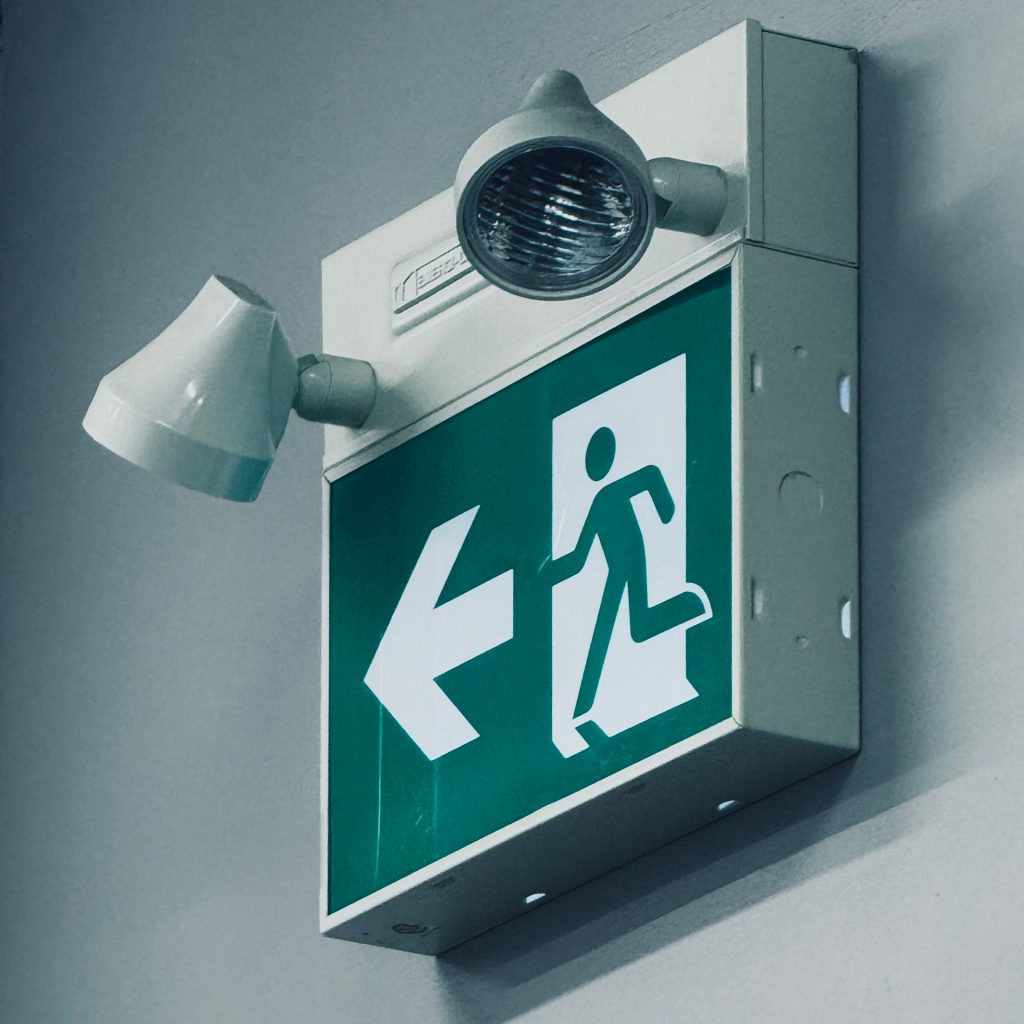
Emergency lighting and exit signs help occupants move towards safe areas when normal lighting fails. Healthcare buildings require particular attention to evacuation routes because patients may depend on staff assistance, mobility aids, or medical equipment.
An AMC should include checks of installed emergency lights, illuminated exit signs, backup power arrangements, and relevant components.
Facility managers should ensure that corridors, staircases, emergency exits, and designated evacuation routes remain clear and adequately marked. Identified lighting faults should be addressed promptly.
5. Preventive Maintenance and Corrective Repairs
An effective AMC should do more than provide a checklist of inspections. It should establish a clear process for identifying, reporting, and resolving equipment faults.
Healthcare building owners should confirm whether the contract includes:
- Scheduled preventive maintenance visits.
- Fault reporting and technical support.
- Emergency call-out arrangements.
- Corrective maintenance procedures.
- Replacement parts and consumables.
- Repair quotations and approval procedures.
- Recommendations for equipment replacement.
The contract should clearly distinguish between included services and additional charges. This prevents misunderstandings when technicians identify defects that require replacement parts or major repairs.
6. Documentation and Compliance Support
Accurate maintenance records help healthcare facility managers track equipment condition, review completed work, and prepare for relevant inspections.
A professional AMC should define the reports and records the service provider will deliver. These may include inspection reports, testing results, identified defects, corrective actions, replaced components, and recommendations for future maintenance.
Building owners should also confirm that the maintenance scope aligns with applicable local authority requirements and relevant equipment standards. An AMC supports compliance, but it does not automatically guarantee approval or replace other statutory responsibilities.
7. Choosing the Right Fire Safety AMC Provider
Selecting a suitable maintenance provider is essential for healthcare buildings. Facility managers should assess the provider’s relevant experience, technical capabilities, service coverage, response arrangements, and familiarity with applicable fire safety requirements.
For facilities seeking fire fighting AMC services, the agreement should clearly list the installed systems, maintenance frequency, reporting procedures, emergency support, and responsibilities of both parties.
Businesses comparing fire safety AMC Abu Dhabi providers should also verify the provider’s relevant approvals and authorisations where required, particularly when the facility falls under specific authority requirements.
Conclusion
A fire system AMC gives healthcare building owners a planned approach to maintaining critical fire protection equipment. From fire alarms and pumps to sprinklers, extinguishers, and emergency lighting, every installed system needs appropriate inspections, testing, and timely corrective action.
Choosing a reliable fire safety AMC Al Ain provider helps healthcare facility managers organise preventive maintenance, maintain accurate records, and address equipment faults before they compromise safety. By defining the service scope clearly and following the applicable maintenance schedule, healthcare buildings can strengthen their fire safety preparedness while supporting the continuity of patient care.