

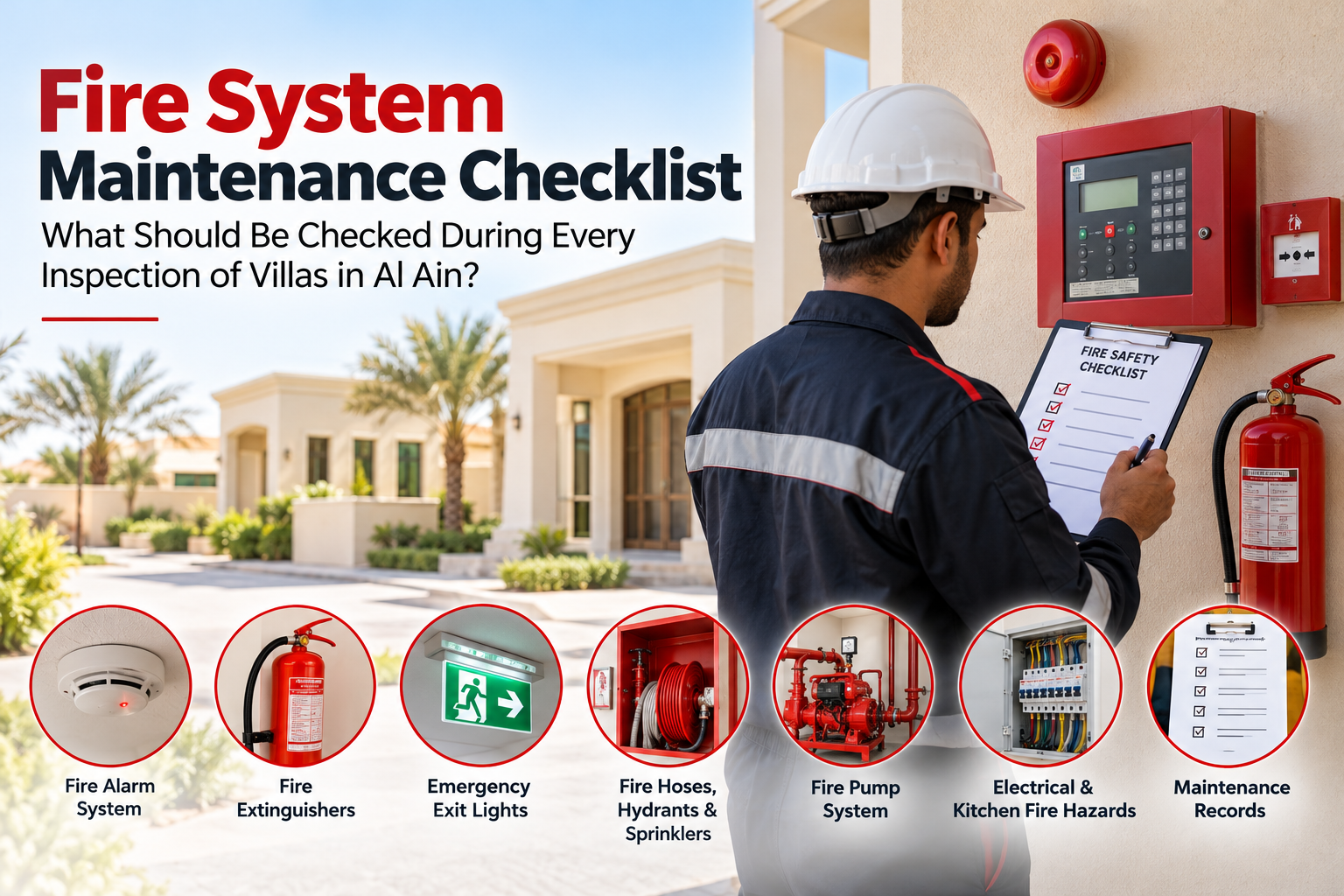
Fire safety is essential for every villa in Al Ain. Electrical appliances, kitchen equipment, air conditioning systems and other household installations can create fire hazards if they are not properly maintained. Regular inspections help identify potential problems, ensure fire safety equipment works correctly and reduce the risk of fire-related damage.
Professional fire system maintenance helps villa owners identify faults before they become serious problems. A proper inspection covers fire alarms, smoke detectors, fire extinguishers, emergency exit lights and other installed safety equipment.
This guide explains what should be checked during every fire safety inspection and why regular maintenance matters for villas in Al Ain.
Inspection Checklist for Fire Alarm System
1. Inspect the Fire Alarm System
A fire alarm system alerts occupants when it detects signs of fire. During an inspection, technicians should check whether the system can detect potential hazards and activate the required warning signals.
The inspection should include:
- Testing the fire alarm control panel for faults and warning indicators.
- Checking smoke detectors and heat detectors for damage, dust or obstructions.
- Testing manual call points to confirm they activate the alarm.
- Checking alarm sounders and visual warning devices.
- Inspecting wiring, connections and backup power supplies.
- Reviewing system fault records and previous maintenance reports.
Regular fire alarm testing helps ensure that occupants receive an early warning during an emergency. Any faulty detector, damaged cable or malfunctioning alarm component should be repaired or replaced as required.
2. Check Fire Extinguishers
Fire extinguishers provide an important first line of defence against small fires when it is safe and appropriate to use them. Villas may require different extinguisher types depending on the identified fire risks.
During the inspection, technicians should check:
- Whether extinguishers are accessible and clearly visible.
- Whether the pressure gauge indicates the correct operating range, where applicable.
- Whether safety pins and tamper seals are intact.
- Whether hoses, nozzles and handles show signs of damage.
- Whether the cylinder has corrosion, dents or leakage.
- Whether servicing and inspection records are up to date.
Technicians should also confirm that the extinguisher type suits its intended application. For example, electrical equipment and cooking areas may require different fire protection considerations.
Expired, damaged or discharged extinguishers should receive the necessary servicing or replacement. Villa owners should never block access to fire extinguishers with furniture or stored items.
3. Inspect Emergency Exit Lights
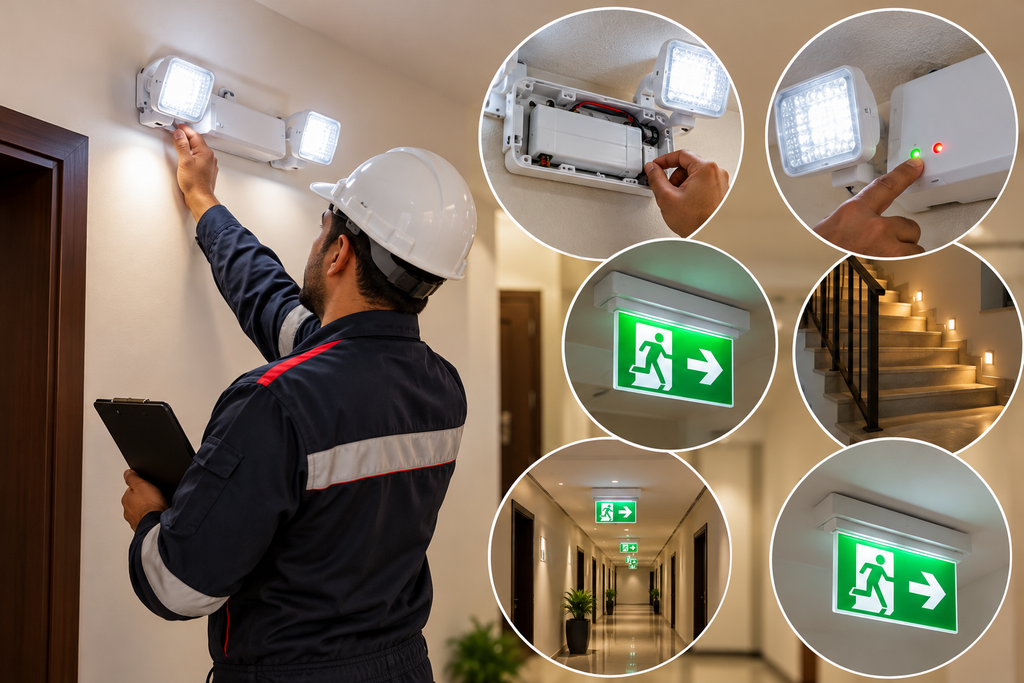
Emergency lighting helps occupants find safe escape routes if the normal power supply fails. This is particularly important in villas with internal staircases, corridors and multiple floors.
A fire safety inspection should include:
- Testing emergency lights using the approved test procedure.
- Checking whether the lights activate when normal power fails.
- Inspecting batteries and charging indicators.
- Confirming that escape routes have adequate illumination.
- Checking exit signs for visibility and damage.
- Ensuring that signs are not hidden by decorations or furniture.
Technicians should verify battery performance and emergency operating duration according to the applicable requirements and equipment specifications.
Any defective light, weak battery or damaged exit sign should be addressed promptly. Clear escape routes and functioning emergency lights can help occupants leave the building safely during a fire or power failure.
4. Examine Fire Hoses, Hydrants and Sprinkler Systems
Some villas have additional fire protection equipment, such as hose reels, sprinkler systems or other fixed firefighting installations. The inspection requirements depend on the equipment installed and the property’s approved fire safety arrangements.
For applicable systems, technicians should check:
- Hose reels, hoses and nozzles for visible damage or leakage.
- Hydrant valves, cabinets and accessible connections.
- Water supply availability and pressure, where required.
- Sprinkler heads for corrosion, damage, paint or obstruction.
- Control valves for correct position and accessibility.
- Pumps, control panels and associated equipment where installed.
Sprinkler heads should never be painted, covered or used to hang household items. Furniture and stored materials should also remain clear of sprinkler discharge areas.
More detailed testing may be necessary to verify water flow, pressure, pump operation and system performance. Qualified technicians should carry out these procedures according to the system design and applicable safety requirements.
5. Check the Fire Pump System
Where a villa has a dedicated fire pump, technicians should verify that the equipment remains ready for operation. A pump that fails during an emergency can affect the performance of connected firefighting systems.
The inspection may cover:
- Fire pump control panel indicators and fault alarms.
- Power supply and associated electrical connections.
- Pump condition, unusual noise, vibration or leakage.
- Suction and discharge pressure readings.
- Valves and visible pipework.
- Automatic starting arrangements and other required operating functions.
Functional testing should follow the manufacturer’s instructions and applicable requirements. Any abnormal pressure, electrical fault or mechanical problem should be documented and corrected by qualified personnel.
Not every villa has a dedicated fire pump. The inspection checklist must reflect the property’s actual fire protection installations.
6. Inspect Electrical and Kitchen Fire Hazards
Electrical faults and cooking activities can create fire risks inside residential properties. A fire safety inspection should identify visible hazards and recommend corrective action where necessary.
Technicians or appropriately qualified electrical professionals should check for damaged cables, loose connections, overloaded sockets and signs of overheating. Electrical distribution boards should remain accessible and show no visible signs of burning or damage.
Kitchen inspections should consider cooking equipment, extractor areas and the safe use of appliances. Where a specialised kitchen suppression system is installed, its inspection and maintenance should follow the manufacturer’s instructions and applicable requirements.
Villa owners should avoid using damaged electrical appliances, overloading extension sockets or leaving cooking equipment unattended.
7. Review Maintenance Records and Corrective Actions
A complete fire system maintenance visit should include more than checking equipment. Technicians should document their findings and identify any work needed to restore the system to its required condition.
A maintenance report should record:
- Equipment inspected and tests performed.
- Faults, damage and other observations.
- Repairs or replacements completed.
- Outstanding defects and recommended corrective actions.
- Any required follow-up inspection or testing.
- The next inspection or maintenance date, as applicable.
Keeping accurate records helps villa owners track recurring problems and demonstrate that maintenance activities have been documented. It also supports planned servicing instead of waiting for equipment to fail.
Why Professional Fire System Maintenance Matters in Al Ain
Regular fire system maintenance helps villa owners keep installed safety equipment in working condition. It can identify faults early, reduce the risk of equipment failure and support compliance with applicable fire safety requirements.
The inspection schedule should reflect the type of equipment installed, manufacturer recommendations, applicable regulations and any requirements set by the relevant authorities. A visual check alone does not replace the technical testing required for individual systems.
Choosing an experienced fire fighting system maintenance provider helps ensure that inspections, repairs and functional tests receive the appropriate attention. For properties in Al Ain and the wider Abu Dhabi region, villa owners should confirm that their maintenance provider has the relevant qualifications and approvals for the work involved.
Conclusion
A systematic fire safety inspection helps villa owners identify problems before they affect the performance of essential safety equipment. Fire alarms, extinguishers, emergency lights, sprinklers, fire pumps and electrical installations all require attention according to their design and maintenance requirements.
If you need fire system maintenance in Abu Dhabi, arrange regular professional inspections and address reported faults without delay. A well-maintained fire protection system supports early warning, safer evacuation and better preparedness for emergencies in villas across Al Ain.