
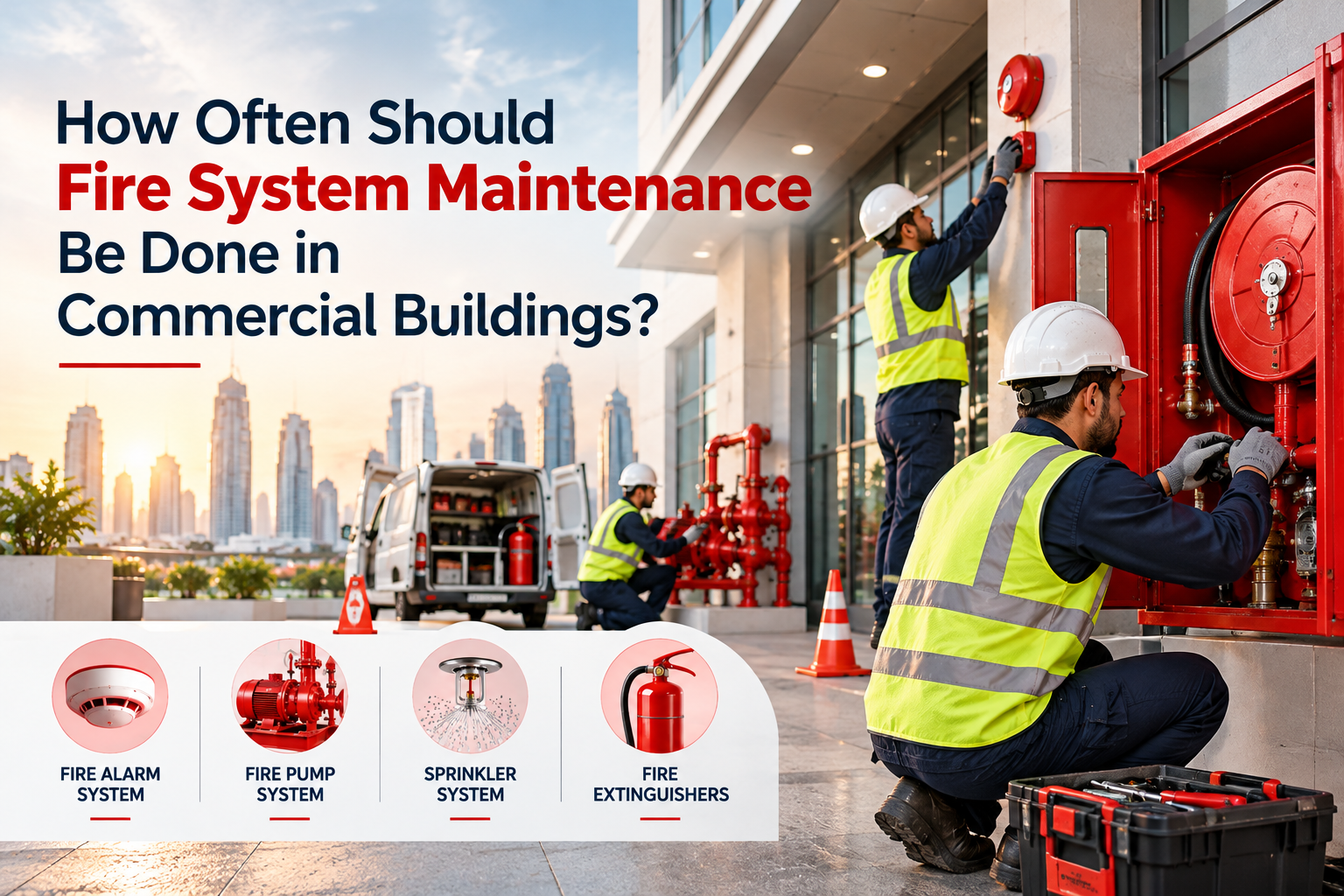
Fire protection systems play a vital role in keeping commercial buildings safe. Fire alarms, fire pumps, sprinkler systems, fire extinguishers, hydrants, and emergency lighting must remain operational to protect employees, visitors, property, and business operations. Regular fire fighting system maintenance Abu Dhabi helps identify equipment faults, maintain system performance, and support compliance with applicable fire safety requirements. However, installing fire protection equipment is not enough. Building owners and facility managers must follow a planned maintenance schedule to ensure that every system remains ready for an emergency. The required frequency depends on the type of equipment, building usage, manufacturer’s recommendations, and applicable local authority requirements.
Why Is Regular Fire System Maintenance Important?
Commercial buildings experience continuous activity, and fire safety equipment can deteriorate over time. Dust accumulation, corrosion, electrical faults, physical damage, and poor maintenance can affect system performance. Professional fire system maintenance helps building owners identify potential problems before they become serious safety risks.
The key benefits include:
- Identifying faulty or damaged fire protection equipment.
- Checking the operational condition of fire alarm and detection systems.
- Maintaining fire pumps, hydrants, and sprinkler systems.
- Ensuring emergency lighting and exit signs function correctly.
- Reducing the risk of unexpected equipment failure.
- Maintaining inspection and maintenance records.
- Supporting compliance with applicable fire safety regulations.
A structured maintenance plan also helps facility managers schedule repairs, replace worn components, and maintain reliable fire protection throughout the year.
How Often Should Fire Protection Systems Be Maintained?
There is no single maintenance frequency for every fire protection system. Each component requires an appropriate schedule based on its function, technical requirements, and applicable standards.
1. Monthly Visual Checks
Routine visual checks help identify obvious problems before they affect system performance. Depending on the equipment and applicable requirements, building personnel may check:
- Fire alarm control panel status indicators.
- Accessibility and visible condition of fire extinguishers.
- Emergency exit routes and firefighting equipment access.
- Emergency lighting indicators.
- Fire pump controller status.
- Visible damage, leakage, or obstruction around fire protection equipment.
Building staff can carry out basic visual checks when appropriate. Technical inspections and functional tests should be performed by qualified personnel according to the relevant maintenance procedures.
2. Quarterly and Other Scheduled Inspections
Some components require more detailed inspections or testing at specific intervals. Depending on the installed systems, these activities may include checking fire alarm devices, detectors, manual call points, pumps, valves, sprinkler components, and associated control equipment.
Technicians should look for faulty connections, damaged devices, corrosion, battery deterioration, pressure problems, and other signs of poor performance.
The required inspection frequency varies by equipment type. Building managers should follow the manufacturer’s instructions and applicable fire safety requirements rather than assume that every component needs quarterly servicing.
3. Annual Comprehensive Maintenance
Annual servicing is an important part of a commercial building’s fire safety program. It provides an opportunity to assess the condition of installed equipment, review maintenance records, and identify outstanding repair requirements.
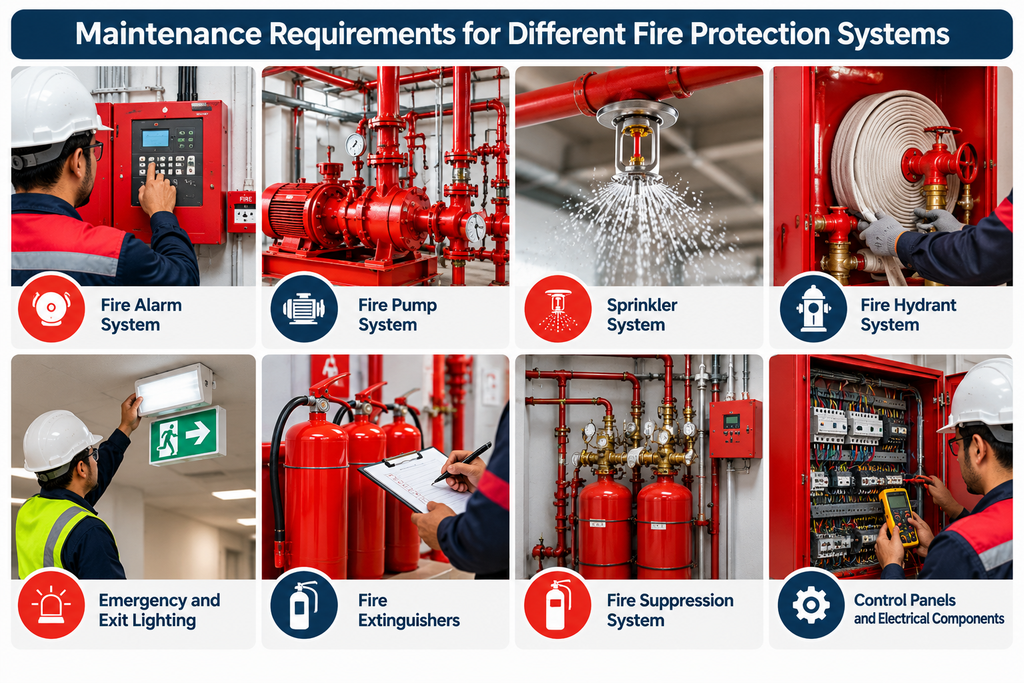
A comprehensive service may cover:
- Fire alarm and detection systems.
- Fire pump systems and controllers.
- Sprinkler and fire hydrant systems.
- Fire extinguishers.
- Emergency and exit lighting.
- Fire suppression systems.
- Associated valves, control panels, and electrical components.
The scope and testing frequency should match the applicable requirements for each system. An annual visit does not replace monthly, quarterly, or other inspections required throughout the year.
Maintenance Requirements for Different Fire Protection Systems
Fire Alarm System Maintenance
Fire alarm systems detect potential fire incidents and alert building occupants. Maintenance may include checking detectors, manual call points, sounders, visual indicators, control panels, batteries, and wiring.
Dust, damaged devices, and electrical faults can affect performance. Regular testing helps identify these issues and confirms that the system operates according to its design and applicable requirements.
Fire Pump System Maintenance
Fire pumps supply water to firefighting systems where installed. Their reliability depends on suitable maintenance of pumps, controllers, valves, electrical connections, pressure conditions, and other associated components. Scheduled inspections and operational testing help identify mechanical or electrical problems before an emergency occurs.
Sprinkler and Fire Hydrant System Maintenance
Sprinkler and hydrant systems require inspections to identify leaks, corrosion, obstructions, damaged components, and valve problems. Technicians should also check relevant pressure conditions and other components according to the system design.
Keeping these systems accessible and in proper working condition supports their intended firefighting function.
Emergency and Exit Lighting Maintenance
Emergency lights and illuminated exit signs help occupants evacuate when normal lighting fails. Regular checks should confirm that the lights operate correctly and that exit signs remain visible. Battery condition and backup performance should also be assessed at the required intervals.
What Is an Annual Maintenance Contract for Fire Systems?
An annual maintenance contract provides a planned approach to servicing fire protection equipment throughout the year. An annual maintenance contract fire system Al Ain can help commercial property owners arrange scheduled inspections, preventive maintenance, and corrective work according to the agreed scope.
Depending on the contract, services may cover fire alarms, pumps, sprinklers, hydrants, extinguishers, and emergency lighting. Building owners should confirm which systems are included, how often inspections will take place, whether emergency call-outs are covered, and how repairs and replacement parts will be charged.
A clearly defined contract helps facility managers maintain service records and address identified faults without relying solely on emergency repairs.
Factors That Influence Maintenance Frequency
The appropriate maintenance schedule depends on several factors:
- Building size and occupancy.
- Type of commercial activity.
- Fire risk and materials stored on-site.
- Equipment type, age, and condition.
- Manufacturer recommendations.
- Environmental conditions.
- Previous faults and maintenance history.
- Applicable local authority requirements.
For example, a warehouse storing combustible materials may have different inspection needs from a standard office building. Facility managers should establish a schedule that reflects the actual risks and systems present.
Choose Professional Fire System Maintenance in Abu Dhabi and Al Ain
Commercial building owners should treat fire protection maintenance as an ongoing safety responsibility. A planned schedule helps identify faults, maintain equipment performance, and prepare the building for emergencies. Professional fire fighting system maintenance Abu Dhabi supports the systematic inspection and servicing of installed fire protection equipment. Businesses seeking fire system maintenance al ain should also ensure that their maintenance provider understands the building’s requirements and applicable local authority standards. By arranging suitable inspections, keeping accurate records, and addressing defects promptly, facility managers can improve equipment reliability and strengthen building safety. Regular professional maintenance remains an essential part of protecting people, property, and business continuity.