
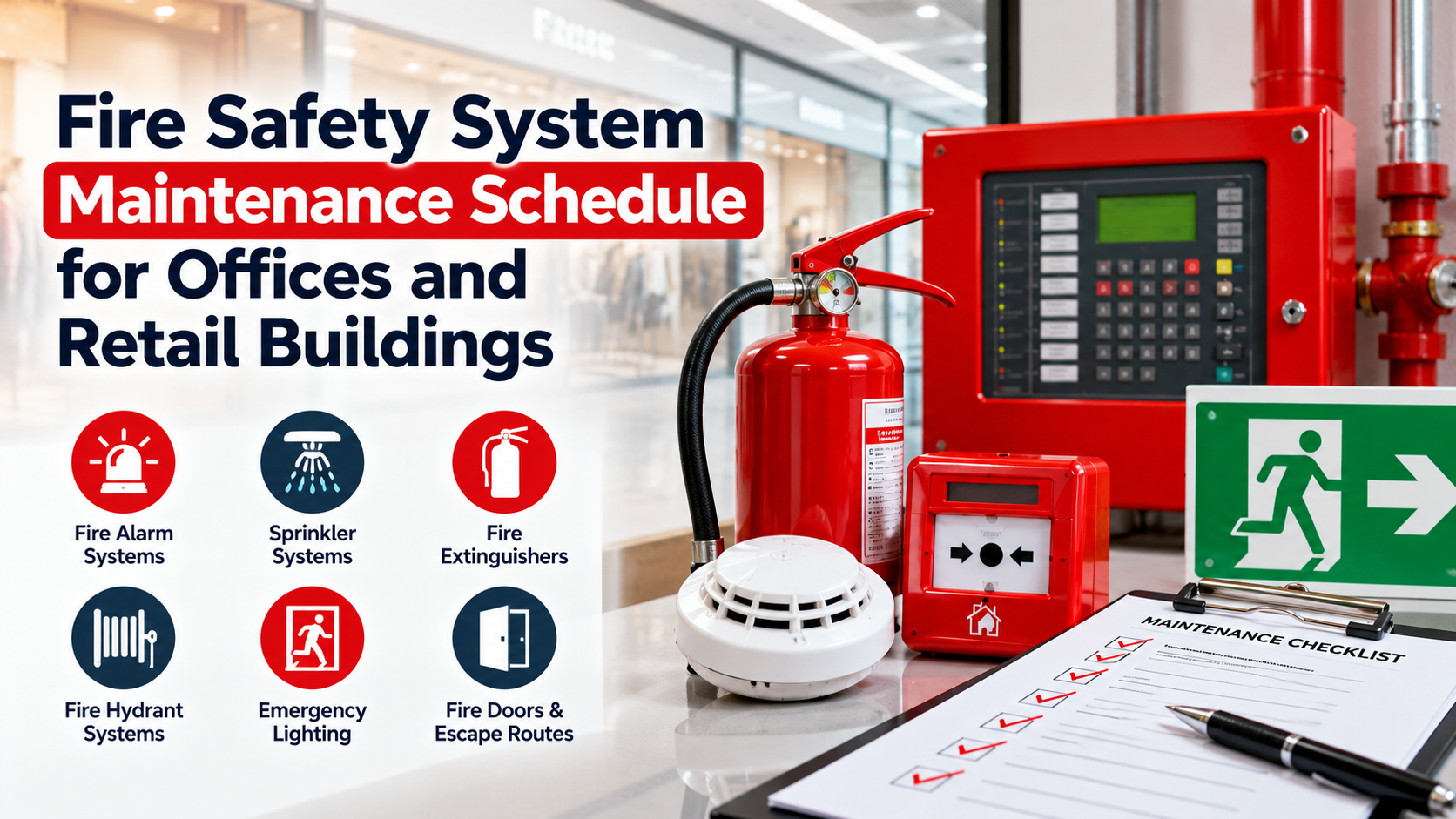
Fire safety systems must remain operational every day, not just during inspections. Offices and retail buildings accommodate employees, customers, visitors, and contractors, making regular fire safety system maintenance essential for protecting people and property. A structured fire safety maintenance in Al Ain, schedule helps facility managers identify faults early, reduce equipment failures, and maintain readiness for emergencies.
From fire alarms and extinguishers to emergency lighting and sprinkler systems, every installed component needs appropriate inspection and servicing. Businesses should establish a clear maintenance plan based on the building’s fire safety requirements, equipment manufacturer’s instructions, and applicable local regulations.
Why Is Fire Safety System Maintenance Important?
Fire protection equipment can develop faults because of dust accumulation, damaged wiring, corrosion, wear, or poor maintenance. If these problems remain undetected, a system may fail when occupants need it most.
Regular fire system servicing helps identify defects before they affect performance. It also supports business continuity by reducing unexpected equipment failures and helping facility managers maintain accurate service records.
For offices, maintenance focuses on protecting employees, electrical equipment, meeting rooms, and evacuation routes. Retail buildings require additional attention to customer areas, storage rooms, display lighting, stockrooms, and spaces with high visitor traffic.
Fire Safety System Maintenance Schedule
A planned schedule makes it easier to assign responsibilities and track completed activities. The following framework provides a starting point; the actual frequency must follow applicable regulations, system requirements, and manufacturer guidance.
1. Daily Fire Safety Checks
Building staff or designated safety personnel should carry out basic visual checks to identify obvious problems.
Key activities include:
- Check the fire alarm control panel for visible fault indicators.
- Ensure emergency exits and evacuation routes remain clear.
- Confirm that fire extinguishers and fire hose reels remain accessible.
- Check that exit signs are visible and undamaged.
- Look for visible damage to fire doors and emergency equipment.
Staff should report faults immediately rather than waiting for the next scheduled maintenance visit.
2. Weekly Fire System Checks
Weekly checks help staff identify changes in the condition of essential fire safety equipment.
Depending on the system and applicable requirements, activities may include checking fire alarm indicators, inspecting extinguishers for visible damage, confirming access to manual call points, and checking that fire doors close properly.
Any fire alarm testing must follow the approved procedure and manufacturer instructions. Where a building uses a monitored alarm system, the responsible team should coordinate testing with the monitoring provider to prevent unnecessary emergency responses.
3. Monthly Preventive Maintenance
Monthly inspections provide an opportunity to review equipment condition and address minor issues before they develop into major faults.
The maintenance checklist may include:
- Inspect emergency lighting and exit signs.
- Check fire extinguishers for damage, accessibility, and visible signs of pressure loss where applicable.
- Inspect fire doors, hinges, closers, and seals.
- Check sprinkler heads for visible obstruction or damage.
- Review maintenance records and outstanding repair requests.
These activities should complement, not replace, the testing and servicing required from qualified fire safety technicians.
4. Quarterly Fire Safety System Servicing
Quarterly servicing allows maintenance teams to assess the condition of major fire protection systems in greater detail. The exact frequency depends on the installed equipment and applicable requirements. A professional fire safety maintenance team may inspect fire alarm panels, detectors, manual call points, sounders, fire pumps, sprinkler installations, hydrants, and other covered equipment. Technicians should identify faults, perform the required functional tests, and document their findings. Any repairs or replacements should follow the manufacturer’s specifications and the approved maintenance scope.
5. Annual Fire Safety Inspection and Maintenance
Annual maintenance provides an opportunity to review the overall condition and performance of the building’s fire protection systems.
A qualified service provider should carry out the inspections and tests required for the installed equipment. These may cover fire alarms, firefighting equipment, emergency lighting, fire pumps, sprinkler systems, and other relevant installations.
Facility managers should review the annual service report, confirm that identified defects have been addressed, and update the maintenance plan. They should also verify that the maintenance provider holds the approvals or licences required for the work.
In the UAE, applicable fire safety rules may require annual maintenance contracts through licensed providers and additional approval or documentation. Building owners should confirm the current requirements with the relevant Civil Defence authority.
Essential Systems to Include in a Maintenance Plan
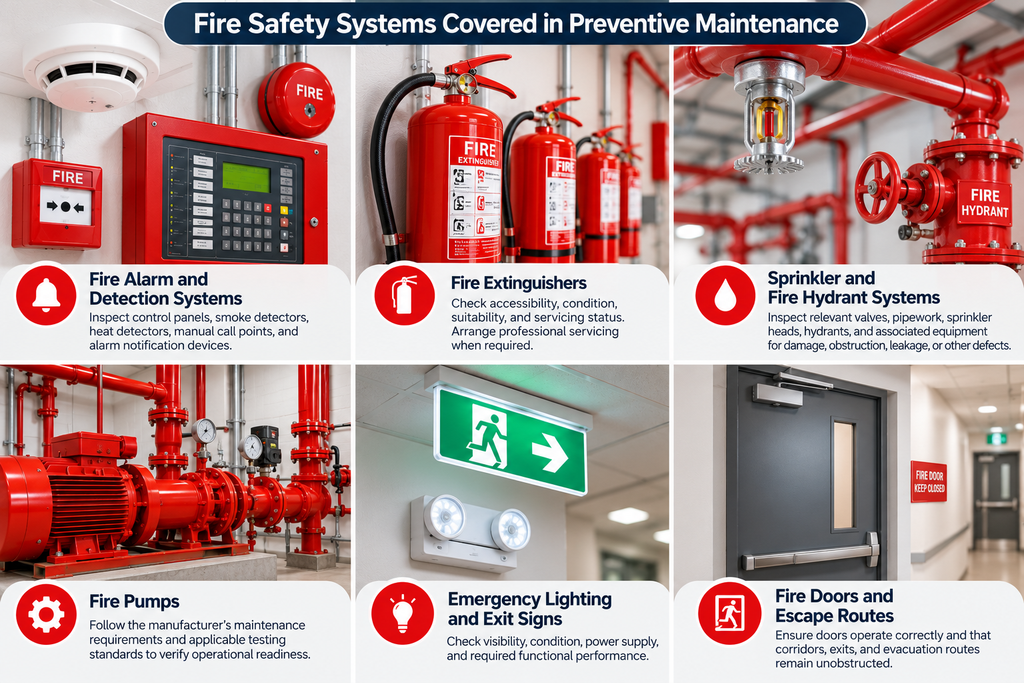
A complete preventive fire safety maintenance programme should cover every fire protection system installed in the building.
Fire alarm and detection systems: Inspect control panels, smoke detectors, heat detectors, manual call points, and alarm notification devices according to the required schedule.
Fire extinguishers: Check accessibility, condition, suitability, and servicing status. Arrange professional servicing when required.
Sprinkler and fire hydrant systems: Inspect relevant valves, pipework, sprinkler heads, hydrants, and associated equipment for damage, obstruction, leakage, or other defects.
Fire pumps: Follow the manufacturer’s maintenance requirements and applicable testing standards to verify operational readiness.
Emergency lighting and exit signs: Check visibility, condition, power supply, and required functional performance.
Fire doors and escape routes: Ensure doors operate correctly and that corridors, exits, and evacuation routes remain unobstructed.
Maintain Accurate Service Records
Every inspection and maintenance visit should produce a clear record of the work completed. Records should identify the equipment inspected, test results, faults discovered, repairs performed, and outstanding recommendations.
A central maintenance log helps facility managers track recurring problems, plan replacement work, and prepare for relevant inspections. Offices and retail chains with multiple locations can also use digital maintenance systems to monitor service dates and overdue tasks.
Choose a Reliable Fire Safety Maintenance Provider
Professional fire system servicing requires technical knowledge, suitable testing equipment, and familiarity with the applicable fire safety requirements.
Before signing an annual maintenance contract, review the provider’s credentials, inspection schedule, emergency response arrangements, reporting procedures, and repair charges. Confirm which systems the agreement covers and whether spare parts or corrective maintenance incur additional costs.
For properties in Abu Dhabi, verify that the contractor meets the applicable Abu Dhabi Civil Defence requirements.
Conclusion
A consistent fire safety system maintenance schedule helps offices and retail buildings keep essential safety equipment in serviceable condition. Daily visual checks, routine inspections, planned preventive maintenance, and professional annual servicing all contribute to better fire safety management.
Facility managers should assign clear responsibilities, resolve reported faults promptly, and maintain complete service records. By following a maintenance programme tailored to the building and its installed systems, businesses can strengthen emergency preparedness and support safer working and shopping environments.