
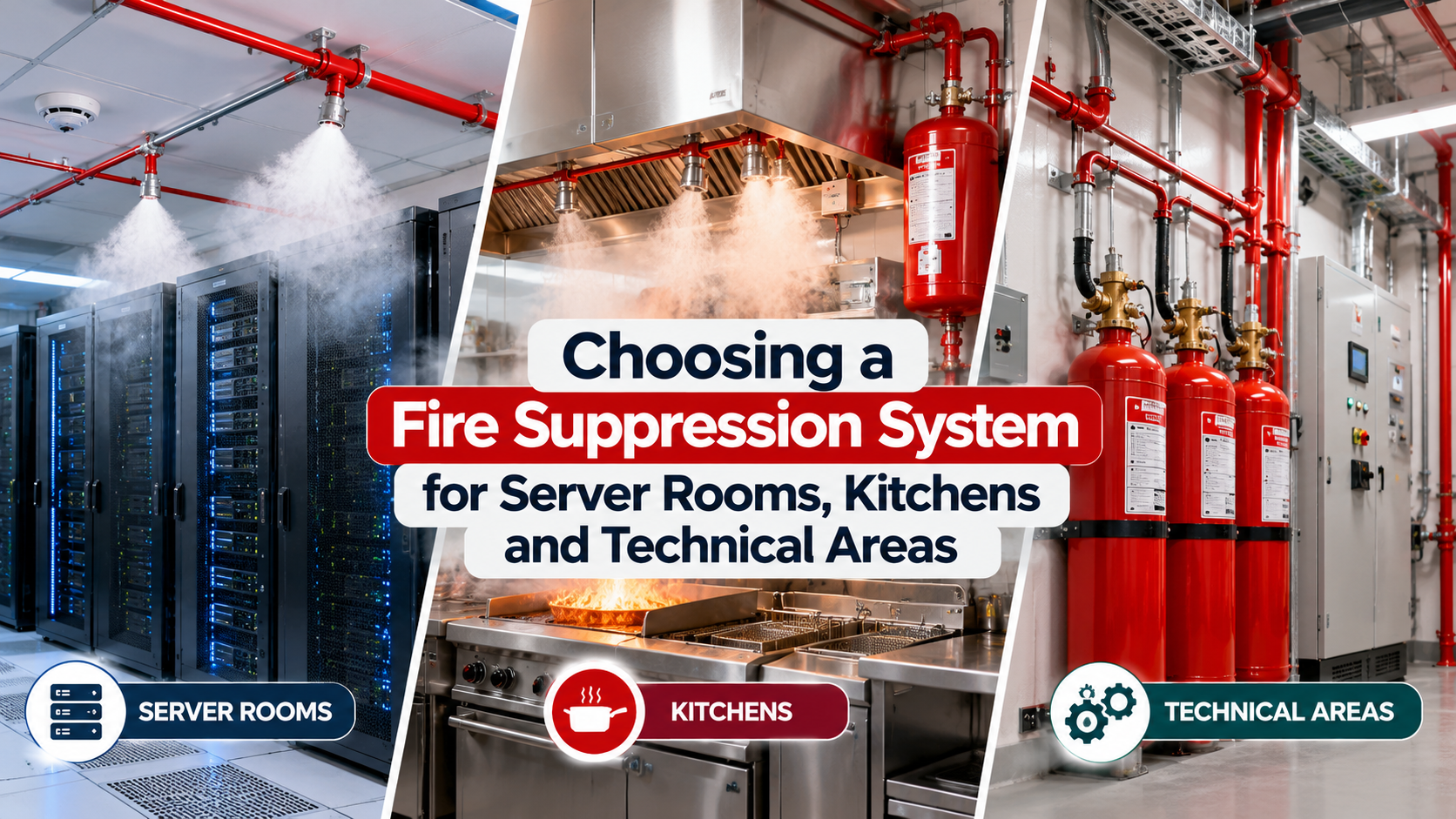
Fire incidents can cause serious damage to buildings, equipment, business operations, and human life. Server rooms, commercial kitchens, electrical rooms, and technical areas face different fire risks because they contain sensitive electronics, cooking equipment, electrical installations, or specialised machinery. Choosing the right fire suppression system helps control these risks and protect critical assets.
For businesses in Abu Dhabi, selecting a suitable fire suppression system requires careful consideration of the room’s purpose, fire hazards, equipment value, occupancy, and applicable fire safety requirements. A system designed for a commercial kitchen may not be suitable for a server room. Understanding these differences helps property owners and facility managers make informed decisions.
1. Understand the Fire Risks in Each Area
The first step in choosing a fire suppression system is identifying the potential sources of ignition and the materials that could catch fire.
Server rooms contain servers, network switches, storage equipment, cables, and power distribution units. Electrical faults and overheating can create fire risks, while water discharge may damage sensitive equipment.
Commercial kitchens present different hazards. Cooking oils, grease, gas appliances, fryers, and extraction hoods can contribute to rapidly developing fires. These areas need suppression solutions designed for cooking-related hazards.
Technical areas, including electrical rooms, control rooms, laboratories, and industrial equipment rooms, may contain electrical panels, machinery, combustible materials, or specialised equipment. A professional risk assessment helps determine the most appropriate protection.
2. Fire Suppression Systems for Server Rooms
Server rooms require fire protection that can control a fire while limiting damage to sensitive electronic equipment. Conventional water-based suppression may be unsuitable for certain applications, particularly where equipment damage and operational downtime are major concerns.
Clean agent fire suppression systems are commonly considered for server rooms and data centres. These systems use specialised extinguishing agents designed for particular protected environments. Depending on the agent and system design, they can suppress fires without leaving solid or liquid residue on equipment.
When selecting a clean agent system, consider:
- Compatibility with the protected equipment and expected fire hazards.
- Room dimensions, enclosure integrity, and ventilation arrangements.
- Detection and automatic release controls.
- Alarm notifications and evacuation procedures.
- Agent storage, maintenance, and system inspection requirements.
The design must account for the specific agent’s safety characteristics and applicable standards. Enclosure integrity and room conditions also affect system performance. A qualified specialist should assess these factors before installation.
3. Kitchen Fire Suppression Systems for Commercial Kitchens
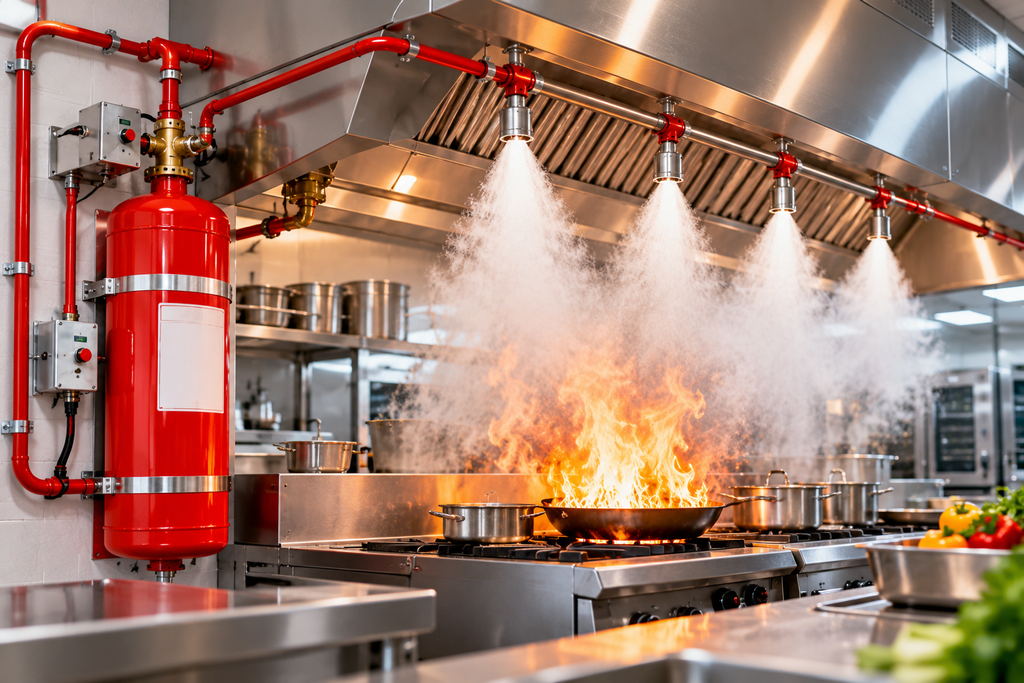
Commercial kitchens require specialised protection because cooking oils and fats can produce fires that ordinary extinguishing methods may not control effectively.
A kitchen fire suppression system is generally designed to protect high-risk cooking equipment, such as deep-fat fryers, grills, griddles, and cooking ranges. Depending on the design, the system may also protect extraction hoods, filters, and associated ductwork.
Wet chemical suppression systems are commonly used for commercial cooking hazards involving cooking oils and fats. The agent helps suppress the fire and forms a layer that reduces the risk of re-ignition.
When evaluating a kitchen suppression installation, check that it includes:
- Detection suitable for the cooking environment.
- Correctly positioned suppression nozzles.
- Protection for the identified cooking appliances and hood areas.
- Manual activation where required.
- Appropriate shutdown or isolation of fuel and electrical supplies.
- Inspection, testing, and maintenance arrangements.
The system must match the kitchen layout and cooking equipment. Changes to appliances or hood arrangements may require a review of the existing protection.
4. Fire Suppression for Electrical and Technical Areas
Electrical rooms, control panels, battery rooms, and technical facilities may require a different approach depending on their hazards.
Clean agent systems may suit some enclosed electrical or technical spaces. Other locations may need water-based, foam-based, or specialised suppression solutions, depending on the materials involved and the applicable design requirements. No single suppression method suits every technical area.
Before selecting a system, consider the electrical equipment, combustible materials, ventilation, room size, occupancy, and potential impact of the extinguishing agent. Battery installations require particular attention because some battery failures can produce intense heat and hazardous gases.
A qualified fire protection specialist should assess the hazard and select a system that meets the relevant safety standards and equipment requirements.
5. Important Factors When Choosing a Fire Suppression System in Abu Dhabi
When comparing fire suppression installation in Al Ain, Abu Dhabi, businesses should assess more than the initial purchase price.
Application suitability: Confirm that the proposed system is designed for the specific fire hazards and protected equipment.
Detection and activation: Check how the system detects a fire, activates suppression, and alerts occupants. Automatic and manual activation arrangements should follow the approved design.
Building integration: Consider connections to fire alarm systems, ventilation controls, and equipment shutdown arrangements where required.
Regulatory compliance: Confirm that the proposed design, installation, and service provider meet the applicable UAE and Abu Dhabi fire safety requirements. Verify relevant approvals and licensing before work begins.
Maintenance requirements: Review inspection intervals, servicing costs, replacement components, and emergency support.
Future changes: Consider whether planned equipment upgrades, kitchen modifications, or changes in room use could affect the system’s suitability.
6. Why Professional Installation and Maintenance Matter
Correct equipment selection is only one part of effective fire protection. Installation errors, poorly positioned nozzles, unsuitable detection, or inadequate maintenance can affect system performance.
Professional fire suppression installation should follow the approved design, manufacturer’s instructions, and applicable standards. After installation, the responsible provider should complete the required testing, commissioning, documentation, and handover.
Regular maintenance helps identify damaged components, faults, pressure issues, and other conditions that could affect readiness. Businesses should maintain service records and ensure that any system impairment receives prompt attention and appropriate temporary safety measures.
Conclusion
Choosing the right fire suppression system for server rooms, commercial kitchens, and technical areas starts with understanding the specific hazards in each location. Clean agent systems may suit sensitive electronic environments, wet chemical systems are commonly used for commercial cooking hazards, and technical areas require solutions tailored to their individual risks.
For businesses seeking a fire suppression system in Abu Dhabi, professional risk assessment, compliant installation, and regular maintenance are essential parts of a reliable fire protection strategy. Selecting a system based on the actual application helps protect people, property, and critical business operations.