

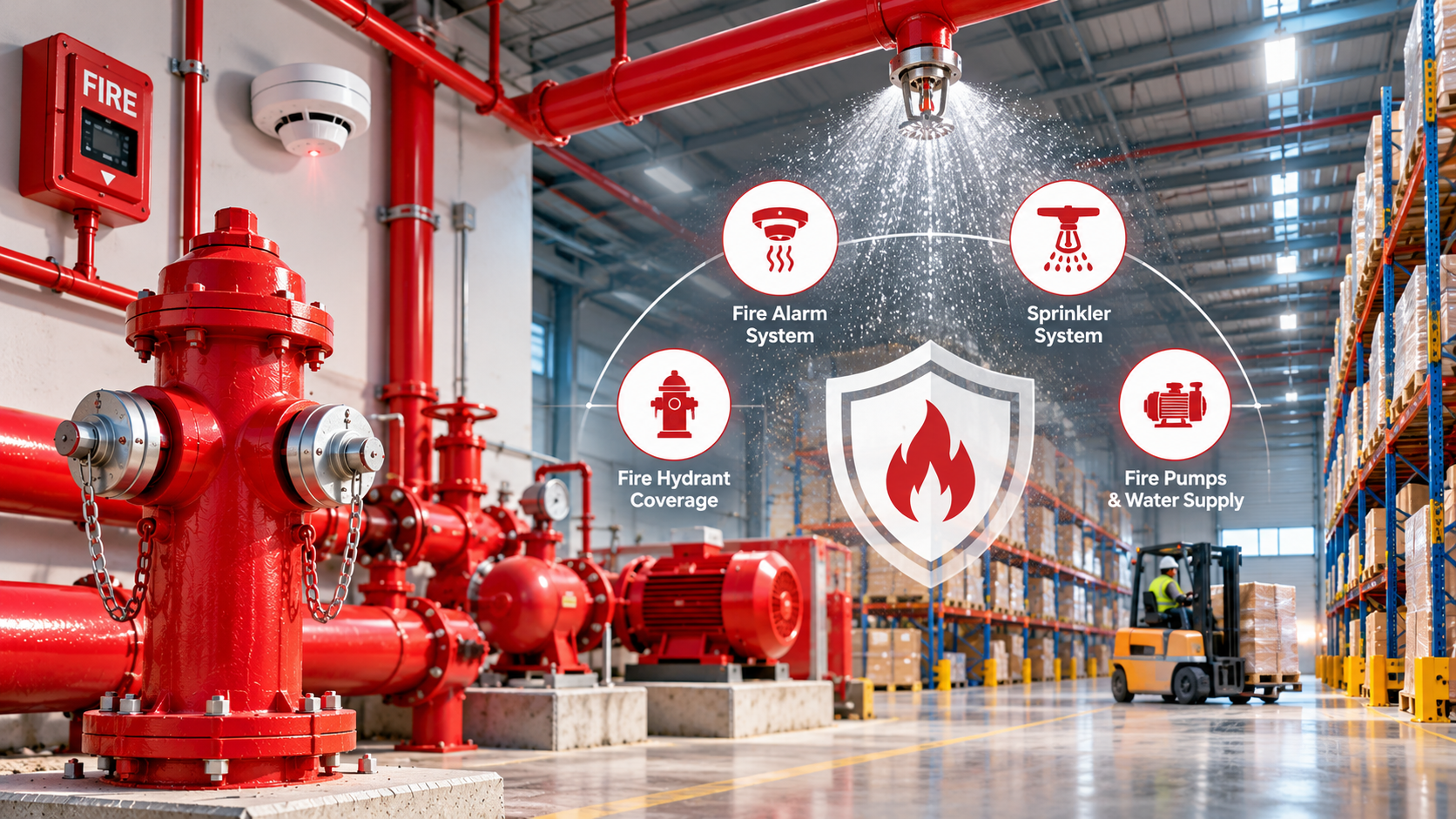
Warehouses store a wide range of materials, including raw materials, finished products, packaging supplies, machinery and chemicals. These storage environments can present different fire risks depending on the type of goods, storage arrangements and building design. A small fire can spread quickly through combustible materials, potentially causing significant property damage, business interruptions and safety risks for employees.
Installing suitable warehouse fire safety systems in Abu Dhabi is essential for protecting people, inventory and business operations. An effective fire protection strategy combines early fire detection, automatic suppression, fire hydrant coverage and reliable emergency response arrangements.
Businesses should select fire protection systems based on their warehouse layout, storage height, material classification and applicable UAE fire safety requirements.
Key Components of an Effective Warehouse Fire Safety System
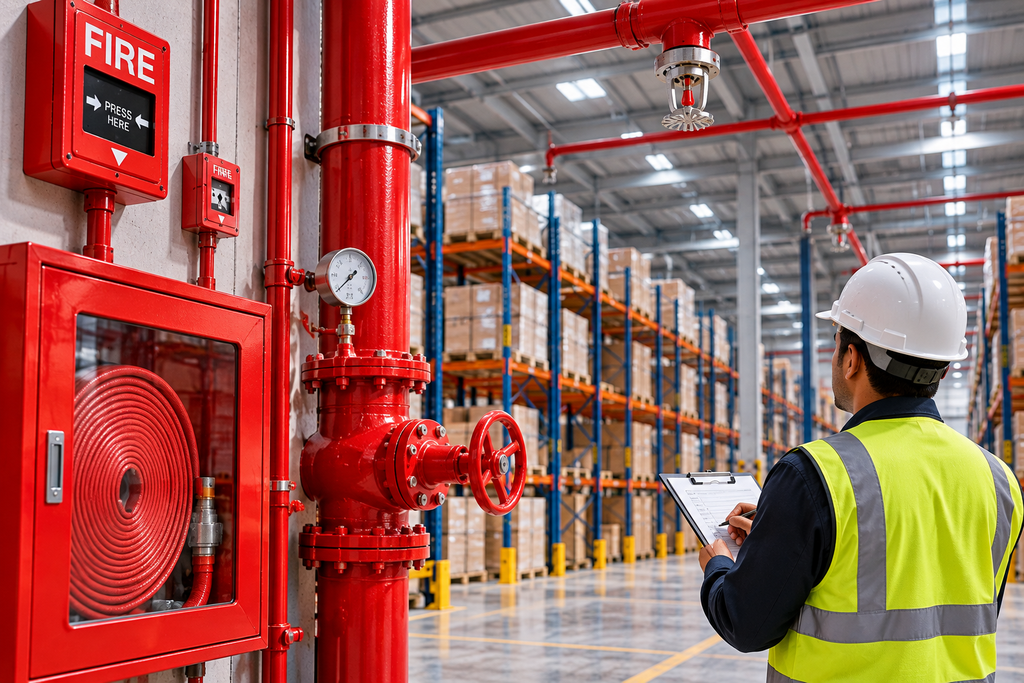
1. Understand the Fire Risks Within the Warehouse
Every warehouse has different fire protection requirements. A facility storing paper products, textiles, plastics or wooden materials may face different fire risks from a warehouse storing metal components or non-combustible products.
Several factors influence warehouse fire hazards:
- Combustible Materials: Cardboard, paper, plastics and wooden pallets can contribute to rapid fire development.
- Storage Height: High-rack storage can make fire detection and suppression more challenging.
- Electrical Equipment: Faulty wiring, overloaded circuits and damaged electrical connections can create ignition risks.
- Flammable Substances: Certain chemicals, fuels and industrial liquids require specialised fire protection arrangements.
- Limited Accessibility: Narrow aisles and densely packed storage areas can restrict firefighting access.
A professional fire risk assessment helps identify these hazards and determine the appropriate protection measures.
2. Install an Effective Warehouse Fire Alarm System
Early fire detection gives warehouse employees more time to respond to emergencies and helps limit potential damage. A properly designed warehouse fire alarm system identifies signs of fire and activates appropriate alerts.
Depending on the warehouse environment, fire alarm systems may include:
- Smoke detectors.
- Heat detectors.
- Manual call points.
- Audible and visual alarm devices.
- Fire alarm control panels.
- Monitoring and notification equipment.
Detector selection and positioning depend on environmental conditions, ceiling height, airflow and the nature of stored materials.
For example, warehouses with high ceilings may require specialised detection arrangements to identify smoke before it reaches conventional ceiling-mounted detectors. Dusty or challenging industrial environments may also require careful detector selection to reduce unwanted alarms.
Regular inspection and testing help ensure that the fire alarm system remains operational.
3. Choose the Right Warehouse Sprinkler System
Automatic sprinklers play an important role in controlling or suppressing fires before they spread across a warehouse. However, not every sprinkler arrangement is suitable for every storage environment.
A warehouse sprinkler system must account for the materials being stored, storage configuration, ceiling height and potential fire development.
Common considerations include:
- Type and combustibility of stored products.
- Maximum storage height.
- Ceiling construction and height.
- Rack arrangement and aisle spacing.
- Required water supply and pressure.
- Sprinkler design and installation specifications.
Some high-storage warehouses may require specialised sprinkler arrangements, including in-rack sprinklers, depending on the approved fire protection design.
Selecting the correct system is important because unsuitable sprinkler coverage may leave certain storage areas inadequately protected.
4. Ensure Adequate Fire Hydrant Coverage
Fire hydrants provide firefighters with access to water during emergency operations. Warehouses generally require carefully planned internal or external firefighting provisions based on their building design and applicable regulations.
Fire hydrant coverage should consider the warehouse perimeter, building access points, fire service access routes and the overall fire water network.
Important planning factors include:
- Strategic placement of external fire hydrants.
- Suitable internal hydrant arrangements where required.
- Adequate water pressure and flow.
- Accessible hydrant locations.
- Properly designed fire water pipelines.
- Reliable fire pump and water storage arrangements.
Hydrants must remain accessible and free from obstructions. Routine inspections also help identify damaged valves, leaks and other operational issues.
5. Integrate Fire Pumps and Water Storage Systems
Fire alarm and sprinkler installations require appropriate supporting infrastructure to operate effectively. Fire pumps and dedicated water storage arrangements help provide the water supply needed by applicable firefighting systems.
Fire pump selection depends on the hydraulic calculations and water demand of the approved system design.
A typical fire pump arrangement may include:
- Main electric fire pump.
- Diesel standby fire pump, where required by the design.
- Jockey pump for maintaining system pressure.
- Dedicated fire water storage tank.
- Associated control panels and valves.
The complete installation should undergo appropriate testing to verify pump operation, pressure and water supply performance.
6. Maintain Clear Emergency Exits and Fire Safety Equipment
Fire protection involves more than automatic detection and suppression. Warehouse employees must also have safe and accessible evacuation routes.
Emergency exit lighting and illuminated exit signs help occupants identify escape routes during power failures or smoke-related visibility problems.
Warehouse managers should ensure:
- Emergency exits remain unobstructed.
- Exit signs are clearly visible.
- Emergency lighting receives regular testing.
- Fire extinguishers are accessible.
- Evacuation routes are clearly marked.
- Employees understand emergency procedures.
Staff training and periodic evacuation exercises help improve emergency preparedness.
7. Schedule Regular Inspection and Preventive Maintenance
Even professionally installed fire protection systems require ongoing maintenance. Dust accumulation, damaged components, leaking pipes and electrical faults can affect system performance.
Warehouse operators should establish a preventive maintenance programme covering:
- Fire alarm detector inspection and testing.
- Sprinkler heads and pipeline inspections.
- Fire hydrant and valve checks.
- Fire pump performance testing.
- Fire water tank inspections.
- Emergency lighting checks.
- Fire extinguisher servicing.
Maintenance activities should follow applicable requirements, manufacturer recommendations and the approved maintenance schedule. Keeping inspection and service records also helps facility managers monitor system conditions.
Why Choose a Professional Warehouse Fire Safety Company in Abu Dhabi?
Warehouse fire protection requires a coordinated approach to detection, suppression, firefighting water supply and emergency evacuation. Working with an experienced fire safety contractor helps businesses identify suitable solutions for their facilities. Fire Base – Fire Fighting Systems provides fire protection solutions in Al Ain, Abu Dhabi for commercial and industrial properties. Its services include fire alarm systems, fire hydrant systems, fire fighting systems, fire suppression systems, sprinkler systems, fire pump systems and emergency exit lighting. From installation to annual maintenance and preventive servicing, businesses can discuss their warehouse fire protection requirements with a professional fire safety team.
Conclusion
Effective warehouse fire protection depends on matching detection and suppression systems to the actual storage risks within the facility. Fire alarm systems provide early warnings, sprinkler systems help control fires, and hydrant networks support firefighting operations.
Businesses planning warehouse fire safety systems in Abu Dhabi should prioritise proper risk assessments, suitable equipment, regulatory compliance and regular maintenance. A coordinated fire protection strategy helps safeguard employees, protect stored inventory and support safer warehouse operations.