

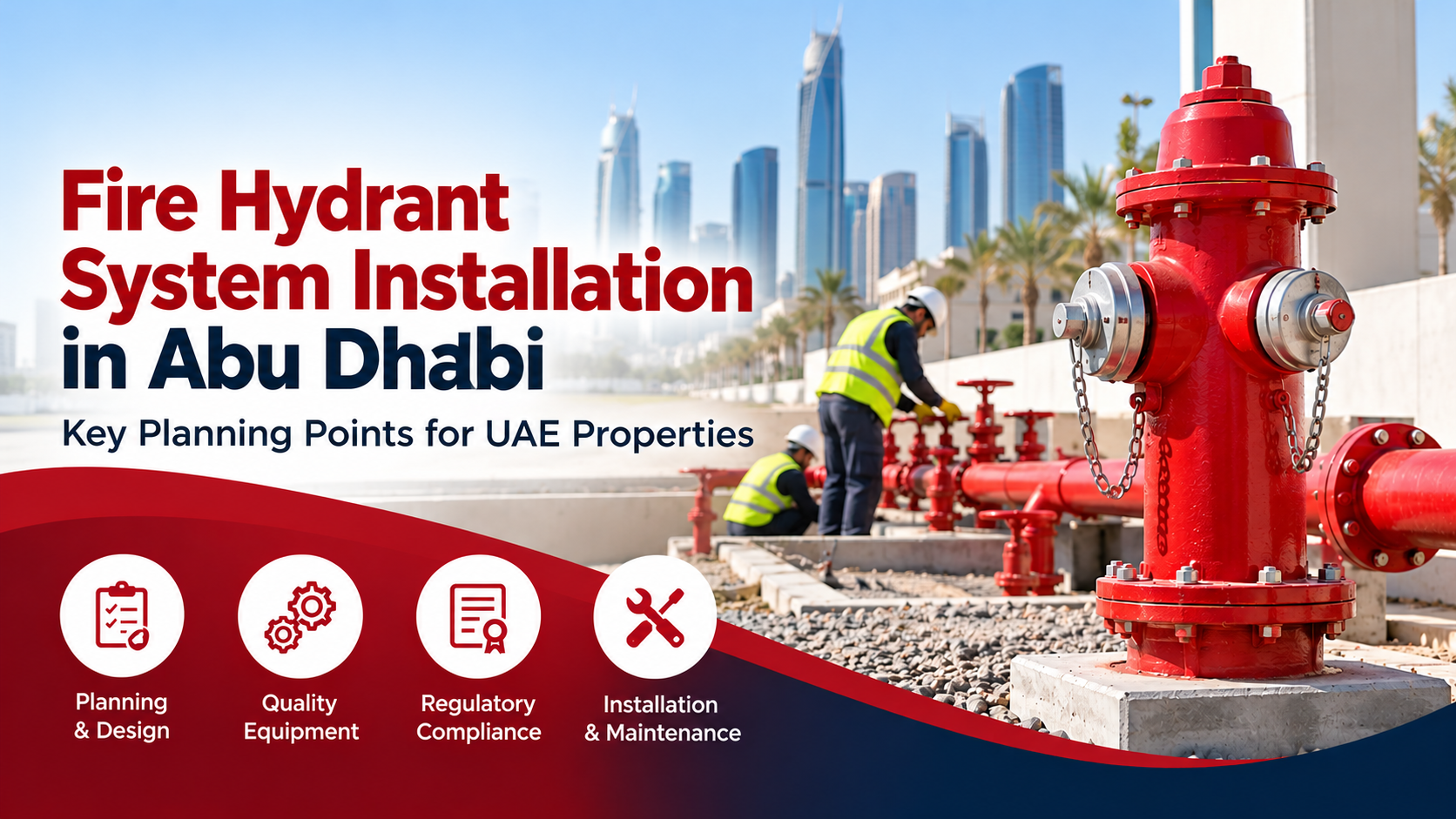
Fire safety is a critical requirement for commercial buildings, industrial facilities, warehouses, residential complexes and other large properties across the UAE. A properly designed fire hydrant system provides firefighters and emergency response teams with access to water during fire incidents. It helps control fire outbreaks, protects valuable assets and improves the safety of building occupants.
Fire hydrant system installation in Abu Dhabi requires careful planning, suitable equipment selection and compliance with applicable UAE fire safety regulations. Property owners, contractors and facility managers must consider several factors before installing a fire hydrant network.
1. Understand the Property’s Fire Safety Requirements
The first step in fire hydrant installation is understanding the property’s layout, building size, occupancy and fire risk level. Different properties have different firefighting requirements depending on their usage and construction.
For example, warehouses may require strategically positioned external fire hydrants to cover large storage areas, while commercial buildings may need hydrant connections that provide access to different sections of the property.
A professional fire safety contractor in Al Ain, assesses the property and identifies the appropriate hydrant locations, water supply requirements and system configuration. This initial assessment helps create a fire water network that provides adequate coverage throughout the premises.
2. Plan the Fire Water Network
The fire water network forms the foundation of an effective hydrant system. It consists of underground or above-ground pipes, valves, hydrant points and water supply connections that distribute water during emergencies.
During planning, engineers consider:
- Property boundaries and building access points.
- Distance between external fire hydrants.
- Underground pipe routing and installation depth.
- Required water flow and pressure.
- Accessibility for fire and rescue vehicles.
- Connections to fire pumps and water storage tanks.
Proper network planning ensures that firefighters can access water from suitable locations without unnecessary delays. It also reduces the possibility of pressure losses and operational difficulties during emergencies.
3. Select Suitable Fire Hydrant Equipment
Choosing the right equipment is essential for the reliability and performance of a fire hydrant system. Every component must match the system design and applicable fire safety requirements.
Common components include:
- External Fire Hydrants: Installed outside buildings to provide accessible water connections for firefighting operations.
- Fire Hydrant Valves: Control water flow through the hydrant network.
- Fire Pumps: Maintain the required water pressure and flow.
- Fire Water Storage Tanks: Provide the water supply needed during fire emergencies.
- Underground Fire Pipes: Transport water across different sections of the property.
- Hose Connections and Accessories: Allow firefighters to connect hoses and access the water supply.
Equipment selection should consider the property’s fire protection requirements, operating conditions and relevant approval standards.
4. Ensure Compliance with UAE Fire Safety Regulations
Fire hydrant system installation in Abu Dhabi must follow the applicable UAE Fire and Life Safety Code of Practice and requirements of the relevant Civil Defence authority.
Compliance involves more than installing firefighting equipment. The complete system must meet the applicable requirements for design, equipment, water supply, accessibility, installation and testing.
Contractors should consider the following:
- Approved fire safety system designs.
- Appropriate equipment specifications.
- Correct hydrant positioning and accessibility.
- Required water pressure and flow capacity.
- Proper pipe installation and protection.
- Inspection, testing and commissioning documentation.
Working with an experienced and appropriately approved fire safety contractor helps property owners address regulatory requirements and avoid installation issues.
5. Consider Water Pressure and Fire Pump Capacity
Water pressure plays an important role in fire hydrant system performance. Even when hydrants are installed at the correct locations, insufficient pressure can affect firefighting operations.
Fire pump capacity must match the hydraulic requirements of the designed fire water network. Engineers evaluate factors such as the number of hydrants, expected water demand, pipe dimensions, network layout and pressure requirements.
A properly designed fire pump system helps maintain the required water flow during emergency operations.
Fire water storage tanks must also provide sufficient capacity based on the approved system design. The water supply should remain reliable and accessible when firefighters need it.
6. Focus on Professional Installation and Pipe Protection
The quality of installation directly affects the long-term reliability of a fire hydrant system. Incorrect pipe connections, unsuitable materials, poor jointing and inadequate protection can lead to leakage, corrosion and pressure problems.
During installation, contractors should pay attention to:
- Proper excavation and trench preparation.
- Correct underground pipe alignment.
- Secure pipe connections and joints.
- Suitable corrosion protection.
- Proper valve chamber installation.
- Clear identification of hydrant locations.
- Safe access for inspection and maintenance.
In the UAE, underground fire water pipes may experience challenging environmental conditions, including high temperatures and soil-related corrosion risks. Selecting suitable materials and protective measures helps maintain system durability.
7. Conduct Testing and Commissioning
After completing the installation, the fire hydrant system must undergo appropriate inspection and testing before becoming operational.
Testing helps verify whether the installed network performs according to its approved design.
Important activities include:
- Hydrostatic pressure testing of the pipeline.
- Checking for leaks at joints and connections.
- Verifying hydrant valve operation.
- Measuring water pressure and flow.
- Testing fire pump performance.
- Checking water storage and supply arrangements.
- Completing the required commissioning documentation.
Any issues identified during testing should be corrected before the system is handed over. Proper commissioning provides confidence that the fire hydrant network can perform as intended during an emergency.
8. Schedule Regular Inspection and Maintenance
Fire hydrant systems require regular maintenance to remain operational. Components that remain unused for extended periods may develop problems such as corrosion, valve blockage, leakage or mechanical failure.
Facility managers should establish a preventive maintenance schedule that covers:
- Inspection of external fire hydrants.
- Checking valves and pipe connections.
- Monitoring fire pump performance.
- Inspecting fire water storage tanks.
- Checking water pressure and flow.
- Identifying corrosion and physical damage.
- Maintaining inspection and service records.
Regular maintenance helps identify potential problems early and reduces the risk of system failure during emergencies.
Why Choose a Professional Fire Hydrant Installation Company in Abu Dhabi?
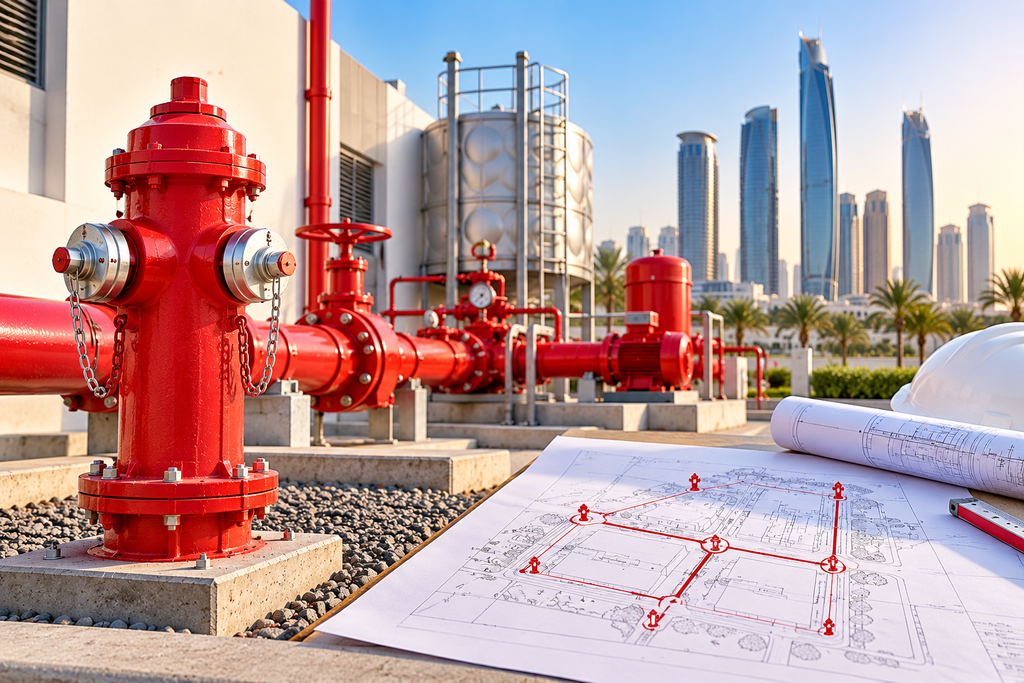
Installing a fire hydrant system involves technical design, equipment selection, hydraulic calculations, civil works, testing and regulatory compliance. Choosing an experienced fire safety contractor helps ensure that these activities follow the approved project requirements.
Fire Base – Fire Fighting Systems provides fire safety solutions for properties in Al Ain and Abu Dhabi. Its services include fire hydrant systems, fire pump systems, fire alarm systems, sprinkler systems, fire suppression systems and emergency exit lighting systems.
With a focus on installation, maintenance and fire safety requirements, Fire Base supports property owners and businesses in developing reliable fire protection arrangements.
Conclusion
A properly planned fire hydrant system is an essential part of fire protection for commercial, industrial and residential properties. From evaluating water requirements and positioning external fire hydrants to selecting suitable equipment and conducting commissioning tests, every installation stage contributes to system performance.
Property owners planning fire hydrant system installation in Abu Dhabi should prioritise professional design, regulatory compliance, quality equipment and regular maintenance. A reliable fire water network helps improve emergency preparedness and provides firefighters with the necessary infrastructure to respond effectively to fire incidents.
Looking for professional fire hydrant installation in Abu Dhabi? Contact Fire Base – Fire Fighting Systems to discuss your property’s fire protection requirements and installation needs.