

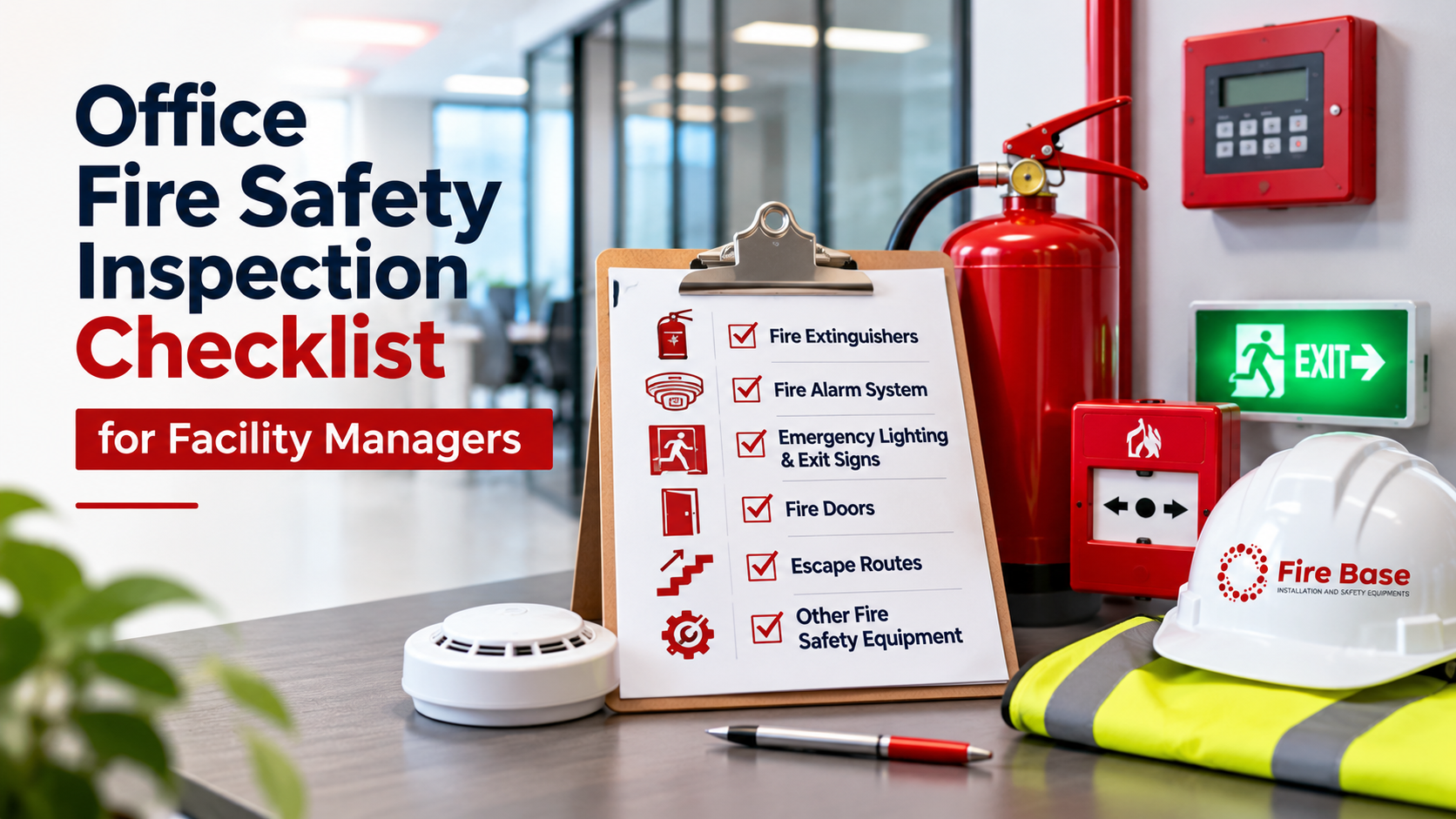
Office fire safety is a critical responsibility for facility managers, building owners, and workplace administrators. Offices contain electrical equipment, computers, documents, furniture, and other materials that can contribute to fire risks. Without regular inspections and properly maintained fire protection systems, a small incident can quickly threaten employees, visitors, and business operations.
A fire safety inspection for offices in Abu Dhabi helps facility managers identify potential hazards, check the condition of fire protection equipment, and maintain compliance with applicable fire safety requirements. A structured inspection checklist also makes it easier to organise maintenance activities and address problems before they become serious.
Here are the key areas facility managers should include in a routine office fire safety inspection.
1. Inspect Fire Extinguishers
Fire extinguishers provide an immediate response option for certain small fires when it is safe and appropriate to use them. Offices should have suitable extinguishers positioned according to the identified fire risks and applicable requirements.
During the inspection, facility managers should check the following:
- Confirm that extinguishers are accessible and clearly visible.
- Check pressure gauges where fitted and look for signs of leakage or damage.
- Inspect hoses, nozzles, safety pins, and tamper seals.
- Verify that identification labels and service tags are legible and current.
- Check that extinguishers remain in their designated locations.
- Review service records and arrange professional servicing when required.
Damaged, discharged, or otherwise defective extinguishers should receive prompt attention. Employees should never attempt repairs that require qualified servicing.
2. Check Fire Alarm and Detection Systems
Fire alarm systems help detect fire conditions and alert building occupants. Regular office fire alarm testing helps identify problems with detectors, control panels, alarm sounders, and associated components. Facility managers should check the fire alarm control panel for fault indicators, warning messages, and abnormal system status. They should also arrange the required testing of smoke detectors, heat detectors, manual call points, audible alarms, and visual warning devices where installed. Testing should follow the manufacturer’s instructions and applicable requirements. Coordinate planned tests with building occupants and monitoring providers to prevent unnecessary emergency responses. The inspection should also confirm that faults identified during previous visits have been resolved. Any defect affecting the system’s ability to detect a fire or alert occupants requires prompt escalation.
3. Inspect Emergency Lighting and Exit Signs
Power failures can leave office corridors, staircases, and exit routes in darkness. Emergency lighting and illuminated exit signs help occupants find safe evacuation routes during an emergency.
An emergency lighting inspection should include:
- Checking that emergency lights and exit signs are visible and unobstructed.
- Confirming that directional signs guide occupants towards designated exits.
- Inspecting visible damage to light fittings and signage.
- Arranging functional tests and battery-duration tests at the required intervals.
- Recording failed lights, battery problems, and replacement requirements.
Facility managers should pay particular attention to stairwells, basement areas, meeting rooms, and corridors with limited natural lighting.
4. Keep Escape Routes and Fire Exits Clear
Clear evacuation routes are essential for safe office evacuation. Boxes, office furniture, cleaning equipment, and temporary storage can obstruct escape routes and delay occupants during an emergency.
Inspect all designated escape routes, including corridors, staircases, exit doors, and access to final exits. Confirm that doors operate correctly and that occupants can reach the designated exits without encountering unnecessary obstacles.
Check that emergency exits are not improperly locked or blocked and that exit signage remains visible. Fire doors should close correctly and must not be wedged open unless an approved arrangement specifically permits it.
Facility managers should correct obstructions immediately and communicate evacuation-route rules to employees and cleaning or maintenance teams.
5. Check Fire Doors and Compartmentation
Fire doors help limit the spread of fire and smoke when installed as part of a building’s fire protection strategy. Their condition can affect the safety of occupants and the effectiveness of the building’s fire compartments.
During an inspection, look for damaged door leaves, missing or damaged seals, faulty closers, broken hardware, and gaps that may indicate a problem. Check that doors close fully and latch as intended.
Also look for unauthorised openings or damaged fire-stopping materials around service penetrations, such as cables and pipes. Report defects to competent professionals rather than attempting unsuitable repairs.
These checks are especially important in offices located within multi-storey commercial buildings.
6. Review Electrical and Workplace Fire Hazards
Electrical equipment and unsafe workplace practices can increase fire risks in offices. Facility managers should inspect work areas, electrical rooms, server rooms, pantry areas, and storage spaces for common hazards.
Check for damaged power cords, overloaded extension leads, exposed wiring, overheating equipment, and blocked ventilation around electrical devices. Keep combustible materials away from electrical panels and other heat sources.
Ensure that electrical repairs are handled by qualified personnel. Staff should follow workplace rules for using heaters, charging devices, and other electrical appliances.
Pantry areas also require attention because cooking appliances, kettles, and other heat-producing equipment can introduce additional fire hazards.
7. Inspect Sprinklers and Other Fire Protection Equipment
Offices may have automatic sprinkler systems, fire hydrants, hose reels, and specialised fire suppression equipment depending on the building’s design.
Facility managers should check that sprinkler heads remain free from obstructions and visible damage. Inspect accessible pipework, valves, gauges, and equipment cabinets for signs of leakage, corrosion, or interference.
Confirm that hydrants, hose reels, and firefighting equipment remain accessible. Any required operational, flow, pressure, or system-integrity testing should be arranged through competent maintenance personnel in accordance with applicable requirements.
Do not close valves, disable alarms, or make changes to protected systems without authorised procedures and appropriate safeguards.
8. Review Fire Safety Training and Evacuation Procedures
Fire protection equipment alone cannot ensure workplace safety. Employees must understand how to respond to alarms, where to evacuate, and how to report hazards.
Facility managers should verify that evacuation plans are current, assembly points are identified, and emergency contact information is available. Check that employees know the designated escape routes and understand their responsibilities during an evacuation.
Schedule fire drills and training in accordance with the building’s emergency plan and applicable requirements. Keep records of participation, observations, and corrective actions.
The inspection should also confirm that arrangements account for visitors, contractors, and people who may require assistance during evacuation.
9. Maintain Inspection Records and Corrective Actions
Accurate records help facility managers monitor fire safety performance and demonstrate that identified issues receive attention.
Each inspection record should include the inspection date, location, equipment checked, findings, photographs where useful, corrective actions, responsible personnel, and completion status.
Use a tracking system to monitor unresolved defects and schedule follow-up inspections. Prioritise issues according to their severity, particularly faults affecting alarms, escape routes, emergency lighting, and essential firefighting equipment.
Fire Safety Inspection in Abu Dhabi: Final Checklist
For offices in Abu Dhabi, facility managers should ensure that inspection and maintenance activities meet the requirements applicable to the building, its occupancy, and its installed systems. Confirm any relevant Abu Dhabi Civil Defence requirements with the building management team and appropriately qualified or approved service providers where required.
A consistent inspection routine helps identify hazards, maintain fire protection equipment, and support safer working conditions.
Conclusion
An effective office fire safety inspection covers fire extinguishers, alarm systems, emergency lighting, escape routes, fire doors, electrical hazards, and other installed fire protection equipment. It also includes employee awareness, maintenance documentation, and timely corrective action.
By following a structured checklist and arranging professional testing and servicing when needed, facility managers can strengthen workplace fire safety and reduce avoidable risks to people and property.